
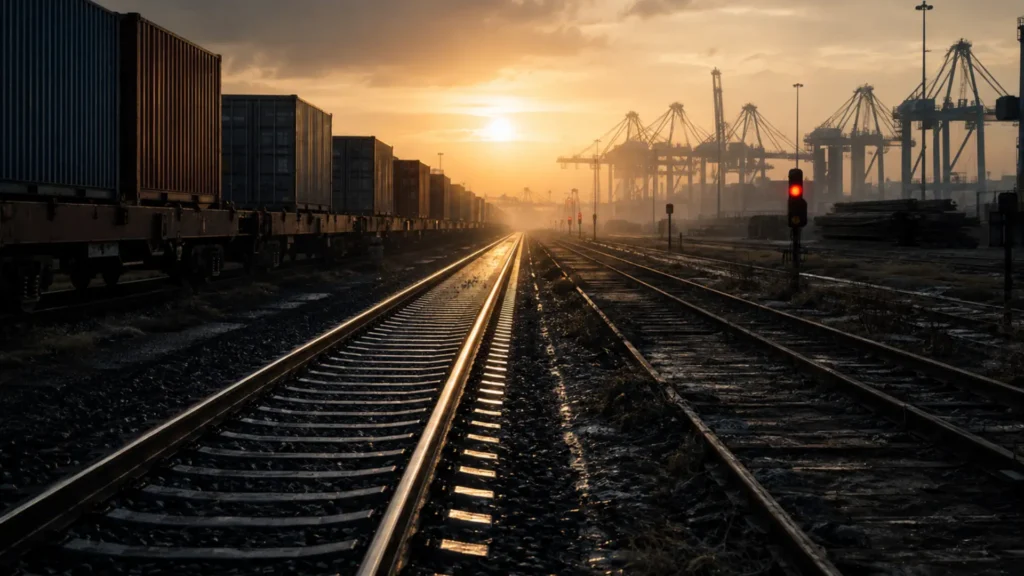
Johannesburg, 24 August 2026 — The Transnet rail funding request now has a number, a destination and a deadline. The state logistics operator is asking the National Treasury for about R35 billion. Transport Minister Barbara Creecy confirmed the figure to Bloomberg in Cape Town. “We are going to put in requests to National Treasury’s Infrastructure Budget Facility for about R35 billion, for projects going out to 2030,” she said. Moreover, the ask comes on top of R13 billion already received from the same facility. That earlier money included R11.2 billion for the iron ore and coal corridors. The same allocation covers efficiency work at the Durban Container Terminal.
Why the Transnet Rail Funding Request Exists
The purpose is unusually candid. “Transnet will probably have to spend about R35 billion to upgrade railways so that the new network operators have a chance,” Creecy said. “They will have to obtain rolling stock. So I expect the hoped-for increase of 24 million tons could take place in around 18 months.” Eleven private operators received train paths on the national network in May. Consequently, the state’s money and the private operators’ success are now formally the same project. A 24-million-ton capacity gain should follow within a year and a half.
The Port Projects Inside the Funding Push
The ports carry their own announcements. A privately operated floating dock at the Port of Cape Town would expand ship-repair capacity, Creecy said. Additionally, Transnet plans a port community system. The platform brings shipping agents and owners into port operations rooms with real-time cargo information. She cited citrus as a beneficiary: the export season coincides with strong winds, so coordination decides whether containers move. Meanwhile, the wider funding stack keeps growing. A $1.5 billion World Bank loan approved in July carries freight reform as a pillar.
The Rail Bet
How the Transnet Rail Funding Request Completes the Picture
The Transnet rail funding request completes a picture this desk has tracked from three sides. Private capital moved first: Traxtion’s R3.4 billion rolling stock programme landed its first locomotives in Durban this month. The road bill of rail failure got priced last week. Mpumalanga disclosed a R38 billion road repair backlog driven substantially by coal trucks. Now the state side has its number, and the mirror is striking. One province’s road repair backlog exceeds the entire national rail modernisation request. Nevertheless, honesty requires the counterweight: a request is not an approval. The Budget Facility for Infrastructure runs appraisal windows, and Treasury discipline is real. Indeed, Transnet’s execution record is the reason private operators exist at all. Announcements build nothing. Approved, spent, audited money does.
The Numbers Behind the Rail Funding Request
Fleet Impact
What the Rail Funding Request Means for Truck Lanes
For road operators, the practical meaning sits in the clock. The 24-million-ton shift now has funding attached. Therefore, the lane-exposure mapping this desk recommended in the Traxtion coverage gains a timeline. Bulk and corridor container work faces rail competition within roughly 18 months. Distribution and regional work stays on trucks. Fleets running vehicle tracking across their operations can see revenue and utilisation per lane. That is the map that decides what to defend. Similarly, litre-level fuel monitoring prices each lane honestly before a rail-armed customer reprices it for you. The Durban Container Terminal money and the port community system matter too. Both change how port trucking queues, books and moves.
- Map bulk and corridor container lane exposure on an 18-month clock: the shift now has funding attached
- Track BFI window outcomes, not announcements: a request is not an approval, and Treasury discipline is real
- Watch the Durban Container Terminal work: efficiency upgrades change port trucking queues and turnarounds
- Prepare for data-coordinated port calls: the port community system will reward fleets that run on live information
Fleet Technology
How Lane Data Beats the Rail Repricing Wave
Rail’s funded return is a repricing event, and repricing rewards the operator who knows their numbers first. DigitFMS builds that position as a by-product of daily work. GPS tracking and route management show which corridors carry the fleet’s revenue. Driver identification ties every trip to a named person, and D-Fuel measures each lane’s true burn against tank capacity and route data. As a result, clients have cut fuel theft by up to 95%, and lane decisions rest on evidence. Competing providers such as Cartrack, Tracker, Netstar, Ctrack and MiX by Powerfleet serve freight fleets as well. However, the sequence is now set: funding request, network upgrades, private trains, repriced lanes. The operators who can cost their work will choose which lanes to hold. The rest will hear the choice from their customers.
Key Numbers · The Funding Picture
New request: about R35 billion from Treasury’s Budget Facility for Infrastructure, for projects through 2030.
Already received: R13 billion from the BFI, including R11.2 billion for iron ore and coal corridors and Durban Container Terminal efficiency.
Expected gain: 24 million tons of annual capacity within about 18 months, via 11 private operators awarded train paths in May.
Also announced: a privately operated Cape Town floating dock and a real-time port community system.
Source: Transport Minister Barbara Creecy to Bloomberg, 13 August 2026.
Questions Answered
Frequently Asked Questions: Transnet Rail Funding Request
What is Transnet asking the Treasury for?
About R35 billion from the National Treasury’s Budget Facility for Infrastructure, covering projects through 2030. Transport Minister Barbara Creecy announced the request in a Bloomberg interview on 13 August.
What funding has Transnet already received?
R13 billion from the same facility. That includes R11.2 billion for repairing the iron ore and coal rail corridors, plus efficiency work at the Durban Container Terminal.
Why does Transnet need the new money?
In Creecy’s own words, to upgrade railways so that the new network operators have a chance, and to obtain rolling stock. In short, the request exists to make third-party rail access work in practice.
How quickly could rail capacity grow?
Quickly, if the plan holds. Creecy expects 24 million tons of added annual capacity within around 18 months. The upgrades and rolling stock would let the 11 private operators awarded train paths in May actually run.
What is the port community system?
A coordination platform that brings shipping agents and owners into port operations rooms with real-time cargo information. Creecy cited citrus exports as a beneficiary, since the season coincides with strong winds that disrupt port schedules.
Is the R35 billion guaranteed?
No. A Budget Facility for Infrastructure request must pass Treasury’s appraisal windows, and approval is not automatic. Therefore, operators should track BFI outcomes rather than announcements.
What should road freight operators do about this?
Map which lanes are rail-competitive against an 18-month clock, mostly bulk and corridor container work. Then watch the Durban Container Terminal upgrades and the port community system, because both change how port trucking runs.
Facts checked 24 August 2026. Source: Minister Creecy’s interview with Bloomberg, with corroborating reports by BizNews and Fullview. Related: the private locomotives already landing and the R38bn road bill of rail failure.
© 2026 DigitFMS. All rights reserved.