
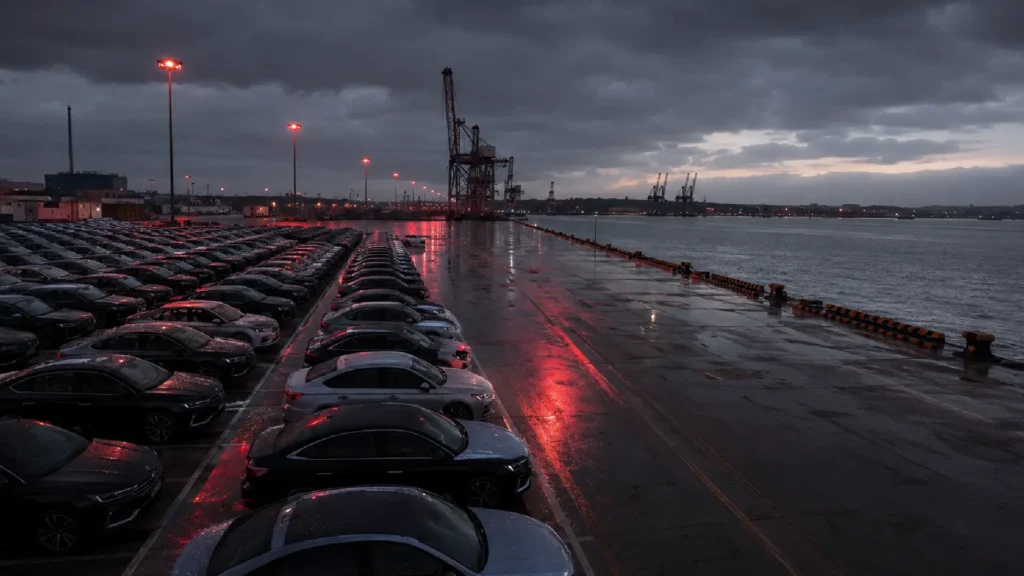
Johannesburg, 25 August 2026 — The AGOA extension South Africa’s exporters cheered this month comes with a hard asterisk. The US Senate approved extending the African Growth and Opportunity Act to 31 December 2028 on 8 August. However, the bill still awaits House concurrence and a presidential signature. Meanwhile, naamsa’s verdict, issued last Tuesday, is blunt. For the automotive industry, the programme’s largest beneficiary over 25 years, the extension does not materially alter current trading conditions. The reason is a different law entirely. A 25% Section 232 tariff on vehicles and components nullifies the preferential access AGOA provides. A trade preference does not override a national-security duty.
The Numbers Behind the AGOA Auto Export Collapse
The numbers behind that verdict are stark. South African vehicle exports to the United States fell 83.2%, per naamsa figures reported by Freight News. Volumes dropped from 24,682 units in 2024 to 4,136 in 2025. Furthermore, the first half of 2026 dropped another 36%, to 1,840 units. Almost all the lost volume traces to one plant. Mercedes-Benz East London builds the C-Class largely for American buyers, and it suspended production for two months last year. Gains in Canada and Mexico helped, but not enough. Overall light-vehicle exports fell 8.1% in the half.
What AGOA Gave South Africa for 25 Years
The history explains the anger. AGOA’s duty saving helped exports to the US grow 1,643.6% in a single year after enactment. Volumes jumped from 853 units in 2000 to 14,873 in 2001. America became South Africa’s largest vehicle export destination from 2008 to 2013. With one exception, it stayed the industry’s second-largest trading partner from 2011 to 2024. Now naamsa interim chief executive Shinny Gobiyeza wants substance behind the paper. The priority, he said, is a durable, mutually beneficial trade arrangement with the United States. Such a deal must support production, protect investment, sustain jobs and let South Africa compete globally.
The Fine Print
Why the AGOA Extension South Africa Got Fixes Nothing Yet
Inside the AGOA extension South Africa is weighing, two dates matter more than the headline. First, current legal certainty ends on 31 December 2026, under the reauthorisation signed in February. The 2028 date sits in a bill that the House has not passed and the President has not signed. Therefore, any operator or manufacturer planning capital expenditure off 2028 is planning off a proposal. Second, the tariff has no expiry at all. Section 232 duties stand on national-security grounds until withdrawn, whatever Congress does with AGOA. Consequently, the industry’s fate rests on a bilateral deal that does not yet exist. An industry producing 23.8% of South Africa’s manufacturing output absorbs the wait.
The AGOA Extension in Three Numbers
Fleet Impact
What the AGOA Extension Means for South Africa Freight
For road freight, an export line is never just the factory’s problem. The East London operation anchors a logistics ecosystem. Inbound component flows, outbound car carriers, port ro-ro work and daily corridor traffic all hang off the line. When US volumes collapsed, that freight shrank with them. This is partly why vehicle exports fell 11.6% in July while the domestic market boomed. Fleets serving automotive chains should map their exposure by corridor and customer. Fleets running vehicle tracking across their operations can see exactly which lanes depend on export work. Similarly, litre-level fuel monitoring keeps those lanes priced on real cost while volumes stay uncertain.
- Map automotive-corridor exposure by customer and lane: East London, Gqeberha and Durban carry the risk
- Plan on certainty to 31 December 2026 only: the 2028 extension is a bill, not a law
- Watch the House vote and any US-SA bilateral talks: a deal, not AGOA, decides the tariff
- Track the domestic pivot: manufacturers redirecting volumes change vehicle supply and inbound freight
Fleet Technology
How Fleets Manage Trade-Policy Freight Exposure
Trade policy moves in Washington, but its freight lands in East London, Gqeberha and Durban. DigitFMS gives operators the tools to manage exposure they cannot control. GPS tracking and route management show which corridors and customers carry the fleet’s automotive work. A policy shock then becomes a known percentage rather than a surprise. D-Fuel prices each lane on measured burn. Additionally, driver identification with AI dashcams keeps the compliance file clean while margins stay thin. As a result, clients have cut fuel theft by up to 95% and can reprice or redeploy on evidence. Competing providers such as Cartrack, Tracker, Netstar, Ctrack and MiX by Powerfleet serve manufacturing fleets as well. However, the AGOA lesson is broader than autos. Preference on paper is not volume on trucks. The operators who know their exposure will adapt first.
Key Numbers · The Export Collapse
US vehicle exports: down 83.2%, from 24,682 units in 2024 to 4,136 in 2025; a further 36% drop to 1,840 units in H1 2026.
The blocker: a 25% Section 232 tariff on vehicles (April 2025) and components (May 2025), which AGOA preference does not override.
Legal certainty: AGOA runs to 31 December 2026; the 2028 extension passed the Senate on 8 August but is not yet law.
The stakes: automotive generated 23.8% of South Africa’s manufacturing output in 2025.
Source: naamsa statement, 18 August 2026, via Freight News and tralac.
Questions Answered
Frequently Asked Questions: AGOA Extension South Africa
What has the US Senate approved on AGOA?
An extension of the African Growth and Opportunity Act to 31 December 2028, passed on 8 August. However, the bill still requires concurrence in the House of Representatives and a presidential signature. It is not yet law.
What AGOA access does South Africa have right now?
Certainty to 31 December 2026. A reauthorisation signed on 3 February 2026 runs the programme to the end of this year, backdated over a brief lapse. Consequently, planning against the 2028 date means planning against a bill.
Why does the AGOA extension not help vehicle exports?
Because AGOA’s duty-free preference does not override a Section 232 tariff. The 25% duty on vehicles, imposed in April 2025 on national-security grounds, stands regardless of AGOA status, per naamsa’s statement.
How far have South African vehicle exports to the US fallen?
By 83.2%, from 24,682 units in 2024 to 4,136 in 2025, per naamsa figures reported by Freight News. Moreover, the first half of 2026 fell a further 36% to 1,840 units against the same period last year.
Which plant carries most of the loss?
Mercedes-Benz’s East London plant, which builds the C-Class largely for export. The plant suspended production for two months in 2025 as US volumes evaporated.
What does naamsa want instead?
A durable, mutually beneficial trade arrangement with the United States. Interim chief executive Shinny Gobiyeza set the terms. Such a deal must support production, protect investment, sustain jobs and let South Africa compete in global automotive markets.
Why does a vehicle-export story matter to road freight?
Because an export line is a logistics ecosystem. Inbound components, outbound car carriers and port ro-ro work all move by road. Moreover, the automotive industry generates 23.8% of South Africa’s manufacturing output, a large share of the national freight base.
Facts checked 25 August 2026. Source: the naamsa statement, reported by Freight News and tralac, with legislative status per the Congressional Research Service. Related: the July truck sales boom those exports offset and our Q2 freight volumes analysis.
© 2026 DigitFMS. All rights reserved.