
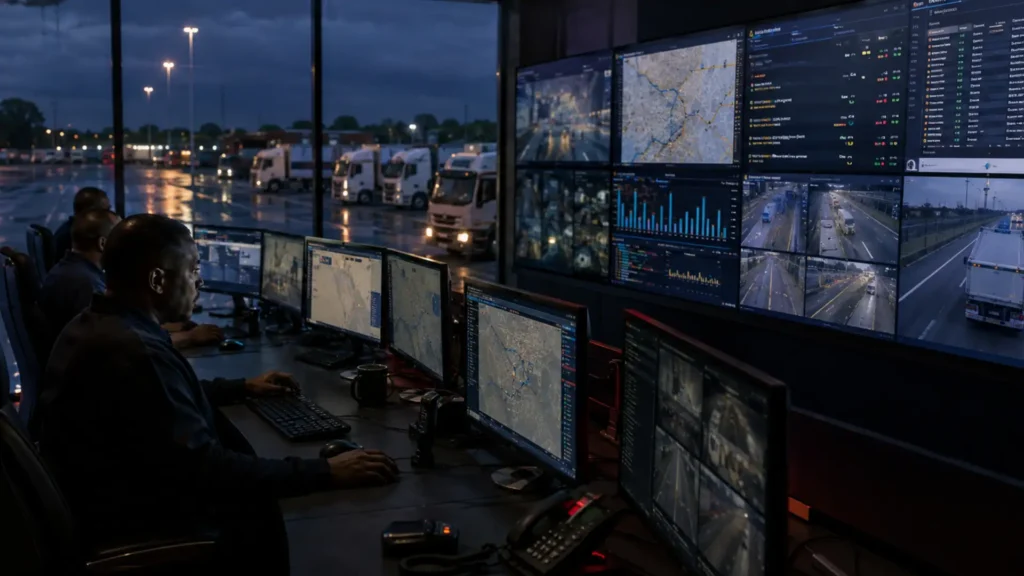
Fleet management security has become a major priority for South African transport operators, logistics businesses, construction fleets, and commercial vehicle owners. As fleet technology continues to evolve, businesses are increasingly relying on connected systems to manage vehicles, drivers, cargo, fuel, and operational visibility.
However, growing connectivity also introduces new risks. Vehicle theft, unauthorised system access, fuel theft, cargo crime, and poor operational visibility can create serious financial and operational pressure for fleet operators.
Direct Answer: How to Improve Fleet Management Security
The best ways to improve fleet management security include using secure GPS tracking, AI video telematics, fuel monitoring, driver alerts, geofencing, access control, cloud-based reporting, trailer tracking, and 24/7 fleet monitoring. Together, these systems help South African businesses improve visibility, reduce losses, and strengthen operational control.
DigitFMS helps businesses improve fleet management security through GPS tracking, AI mobile video, fuel monitoring, fleet visibility, trailer tracking, and operational reporting solutions designed for South African transport environments.
Modern fleet management security systems now combine operational visibility with real-time fleet intelligence. Consequently, businesses gain stronger control over fleet activity while reducing risk exposure.
Why Fleet Management Security Matters More Than Ever
South African transport operators face daily operational challenges across logistics routes, urban delivery environments, mining sectors, and construction operations. Cargo theft, route deviation, hijackings, fuel theft, and unauthorised vehicle use continue to place pressure on fleet operators.
Meanwhile, businesses are expected to improve efficiency while protecting assets and reducing losses. As a result, connected fleet visibility has become a critical operational requirement.
Modern transport businesses require systems capable of:
- Tracking vehicle movement in real time
- Protecting mobile assets
- Monitoring driver behaviour
- Improving route visibility
- Reducing fuel losses
- Improving recovery response
- Monitoring after-hours movement
- Managing fleet risk more effectively
Furthermore, insurers increasingly expect businesses to implement layered fleet management security solutions before underwriting high-risk commercial fleets. Therefore, businesses with stronger operational visibility are often better prepared to reduce long-term fleet risk.
Secure GPS Tracking Is the Foundation of Fleet Security
GPS tracking remains one of the most important tools for improving fleet management security. However, modern telematics platforms now provide far more than basic vehicle tracking.
Advanced systems allow fleet managers to monitor vehicle movement, route adherence, driver activity, geofencing alerts, after-hours movement, ignition events, and operational anomalies in real time.
Additionally, modern systems provide instant alerts during unusual fleet activity. As a result, transport operators can respond faster during incidents and improve overall fleet visibility.
Businesses operating commercial fleets should consider solutions such as fleet tracking and visibility systems that combine operational reporting with real-time monitoring.
Likewise, transport security systems improve accountability across larger fleet environments while helping operators maintain stronger route visibility.
AI Video Telematics Improves Fleet Visibility
AI video telematics has become a major part of modern fleet management security strategies.
Unlike traditional dash cameras, AI-powered systems actively analyse road conditions and driver behaviour in real time. Consequently, operators gain access to important fleet safety and operational insights.
Modern AI video systems can detect:
- Driver fatigue
- Cellphone distraction
- Harsh braking
- Unsafe following distances
- Lane departures
- Potential collisions
- Aggressive driving behaviour
- Unauthorised passenger activity
Moreover, AI video telematics systems provide valuable evidence during accident investigations, insurance claims, cargo incidents, and theft-related cases. In addition, these systems help businesses improve driver coaching and operational safety.
Solutions such as AI mobile video systems help businesses improve fleet management security while strengthening operational visibility.
Consequently, many transport operators now treat AI video monitoring as a core part of their broader fleet cybersecurity and risk management strategy.
Fuel Monitoring Helps Reduce Fleet Losses
Fuel theft remains one of the most common hidden losses within commercial fleet environments. However, many businesses still underestimate the long-term financial impact of uncontrolled fuel losses.
Modern fuel monitoring systems help operators detect:
- Fuel siphoning
- Sudden fuel drops
- Fuel card abuse
- Irregular refuelling
- Excessive idling
- Unauthorised fuel usage
- Abnormal fuel consumption
Consequently, operators can improve accountability while reducing unnecessary fuel losses across commercial fleets. Furthermore, fuel monitoring helps operators identify long-term operational waste.
Integrated systems such as fuel monitoring technology help businesses improve visibility across trucks, generators, bowsers, and mobile fuel assets.
At the same time, connected fleet system protection becomes stronger when fuel visibility forms part of a central fleet platform.
User Access Control Is Critical
Many businesses focus only on physical fleet security while overlooking digital system access. Unfortunately, poor access control can expose fleets to serious operational and security risks.
Fleet management platforms should include:
- Role-based user access
- Strong password policies
- Secure cloud access
- Multi-user permission controls
- Login monitoring
- Audit reporting
- Restricted administrator access
Furthermore, businesses should regularly review who has access to fleet systems and remove inactive users when necessary. Consequently, businesses reduce the risk of unauthorised platform access.
Likewise, fleet cybersecurity improves significantly when businesses maintain clear operational access policies.
Trailer and Cargo Monitoring Improve Fleet Protection
Many fleet operators secure vehicles while overlooking trailers and cargo assets. However, trailers are often targeted because they may lack dedicated monitoring systems.
Additionally, cargo incidents frequently occur during unauthorised stops, route deviations, or overnight parking periods.
Effective trailer and cargo protection strategies often include:
- Independent trailer tracking
- Geofencing alerts
- Cargo door sensors
- Route deviation alerts
- AI video verification
- Panic alert systems
- 24/7 fleet monitoring
In addition, logistics asset tracking systems help operators improve cargo visibility across long-distance transport routes. Therefore, businesses gain stronger control over high-value cargo movement.
Centralised Fleet Visibility Improves Decision-Making
One of the biggest operational mistakes businesses make is using disconnected fleet systems that do not communicate with each other.
Modern fleet management security depends on integrated visibility. Therefore, businesses should look for systems capable of centralising:
- GPS tracking
- AI video monitoring
- Fuel management
- Driver analytics
- Fleet reporting
- Operational alerts
- Security event reporting
- Control room visibility
At the same time, centralised visibility improves decision-making and reduces delays during security incidents. Consequently, businesses gain stronger operational control.
Connected fleet platform security systems also help businesses improve long-term fleet growth and operational planning. Likewise, businesses benefit from improved reporting and operational visibility.
24/7 Monitoring Improves Fleet Response
Technology alone is not enough. Rapid response remains critical during fleet security incidents.
For this reason, many operators partner with providers offering live monitoring and 24/7 fleet oversight.
Professional control rooms can assist with:
- Vehicle recovery support
- Emergency escalation
- Route monitoring
- Panic alert management
- Incident verification
- Driver welfare checks
- After-hours movement monitoring
Furthermore, fast response coordination can significantly reduce losses during theft and hijacking incidents. As a result, many transport businesses now rely on centralised fleet monitoring for high-risk operations.
What Businesses Should Look for in a Fleet Security Partner
Choosing the right technology provider is just as important as selecting the technology itself.
Businesses should evaluate providers based on:
- Transport industry experience
- Control room capability
- Technology integration
- Growth support
- Support response times
- Reporting capability
- System flexibility
- South African fleet experience
- Recovery support capability
In addition, businesses should avoid isolated systems that cannot scale with operational growth. Therefore, choosing the right fleet management security partner remains critical.
Conclusion
Modern fleets require far more than basic vehicle tracking. Effective fleet management security now combines GPS tracking, AI video telematics, fuel monitoring, trailer visibility, cloud-based reporting, and rapid response support into one connected operational platform.
As South African transport risks continue to evolve, businesses that invest in connected fleet visibility and layered protection systems will be better positioned to reduce losses, improve response capability, and strengthen operational control. Furthermore, businesses with stronger operational visibility are often better prepared to respond quickly during incidents.
Ultimately, investing in modern fleet management security technology gives businesses stronger visibility, faster response capability, and better operational control. In addition, connected fleet systems help businesses improve driver accountability, cargo visibility, fuel management, and long-term fleet performance.
Consequently, businesses that adopt integrated transport security solutions are often better prepared to manage operational risk while improving daily fleet efficiency. Likewise, centralised fleet monitoring allows operators to maintain better visibility across vehicles, drivers, trailers, and mobile assets.
Frequently Asked Questions
Businesses can improve fleet management security through GPS tracking, AI video telematics, fuel monitoring, geofencing, access control, trailer tracking, and live fleet monitoring systems.
AI video telematics helps identify driver fatigue, distraction, unsafe driving behaviour, and potential collision risks in real time. Additionally, it provides useful video evidence during incidents and insurance claims.
Yes. Fuel monitoring systems help businesses detect fuel theft, abnormal consumption, excessive idling, and unauthorised fuel usage. Consequently, operators improve accountability and reduce waste.
Access control helps businesses limit unauthorised system usage, improve accountability, and strengthen fleet cybersecurity across connected fleet platforms.