
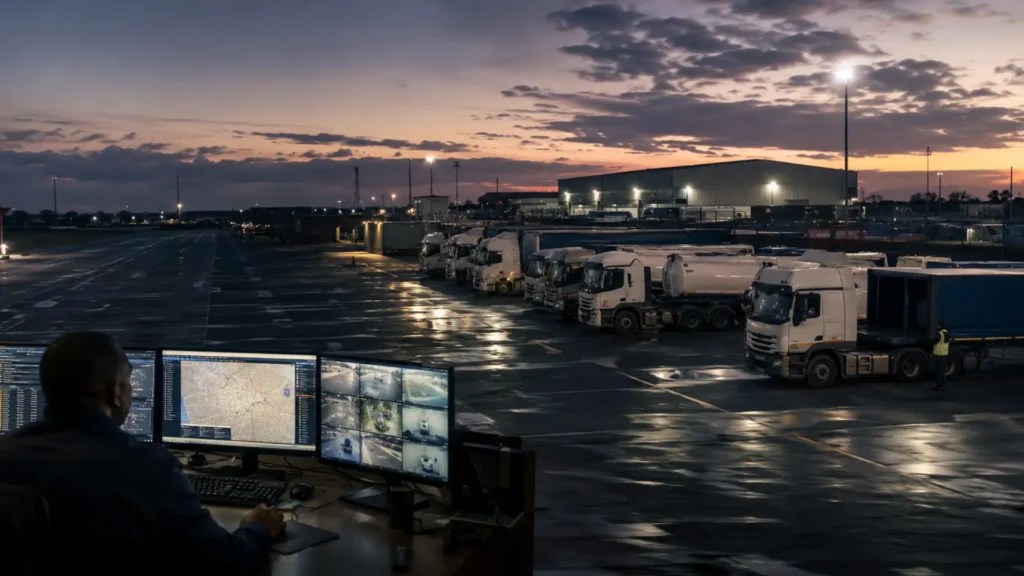
Mobile asset security has become one of the most important priorities for South African fleet operators, logistics companies, construction businesses, fuel distributors, and transport managers. Vehicle theft, cargo hijackings, fuel theft, and visibility gaps continue to place pressure on businesses that rely on mobile assets every day.
At the same time, modern fleet technology is changing how businesses protect vehicles, trailers, cargo, and field operations. Consequently, companies are moving beyond basic tracking devices and adopting connected systems that combine GPS tracking, AI video telematics, fuel monitoring, driver behaviour analytics, and live fleet visibility.
Direct Answer: Best Security Solutions for Mobile Assets
The best mobile asset security solutions for South African fleets include GPS tracking, AI video telematics, fuel monitoring, trailer tracking, cargo monitoring, geofencing, driver alerts, and 24/7 control room support. Together, these tools help businesses protect vehicles, cargo, fuel, drivers, and mobile equipment in real time.
DigitFMS helps South African businesses improve mobile asset security through fleet tracking, AI mobile video, fuel monitoring, trailer visibility, control room support, and operational reporting.
Modern mobile asset security systems help South African businesses protect vehicles, trailers, cargo, fuel infrastructure, and operational staff through real-time visibility and intelligent fleet monitoring. In addition, these systems help businesses improve daily operations while reducing unnecessary losses.
For businesses operating in high-risk transport environments, choosing the right mobile asset security strategy can reduce risk, improve response times, and strengthen overall fleet control. Furthermore, businesses with strong fleet visibility are often better prepared to respond to incidents quickly.
Why Mobile Asset Protection Has Become Critical in South Africa
South Africa’s logistics and transport sectors face serious daily risks. Cargo crime, cross-border route risk, fuel theft groups, and organised vehicle theft remain major concerns across transport corridors such as the N3, N1, and key industrial hubs.
Meanwhile, businesses are under pressure to improve efficiency while reducing losses. As a result, fleet visibility is no longer viewed as a luxury. Instead, it has become a core business requirement for transport operators.
Modern transport operators need the ability to:
- Monitor fleet activity in real time
- Protect high-value mobile assets
- Track fuel usage and unusual fuel use
- Improve driver accountability
- Detect problems early
- Improve recovery response during theft incidents
- Maintain visibility across multiple sites
- Protect cargo and trailer assets
Furthermore, insurance providers increasingly expect businesses to implement proactive risk reduction systems before underwriting high-risk fleets and mobile assets. Therefore, many operators are investing in layered mobile asset security solutions.
GPS Tracking and Mobile Asset Security
GPS tracking remains one of the most effective starting points for protecting mobile assets. However, modern telematics solutions now deliver far more than simple location monitoring.
Advanced fleet tracking platforms give fleet managers live visibility of vehicle movement, route adherence, ignition activity, geofencing alerts, after-hours movement, and driver behaviour.
Additionally, modern systems improve emergency response by providing live fleet positioning and event-based alerts. As a result, transport operators gain faster access to important fleet information during incidents.
Businesses operating large commercial fleets should consider solutions such as fleet visibility systems that combine live tracking with reporting and smart monitoring.
Likewise, mobile fleet protection systems can improve route visibility and driver accountability across large transport operations.
AI Video Telematics for Mobile Asset Security
AI video telematics has rapidly become one of the most powerful fleet security tools available to transport businesses.
Unlike traditional dash cameras, AI-powered systems actively analyse driver behaviour and road conditions in real time. Consequently, fleets gain access to useful insights that help prevent incidents before they occur.
Modern AI video telematics systems can detect:
- Driver fatigue
- Cellphone distraction
- Harsh braking
- Unsafe following distances
- Lane departures
- Collision risks
- Unauthorised passenger activity
- Aggressive driving patterns
Moreover, integrated camera systems provide useful evidence during accident checks, insurance disputes, cargo incidents, and theft-related cases. In addition, these systems help businesses improve driver coaching and fleet safety.
Solutions such as AI-powered mobile video monitoring are becoming increasingly important for logistics operators transporting high-value cargo across South Africa.
Consequently, many businesses now view AI monitoring as a critical part of their broader mobile asset security strategy.
Fuel Monitoring Has Become a Major Security Requirement
Fuel theft remains one of the most underestimated losses within South African fleet environments. However, businesses are increasingly realising that uncontrolled fuel losses can damage profit.
Modern fuel monitoring systems help operators detect:
- Fuel siphoning
- Sudden fuel level drops
- Irregular refuelling behaviour
- Fuel card abuse
- Excessive idling
- Unauthorised fuel usage
- Consumption anomalies
Consequently, businesses can improve accountability while reducing losses across fleets, generators, bowsers, and heavy commercial vehicles. Furthermore, fuel monitoring systems help operators identify long-term waste.
Integrated systems such as fuel risk monitoring technology allow operators to combine live telemetry with reporting and fuel analytics.
At the same time, fleet asset protection becomes stronger when fuel visibility forms part of a connected fleet platform.
Mobile Asset Security for Trailers and Cargo
Many businesses focus heavily on truck security while overlooking trailers and cargo assets. Unfortunately, trailers are often targeted because they may lack dedicated tracking and monitoring systems.
Additionally, cargo theft incidents often occur during unauthorised stops, route deviations, or overnight parking periods. Therefore, transport operators should implement layered trailer and cargo protection systems.
Effective trailer and cargo protection strategies typically include:
- Independent trailer tracking devices
- Geofencing alerts
- Cargo door sensors
- Mobile panic alerts
- Real-time route monitoring
- AI video verification
- 24/7 fleet control room oversight
Likewise, businesses operating cross-border routes should use layered visibility strategies to improve recovery response and route control.
In addition, logistics asset tracking systems help operators maintain better cargo visibility across long-distance routes.
The Importance of Centralised Fleet Visibility
One of the biggest mistakes businesses make is deploying disconnected security tools that do not work together.
Modern fleet protection depends on integrated visibility. Therefore, businesses should look for platforms capable of centralising:
- GPS tracking
- Video telematics
- Fuel monitoring
- Driver analytics
- Fleet reporting
- Asset use
- Security event management
- Control room visibility
At the same time, centralised visibility improves decision-making and reduces delays during incidents. Consequently, businesses gain better control over fleet activity.
Businesses using integrated fleet systems can reduce risk and improve daily operations. Likewise, connected transport security solutions help businesses scale more effectively.
Control Rooms and Live Monitoring Improve Response Times
Technology alone is not enough. Response remains critical during security incidents.
For this reason, many leading fleet operators partner with providers that offer live monitoring support and 24/7 fleet oversight.
Professional control rooms can assist with:
- Vehicle recovery support
- Emergency escalation
- Route deviation monitoring
- Panic alert management
- Security incident checks
- Driver welfare checks
- After-hours movement monitoring
Furthermore, rapid response support can reduce losses during hijacking and theft incidents. As a result, many operators rely on centralised fleet monitoring for high-risk routes.
Operational Data Is Becoming a Competitive Advantage
Modern security systems now generate useful fleet data that extends beyond risk reduction.
Fleet data can help businesses:
- Improve route efficiency
- Reduce downtime
- Lower fuel consumption
- Improve maintenance planning
- Strengthen driver accountability
- Improve customer service visibility
- Support insurance discussions
Consequently, security technology increasingly contributes to broader business efficiency and profit. Moreover, live visibility helps businesses make faster decisions.
According to Transnet, logistics efficiency and infrastructure visibility remain essential parts of strengthening South Africa’s transport economy.
What Businesses Should Look for in a Fleet Security Partner
Choosing the right technology provider is just as important as selecting the technology itself.
Businesses should evaluate providers based on:
- Transport industry experience
- Control room ability
- Technology integration
- Growth support
- Support response times
- Reporting capability
- System flexibility
- South African fleet experience
- Recovery support capability
In addition, businesses should avoid isolated systems that cannot scale with growth. Therefore, choosing the right mobile asset security partner remains critical.
Conclusion
Protecting commercial vehicles, trailers, fuel assets, cargo, and mobile equipment requires far more than basic tracking technology. Modern mobile asset security strategies combine GPS tracking, AI video telematics, fuel monitoring, fleet data, and live response support into one connected fleet visibility system.
As South African transport risks continue to evolve, businesses that invest in fleet visibility and connected systems will be better positioned to reduce losses, improve response times, and strengthen long-term fleet control.
Ultimately, investing in modern mobile asset security technology gives businesses stronger visibility, faster response capability, and better control. Furthermore, connected fleet systems help businesses improve both security and daily performance.
Frequently Asked Questions
The most effective approach combines GPS tracking, AI video telematics, fuel monitoring, driver analytics, and live monitoring. Layered fleet visibility solutions provide stronger visibility and faster response capability.
AI video telematics helps identify driver fatigue, distraction, unsafe driving behaviour, and potential collision risks in real time. Additionally, it provides useful video evidence during incidents and claims.
Yes. Fuel monitoring systems help businesses detect fuel theft, abnormal consumption, excessive idling, and unauthorised refuelling activity. Consequently, operators improve accountability and reduce waste.
Yes. Independent trailer tracking improves recovery capability and helps businesses monitor trailer movement, geofencing breaches, and cargo activity separately from the primary vehicle.