
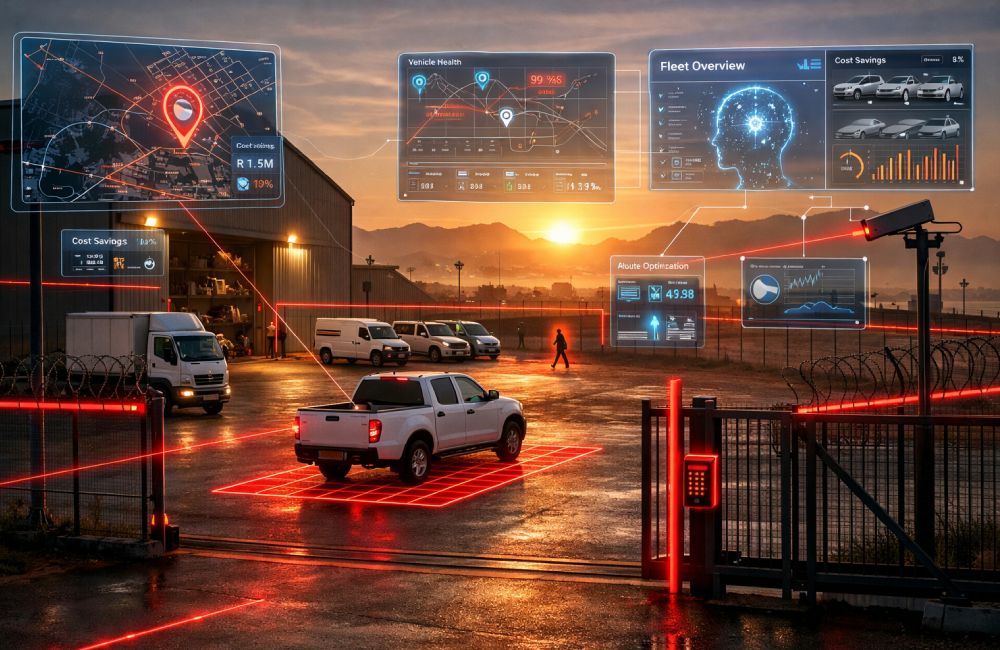
South African businesses operating fleets face mounting pressure — rising fuel costs, increasing security risks, operational inefficiencies, and tighter compliance requirements. Traditional tracking systems are no longer enough to provide the level of control and intelligence modern businesses require. This is where telematics and AI integration is changing the game.
Direct Answer: What Is Telematics and AI Integration?
Telematics and AI integration means applying artificial intelligence to the data that vehicle tracking and telematics devices collect. Instead of only reporting where a vehicle is, the system analyses patterns to predict maintenance needs, flag risky driving and detect fuel or route anomalies automatically. South African fleets use it to move from reactive to proactive control.
By combining real-time data with intelligent automation, businesses can move from reactive decision-making to proactive operational control. Instead of simply tracking vehicles, companies can now predict risks, optimise performance, and prevent losses before they happen.
In this article, you’ll learn how telematics and AI are shaping the future of fleet management in South Africa, the challenges businesses face, and how adopting intelligent systems can drive measurable results across operations.
Understanding Telematics and AI Integration
Telematics refers to the use of GPS tracking, sensors, and onboard diagnostics to collect and transmit vehicle and asset data in real time.
Traditionally, telematics provided:
- Vehicle location tracking
- Basic driver behaviour monitoring
- Trip history and reporting
However, with the introduction of artificial intelligence, telematics has evolved into a powerful decision-making engine.
Telematics and AI integration combines:
- Real-time data collection
- Machine learning algorithms
- Predictive analytics
- Automated alerts and actions
This allows businesses to move beyond visibility and into true operational intelligence.
For example:
- AI can detect unusual driver behaviour before it leads to an incident
- Systems can flag potential fuel theft patterns
- Predictive maintenance alerts can reduce downtime
This transformation is particularly critical in South Africa, where risk environments demand smarter, faster responses.
Why This Matters
In a high-risk, high-cost operating environment like South Africa, businesses cannot afford inefficiencies or blind spots.
Telematics powered by AI directly impacts key business areas:
1. Security and Risk Management
Vehicle theft, hijacking, and asset loss are major concerns. AI-enabled systems can:
- Detect tampering or signal jamming
- Trigger immediate alerts
- Assist in faster recovery
2. Cost Control
Fuel remains one of the biggest operational expenses. AI can:
- Identify fuel inefficiencies
- Detect unauthorised usage
- Optimise route planning
3. Operational Efficiency
Manual processes are slow and error-prone. AI automates:
- Reporting
- Driver performance scoring
- Compliance tracking
4. Data-Driven Decision Making
Instead of relying on assumptions, businesses gain:
- Accurate insights
- Real-time dashboards
- Predictive forecasting
The result is not just visibility — but control, accountability, and measurable performance improvement.
Key Challenges People Face – Telematics and AI integration
Despite its benefits, many businesses struggle to fully leverage telematics and AI integration.
Common challenges include:
- Fragmented systems
Multiple platforms that don’t integrate, creating data silos - Data overload without insight
Too much information, but no actionable intelligence - Limited real-time response capability
Alerts without operational follow-through - High-risk environments
Systems not designed for South African conditions - Lack of scalability
Solutions that don’t grow with the business - Poor adoption by teams
Complex systems that are difficult to use
These challenges often result in underutilised technology — where businesses invest in systems but fail to unlock their full value.
Solutions and Best Practices
To maximise the value of telematics and AI integration, businesses should adopt a strategic approach.
1. Focus on Outcomes, Not Just Technology
Choose systems that deliver:
- Measurable ROI
- Actionable insights
- Operational improvements
2. Integrate Systems into a Single Platform
A unified platform ensures:
- Centralised data
- Better visibility
- Seamless reporting
3. Prioritise Real-Time Intelligence
Look for solutions that provide:
- Instant alerts
- Live monitoring
- Immediate response capabilities
4. Use Predictive Analytics
Move beyond historical reporting to:
- Forecast risks
- Prevent breakdowns
- Anticipate inefficiencies
5. Ensure Local Relevance
In South Africa, systems must:
- Handle signal disruption
- Detect tampering
- Operate reliably in remote areas
6. Simplify User Experience
Adoption improves when systems are:
- Intuitive
- Mobile-friendly
- Easy to interpret
The goal is to transform telematics from a tracking tool into a strategic business asset.
How Professional Services Help
Implementing telematics and AI integration effectively requires more than just installing devices — it requires expertise, strategy, and ongoing support.
DigitFMS provides a comprehensive approach that goes beyond basic tracking.
Their solutions are designed to:
- Deliver real-time operational intelligence
- Integrate multiple systems into one platform
- Provide 24/7 monitoring and support
- Align with South African risk environments
Rather than overwhelming businesses with data, DigitFMS focuses on actionable insights and measurable outcomes.
This ensures that technology translates into:
- Reduced risk
- Lower operational costs
- Improved efficiency
Working with a specialist partner ensures that businesses don’t just adopt technology — they optimise it for performance.
Key Benefits – Telematics and AI integration
Businesses that adopt telematics and AI integration gain significant advantages:
- Improved security and asset protection
- Reduced fuel costs and operational waste
- Enhanced driver accountability
- Real-time decision-making capabilities
- Predictive maintenance and reduced downtime
- Stronger compliance and reporting
- Scalable systems that grow with your business
These benefits directly impact profitability, operational control, and long-term sustainability.
Industry Trends or Future Insights
The future of telematics is being shaped by rapid technological advancement.
Key trends include:
1. AI-Powered Video Telematics
Combining cameras with AI to:
- Detect risky behaviour
- Analyse incidents
- Improve driver safety
2. Edge Computing
Processing data directly on devices, enabling:
- Faster response times
- Reduced reliance on connectivity
3. Predictive and Autonomous Systems
AI will increasingly:
- Automate decision-making
- Trigger preventative actions
4. Integration with IoT Ecosystems
Telematics will connect with:
- Fuel systems
- Security infrastructure
- Smart city platforms
5. Enhanced Cybersecurity
As systems become more connected, protecting data becomes critical.
6. Sustainability and Efficiency
AI will help businesses:
- Reduce emissions
- Optimise routes
- Improve environmental impact
In South Africa, these advancements will play a critical role in improving both security and operational efficiency.
Frequently Asked Questions – Telematics and AI integration
Telematics and AI integration combines vehicle tracking technology with artificial intelligence to analyse data in real time. It goes beyond basic GPS tracking by providing predictive insights, automated alerts, and intelligent decision-making capabilities that improve fleet efficiency and safety.
AI improves fleet management by identifying patterns in data, predicting potential risks, and automating processes. This includes detecting unsafe driving behaviour, optimising routes, reducing fuel consumption, and preventing mechanical failures through predictive maintenance.
Yes, telematics solutions are scalable and can be tailored to businesses of all sizes. Small businesses benefit from improved cost control, enhanced security, and better operational visibility without needing large teams or complex systems.
Absolutely. Advanced telematics systems can monitor fuel levels, detect irregular usage patterns, and trigger alerts for potential theft or misuse. This is particularly valuable in industries where fuel costs are a major expense.
South Africa presents unique challenges, including security risks and operational inefficiencies. Telematics helps businesses mitigate these risks by providing real-time visibility, faster response times, and better control over assets and operations.
Conclusion – Telematics and AI integration
Telematics is no longer just about tracking vehicles — it is about transforming how businesses operate.
With telematics and AI integration, companies gain the ability to:
- Predict risks
- Reduce costs
- Improve efficiency
- Strengthen security
In a demanding environment like South Africa, this level of intelligence is no longer optional — it is essential.
Businesses that adopt these technologies today position themselves for long-term success, while those that delay risk falling behind.
Ready to take control of your fleet with intelligent technology?
Contact DigitFMS today to discover how telematics and AI integration can transform your operations, reduce risk, and deliver measurable results.