
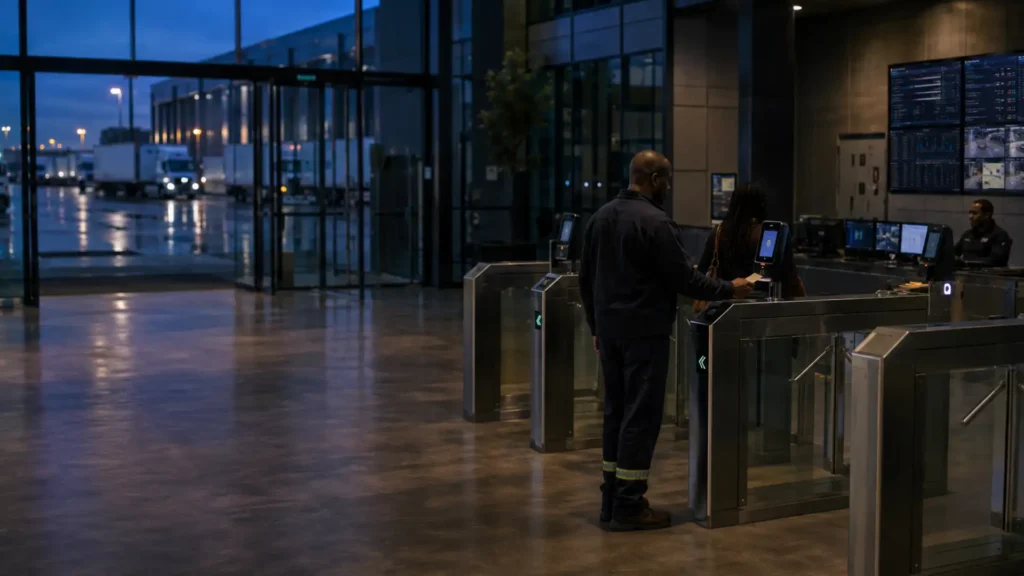
Access control systems have become essential for South African businesses looking to improve security, manage employee movement, and protect operational facilities. From offices and warehouses to logistics depots, factories, estates, and commercial buildings, businesses now require smarter ways to control entry and monitor activity.
At the same time, organisations are under pressure to strengthen operational security while maintaining efficient daily operations. Consequently, many businesses are replacing traditional lock-and-key security with intelligent electronic access management solutions.
Direct Answer: Types of Business Access Security Solutions
The main types of business access security solutions include biometric readers, RFID card systems, keypad entry systems, mobile credentials, cloud-based access platforms, facial recognition technology, and integrated CCTV monitoring. Together, these technologies help businesses improve security, manage access permissions, and strengthen operational visibility.
DigitFMS helps South African businesses improve operational security through integrated commercial security technology, CCTV integration, remote monitoring, and intelligent site visibility solutions.
Modern access control systems now combine visibility, reporting, automation, and remote management into one connected security environment. Furthermore, integrated systems help businesses improve accountability while reducing unauthorised access risks.
Why Modern Businesses Need Better Access Security
Traditional lock-and-key security no longer provides the level of visibility and control required by modern businesses. Lost keys, duplicated access, and limited reporting create serious operational and security concerns for commercial properties.
Meanwhile, businesses need stronger control over employee movement, visitor access, sensitive operational zones, and after-hours activity. As a result, electronic entry management has become a standard requirement across many industries.
Modern businesses use intelligent entry management to:
- Restrict unauthorised access
- Track employee movement
- Control visitor entry
- Protect sensitive operational areas
- Improve incident reporting
- Reduce theft and internal losses
- Strengthen site security
- Improve operational visibility
Additionally, insurers increasingly expect businesses to implement layered security strategies that include electronic entry management and CCTV integration. Therefore, many organisations now invest in scalable business access control solutions.
Biometric Access Control Systems
Biometric access control systems use unique physical identifiers such as fingerprints, facial recognition, or iris scanning to grant or deny entry.
Consequently, biometric technology provides stronger security because physical credentials cannot easily be shared, copied, or stolen.
Common biometric solutions include:
- Fingerprint readers
- Facial recognition scanners
- Palm recognition systems
- Iris scanning technology
Furthermore, biometric systems improve accountability because businesses can monitor exactly who entered specific areas and at what time.
Biometric security is commonly used within:
- Corporate offices
- Logistics depots
- Factories
- Mining operations
- High-security facilities
- Data centres
RFID Card and Tag Systems
RFID technology remains one of the most widely used business access control methods across South Africa.
These systems use RFID cards, tags, or fobs to grant authorised users entry into restricted areas. Additionally, RFID solutions are cost-effective and easy to manage across larger organisations.
Businesses often choose RFID technology because it:
- Allows fast access management
- Supports larger employee environments
- Can disable lost cards remotely
- Improves reporting visibility
- Integrates with other security systems
- Supports multiple access zones
Likewise, RFID solutions work effectively in office parks, warehouses, industrial facilities, residential estates, and commercial buildings.
Keypad Entry Systems
Keypad entry systems use PIN codes or passwords to allow authorised access into secure areas.
Although keypad systems are simpler than biometric or RFID solutions, they remain useful for smaller businesses and lower-risk entry points.
Keypad technology is commonly used for:
- Staff entrances
- Storage rooms
- Small offices
- Security gates
- Restricted internal zones
However, businesses should regularly update PIN codes to reduce risks caused by shared passwords or former employee access.
Mobile Credential Systems
Mobile credential systems allow users to enter secure areas using smartphones instead of physical access cards or keys.
Consequently, businesses gain more flexible and modern security management while reducing reliance on physical credentials.
Modern mobile entry solutions support:
- Bluetooth entry
- NFC mobile credentials
- Remote access management
- Cloud-based permissions
- Visitor management
- Temporary access permissions
At the same time, businesses can manage permissions remotely through cloud-connected security platforms.
Cloud-Based Access Control Systems
Cloud-based access control systems are becoming increasingly popular because they allow businesses to manage multiple facilities remotely.
Unlike traditional standalone systems, cloud-connected platforms allow administrators to:
- Manage users remotely
- View reports online
- Control multiple sites
- Receive real-time alerts
- Monitor activity remotely
- Integrate systems centrally
Furthermore, cloud-based solutions improve scalability and operational flexibility across larger organisations. Consequently, businesses gain stronger operational visibility and improved security management.
Modern access control systems help businesses improve operational visibility, reduce unauthorised entry, and strengthen site security across multiple facilities. Furthermore, integrated security access platforms provide better reporting and long-term operational control.
Facial Recognition Technology
Facial recognition technology uses AI-powered facial analysis to verify authorised individuals before granting entry.
Consequently, businesses gain touchless security while improving convenience and operational efficiency.
Facial recognition technology is commonly used in:
- Corporate offices
- Commercial buildings
- Industrial facilities
- Residential estates
- High-security sites
In addition, facial recognition solutions often integrate directly with CCTV monitoring and visitor management systems.
Integrated CCTV and Access Control Systems
Many businesses now integrate CCTV systems directly with electronic entry management to improve security visibility and incident investigations.
Integrated security platforms allow businesses to:
- Verify access events visually
- Monitor suspicious activity
- Improve incident investigations
- Track visitor movement
- Improve perimeter security
- Maintain central security visibility
Solutions such as integrated CCTV and security management systems help businesses create stronger layered protection environments.
Consequently, businesses improve both physical security and operational reporting capability. Likewise, integrated monitoring systems improve incident response and operational visibility.
Choosing the Right Access Control Systems
Selecting the right business security platform depends on operational requirements, business size, site risk, and integration needs.
Businesses should evaluate:
- Number of users
- Facility size
- Security zones
- Integration requirements
- Remote management needs
- Visitor management requirements
- Scalability
- Reporting capability
Moreover, businesses should choose solutions capable of scaling as operational requirements evolve over time. Therefore, long-term flexibility and system integration remain important considerations.
Conclusion
Modern businesses require far more than traditional locks and manual security management. Today’s access control systems combine biometric technology, RFID credentials, mobile access, cloud-based management, and CCTV integration to improve operational visibility and site protection.
As South African businesses continue strengthening operational security, integrated electronic entry management will remain essential for protecting facilities, employees, visitors, and sensitive operational areas. Furthermore, connected security management helps businesses improve accountability and long-term operational visibility.
Ultimately, businesses that invest in intelligent security management gain stronger visibility, improved accountability, better operational efficiency, and enhanced long-term protection. Consequently, modern access control systems continue to play a critical role in business security across South Africa.
Frequently Asked Questions
The main types include biometric systems, RFID card access, keypad systems, mobile credentials, cloud-connected management, facial recognition, and integrated CCTV security platforms.
The best solution depends on business size, operational requirements, security risks, and integration needs. Many businesses prefer integrated access control systems that combine CCTV, biometric verification, and remote management.
Yes. Modern entry management platforms often integrate directly with CCTV monitoring systems to improve incident investigations, visibility, and operational reporting.
Yes. Cloud-connected platforms provide secure remote management, real-time reporting, scalable visibility, and flexible operational management for businesses.