
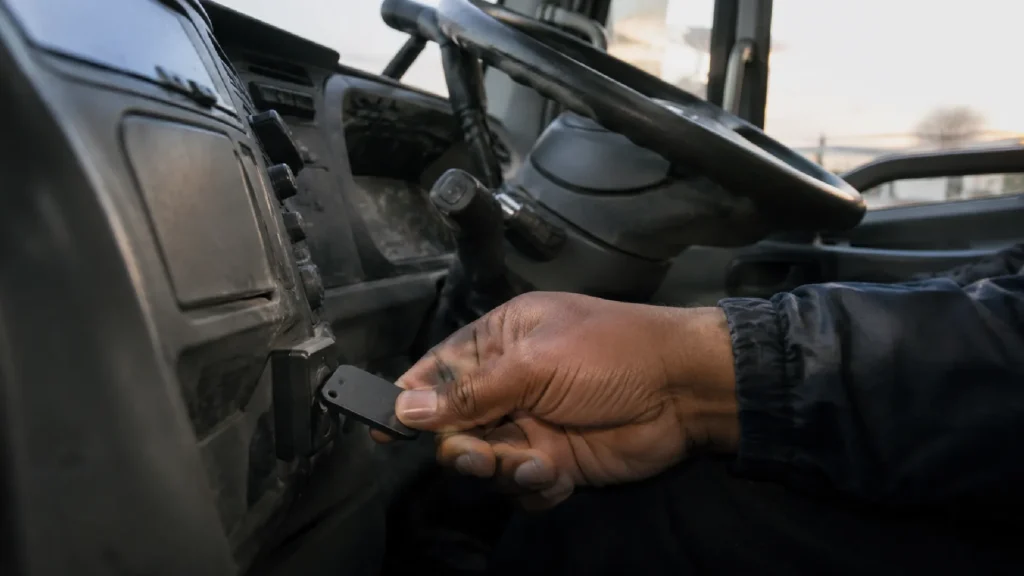
Driver identification systems stopped being a nice-to-have on 1 July 2026, when AARTO Phase 2 came into force across 62 South African municipalities.
The change is administrative rather than dramatic. Traffic infringements in those municipalities now move through the Road Traffic Infringement Agency instead of the criminal courts. Notices go to the registered owner of the vehicle — which, for a company fleet, means the company.
Therefore somebody in your business has to answer a question that used to sort itself out: who was driving?
Most fleets cannot answer it quickly. Keys move between drivers, a vehicle gets reassigned mid-shift, and the trip sheet says one thing while the depot remembers another. Meanwhile the clock on the notice keeps running.
Direct Answer: What Is a Driver Identification System?
A driver identification system links every trip to a named driver, usually through a tag or card the driver presents before the vehicle starts. For South African fleets under AARTO, that record turns an infringement notice addressed to the company into a nomination the company can actually substantiate.
The distinction matters. Vehicle tracking tells you where a vehicle went and how somebody drove it. Driver identification tells you whose hands were on the wheel while it happened. In practice, a fleet needs both records before a nomination holds up.
DigitFMS builds driver identification into its vehicle tracking for fleet management platform, pairing tag-based driver ID with route playback so a nomination carries evidence rather than an assumption.
Why AARTO Puts the Notice on the Company, Not the Driver
AARTO changes the route a traffic fine takes, not the rules of the road.
Under the administrative process, the Road Traffic Infringement Agency issues an infringement notice to the person registered as the vehicle’s owner. Because a company owns its fleet vehicles, every camera-detected offence across that fleet lands on the company’s desk. The operator then has a limited window to nominate the driver who held the wheel at the time.
Miss that window and the infringement stays with the owner. As a result, the business absorbs a penalty earned by somebody who may no longer work there.
Business Day reported in July 2026 that the system now applies in 62 municipalities, with a further 151 due later in the year and the demerit points system scheduled for 2027. Consequently the volume of notices reaching fleet offices climbs well before the points regime arrives. The DigitFMS Fleet Intelligence Desk covered the Phase 2 rollout and the legal challenges around it in more detail.
What Happens Without a Driver Identification System
Without a driver identification system, a fleet answers the nomination question from memory and paperwork.
That works while volumes stay low. Once notices arrive weekly, however, the process breaks in predictable ways.
Where nominations fail
Above all, the failure is rarely dishonesty. It is a record nobody captured in the first place.
- Trip sheets completed at the end of a shift, from memory
- Vehicles reassigned mid-day without a written handover
- Pool vehicles shared across departments
- Relief drivers covering leave and sick days
- Subcontractors driving company-liveried vehicles
- Notices arriving weeks after the offence date
- Drivers who have since left the business
Each of these turns a two-minute administrative task into an investigation. Therefore the real cost is not the fine. It is the hours somebody spends reconstructing a Tuesday afternoon from three months ago.
Find out whether your fleet can nominate
A DigitFMS specialist will check what your current tracking data can prove about who was driving, and where the gaps sit.
Book a Fleet Tracking Assessment →How Does a Driver Identification System Work?
A driver identification system attaches identity to ignition.
The driver presents a tag or card to a reader in the cab before starting. The tracking unit records that identity alongside the trip, so location, speed, harsh braking and idling all attach to a named person rather than to a registration number. Where a driver starts the vehicle without presenting a tag, the system flags the trip as unidentified, and some configurations prevent the vehicle from starting at all.
The Digit D-Card driver identification tag works this way inside the DigitFMS tracking environment. Because the record forms at the moment of the trip rather than afterwards, it survives being questioned months later.
In other words, you are not buying a report. You are buying a record that already exists by the time somebody asks for it.
Which Fleets Need Driver Identification Most?
A driver identification system earns its keep wherever more people drive than there are vehicles.
The operations that gain most include:
- Pool and shared-vehicle fleets running across departments
- Logistics and distribution fleets working shifts
- Construction and plant operations with rotating crews
- Service and maintenance fleets with regional teams
- Rental and short-term hire operators
- Agricultural operations sharing bakkies across sites
- Any fleet relying on relief drivers or subcontractors
By contrast, an owner-driver operation with one vehicle and one licence rarely needs it. Fleet size, therefore, is not the threshold. How often the same vehicle changes hands is.
The South African Compliance Context
AARTO is the immediate pressure, yet the case for knowing who drove predates it.
South African fleet operators already carry duties around who may operate a vehicle and in what condition. Insurers ask who was driving after an incident. Clients writing fleet security tracking requirements into supply contracts increasingly ask the same question before they award the work.
Because the demerit points system remains scheduled rather than live, many operators treat this as a 2027 problem. That reading misses the point. The administrative duties apply now, and the fleets that build the record habit this year will enter the points era with clean, defensible histories.
Decentralisation makes it harder still. A fleet spread across provinces, with vehicles allocated by branch managers who rarely speak to head office, cannot run nomination on trust alone.
Building a Driver Accountability Programme
A driver identification system produces the record. Accountability is what a business does with it.
Once trips carry names, driver behaviour data stops being a fleet average and becomes a conversation with an individual. Consequently coaching gets specific, and the drivers who consistently drive well become as visible as those who do not. If you want that reviewed against your current setup, speak to a DigitFMS fleet specialist before the next round of notices lands.
What a workable nomination process looks like
In short, the process should be boring and repeatable.
- One tag per driver, never shared between people
- A named person who owns nominations and checks for notices weekly
- Trip records retained long enough to cover the notice lag
- Unidentified trips escalated the same day, not at month end
- Subcontractor drivers registered before they collect a vehicle
- A written handover step whenever a vehicle changes driver
- Behaviour reviews run per driver rather than per vehicle
Revisit the process whenever the fleet changes shape. New depots, new shift patterns and new subcontractors all open gaps that a system tuned to last year’s operation will miss.
Conclusion
AARTO did not create the question of who was driving. It simply made the question expensive to leave unanswered.
A driver identification system converts an administrative scramble into a lookup. The record exists before anyone asks for it, which is the only useful time to create one.
Fleet operators who wait for the demerit points system will spend 2027 reconstructing 2026. Those who start now will spend it nominating in minutes.
An infringement notice is addressed to whoever owns the vehicle. Only a record made at the moment of the trip moves it to the person who earned it.
Frequently Asked Questions
Hardware in the vehicle that links each trip to a named person, usually through a tag or card presented before ignition. The tracking unit then stores that identity alongside route, speed and behaviour data for the whole journey.
The infringement notice goes to the registered owner of the vehicle. Where that owner is a company, the business carries the penalty unless it nominates the driver who held the wheel at the time, within the window the notice specifies.
Tracking records where a vehicle went and how somebody drove it. Identification records who that somebody was. Used together, they produce a trip history naming a person rather than a registration number, which is exactly what a nomination needs.
Operations where vehicles change hands often — pool fleets, shift-based logistics, construction crews, rental operators and anyone using relief drivers or subcontractors. Fleet size matters far less than how many different people drive the same vehicle in a month.
Cost follows the number of vehicles fitted and the number of tags issued, rather than the size of the business. Whether identification links to an immobiliser, so an unidentified driver cannot start the vehicle, also moves the figure.
Nothing physically prevents it, which is why policy matters as much as hardware. Issuing one tag per person, treating unidentified trips as exceptions and reviewing them weekly closes the gap that shared tags would otherwise open.