
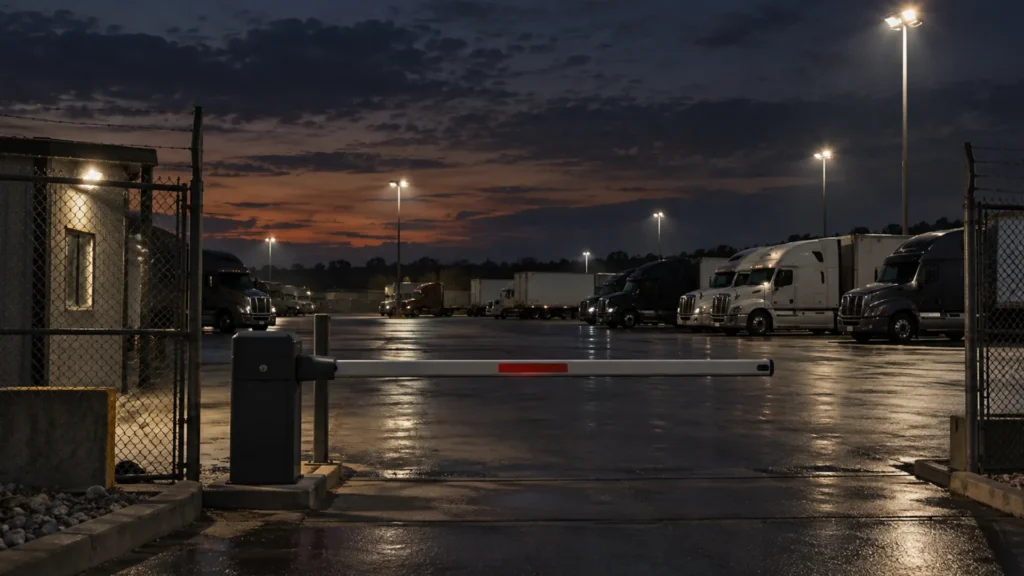
Johannesburg, 21 September 2026 — The truck stop framework 2026 is South Africa’s first attempt to grade where long-haul drivers rest. Transport Minister Barbara Creecy launched the National Truck Stop Framework on Thursday 17 September. She chose the Sasol N17 Truck Stop in Mpumalanga as the venue. Under the framework, each truck stop will receive a grade for security, services and driver wellness.
The research behind it is stark. The SaferStops Association spent two years on the groundwork, according to SA Trucker. It visited 179 sites, classified 137 and surveyed 3,444 drivers. Only 22% of the assessed sites had controlled entry and exit. Meanwhile, on the manganese corridor through Cradock, between 1,100 and 1,700 trucks pass every day. Yet that route offers only about 200 secure parking bays.
Creecy listed what the survey found. Drivers face unsafe roadside parking, poor lighting and security, and inadequate ablutions and showers. In addition, wellness services are limited and standards vary from site to site. “These conditions affect road safety, driver fatigue, freight efficiency, cargo security, the dignity of drivers and ultimately the performance of our logistics system,” she said. SaferStops’ Nicci Scott-Anderson added that the framework “was not drawn up in a boardroom”.
How The Truck Stop Framework 2026 Grades A Site
The framework introduces four tiers. Tier 1 is the baseline, while Tier 4 is the highest standard. However, the Department of Transport is still writing the detailed criteria for each tier. The proposed process starts with self-assessment by the owner. Then comes a site visit, followed by evaluation, classification and regular review. Freight News also reported provisions for digital access management and intelligent transport systems. Likewise, the framework covers clean-energy infrastructure, including EV charging, and facilities for women drivers. Next, a task team of owners, government and industry will settle the governance arrangements.
What The Framework Does Not Yet Say
Three things are still missing. First, the department has not set a date for publishing classifications. Second, nothing announced so far makes the tiers compulsory. Instead, the launch described a collaborative process. Third, there is no funding line for the secure bays the survey shows are lacking. Creecy said the launch “marks the beginning of the next phase”. Provinces, municipalities, transport entities, operators and organised labour will all take part. Until those three gaps close, though, the framework maps the problem rather than fixing it.
Analysis
What The Truck Stop Framework 2026 Means For Fleet Security
For fleet operators, the key number is the 22%. It means fewer than one in four assessed truck stops can control who drives in and out. In other words, most places a loaded truck can stop overnight are open to anyone. That matters because a truck is most exposed when it stands still. SAPS recorded 327 truck hijackings between April and June 2026, or about 3.6 a day. Moreover, the Road Freight Association warns that many incidents go unreported. The RFA’s Vehicle Cost Index also puts security at about 2.3% of vehicle operating costs. A decade ago, the figure was roughly 0.3%. For high-risk loads such as fuel, electronics, spirits and medicines, it now reaches about 4.1%. The Desk’s hijacking statistics coverage tracked that fall in reported cases alongside the rise in spending.
The Desk Calculation: Bays Against Trucks
Here is the arithmetic, with the assumptions shown. First, take the 22%. If it applies to the 137 classified sites, roughly 30 truck stops nationally have controlled access. If instead it applies to all 179 sites visited, the figure is about 40. Next, consider Cradock. There, about 200 secure bays serve 1,100 to 1,700 trucks a day. So secure parking covers only 12% to 18% of the traffic. Of course, not every truck stops on that stretch. Assume, therefore, that half need a rest stop there. Even then, 550 to 850 trucks compete each night for 200 secure bays. As a result, between 350 and 650 trucks on one corridor rest unsecured every night.
Furthermore, demand for secure parking is rising for reasons the framework does not address. Last week, trucks took 38 hours to cross Beitbridge. Similarly, Durban port queues run between four and 22 hours. Consequently, every extra hour a truck stands is an hour it needs somewhere safe to do it.
Truck Stop Framework 2026: The Survey Findings
| Measure | Finding |
|---|---|
| Sites visited / classified | 179 / 137 |
| Driver surveys | 3,444 over two years |
| Controlled entry and exit | Only 22% of assessed sites |
| Cradock manganese corridor | 1,100–1,700 trucks a day, but only ~200 secure bays |
| Classification | Tier 1 (baseline) to Tier 4 (highest) |
| Criteria, timeline, funding | Still to be set by a task team |
The Numbers Behind The Truck Stop Framework 2026
Fleet Impact
The Fleet Playbook Until The Tiers Are Published
A classification system helps only once operators can see it. Until the first tiers appear, fleets have to judge for themselves where drivers stop. That starts with knowing where they actually stop today, rather than where the route plan says they should. It also involves driver behaviour. After all, a tired driver who pushes on to avoid an unsafe stop is a crash risk of a different kind. Creecy made the same point, calling rest periods a normal and essential part of professional freight operations. Earlier this month, a contributor to this Desk made that argument from the cab.
On the security side, stolen vehicle recovery with a rapid-response network matters most at an ungated stop. On the fatigue side, meanwhile, mobile video with ADAS shows what happened in the cab before an incident.
- First, map where your drivers really overnight. Pull the last 90 days of stop locations and compare them with the few gated sites on each corridor. Most fleets will find that drivers already use unsecured roadside parking several nights a week.
- Second, build an approved-stop list for each corridor now. Cradock alone carries up to 1,700 trucks a day against about 200 secure bays. So pre-arrange bays wherever the operator allows it.
- Third, treat the rest period as part of the security plan. High-risk loads already cost about 4.1% of operating costs to protect. Therefore, an unsecured overnight stop undoes spending the fleet has already made.
- Finally, raise the truck stop framework 2026 at every customer review. Shippers carry the cargo risk too, so a documented rest-stop policy also gives them a reason to keep the contract.
Fleet Technology
Fleet Technology For The Hours A Truck Stands Still
Most fleet risk management focuses on the moving truck. Yet the framework shows that a stationary truck carries as much risk. DigitFMS tracking records every stop, its location and its duration. As a result, a manager can see which drivers rest at gated sites and which park on the verge. Geofenced alerts also flag a loaded truck that stops outside the approved list. If the worst happens, the recovery team then works from a live position rather than a last-known one. Mobile video with ADAS, meanwhile, keeps a record of driver behaviour and road events for insurers and investigators. Cartrack, Netstar, Tracker, Ctrack and MiX by Powerfleet compete for the same fleets. DigitFMS answers with more than 100 franchise branches. So a recovery and installation team is within reach of most long-haul corridors.
Key Numbers: Truck Stop Framework 2026 At A Glance
Key Numbers · Truck Stop Framework 2026
Launch: Minister Barbara Creecy, Sasol N17 Truck Stop, Mpumalanga, Thursday 17 September 2026
SaferStops (two years): 179 sites visited, 137 classified, 3,444 driver surveys; only 22% with controlled entry and exit
Cradock manganese corridor: 1,100–1,700 trucks a day, while secure bays number only ~200
Framework: Tier 1 to Tier 4; criteria, governance, timeline and funding still to be set by a task team
Context: SAPS Q1 2026/27 truck hijackings 327 (≈3.6 a day); RFA security cost ~2.3% of operating cost, up from ~0.3%, and ~4.1% for high-risk loads
Desk calculation: ≈30–40 controlled-access sites nationally; Cradock bays cover 12–18% of traffic; at half the trucks stopping, 350–650 rest unsecured nightly
Source: Department of Transport launch statement via SAnews, 18 September 2026; SaferStops figures as reported by SA Trucker; Freight News, 18 September 2026; SAPS and RFA figures as reported by Freight News, 1 September 2026.
Questions Answered
Frequently Asked Questions: Truck Stop Framework 2026
What Is The National Truck Stop Framework?
It is a Department of Transport roadmap for planning, classifying, investing in and standardising truck stops. Minister Barbara Creecy launched it on 17 September at the Sasol N17 Truck Stop in Mpumalanga. Under it, each site will receive a grade for security, services and driver wellness.
How Many Truck Stops Were Assessed?
The SaferStops Association visited 179 sites over two years and classified 137 of them. It also surveyed 3,444 drivers. However, only 22% of the assessed sites had controlled entry and exit, which is the basic requirement for a secure park.
What Are The Four Tiers?
The framework runs from Tier 1, the baseline, to Tier 4, the highest standard. The detailed criteria are still under development, though. Next, a task team of owners, government and industry will finalise them along with the governance arrangements.
Is The Truck Stop Framework 2026 Mandatory?
Nothing announced so far makes it compulsory. Instead, the launch described a collaborative process of self-assessment, site visits, classification and review. The department also has not yet published a timeline or funding for new secure bays.
Why Does Truck Stop Security Matter To Fleets?
A loaded truck is most exposed when it stands still. SAPS recorded 327 truck hijackings between April and June 2026. Meanwhile, the RFA says security now accounts for about 2.3% of operating costs, or about 4.1% for high-risk loads. So where a driver rests is part of the cargo-security plan.
What Should Operators Do Before The Tiers Are Published?
First, map where drivers actually overnight using tracking data. Then build approved-stop lists for each corridor. Finally, pre-arrange secure bays where possible and write the rest-stop policy into customer contracts, since shippers share the cargo risk.
Facts checked 21 September 2026. Source: SAnews, SA Trucker, Freight News and IOL. Related: standing time at the Durban Gateway Terminal and the 38-hour Beitbridge queue.
© 2026 DigitFMS. All rights reserved.