
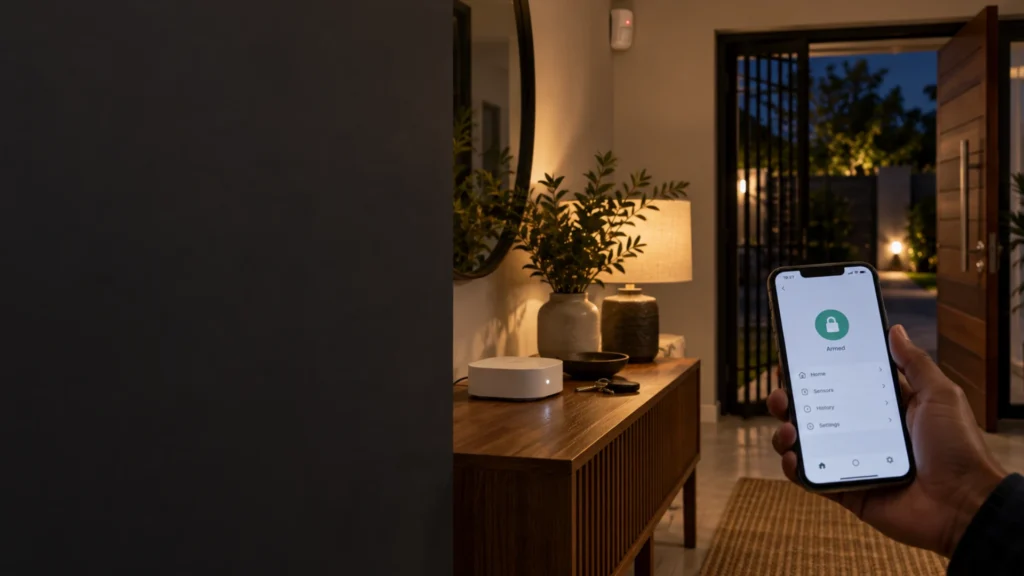
An Ajax wireless alarm system replaces cabled detectors with radio devices that report to one hub, your phone and a control room. As a result, it suits South African sites where wiring is difficult, power is unreliable and every false alarm costs money.
Aleksandr Konotopskyi founded Ajax Systems in 2011, and the company now sells its equipment worldwide. In South Africa, DigitFMS is an authorised Ajax partner that installs, configures and monitors the system locally.
This guide explains what the system is, how it works, how it copes with load shedding and jamming, and what installation involves.
Direct Answer: What Is an Ajax Alarm System?
An Ajax alarm system is a professional wireless security system built around a hub that links up to 100 detectors, sirens and keypads over two-way radio. It sends alarms to your phone and a monitoring centre, verifies them with photos, and keeps running on battery during power cuts. DigitFMS installs and monitors it across South Africa.
What Is an Ajax Alarm System?
An Ajax alarm system is a set of wireless security devices managed from one app. The hub sits at the centre, and detectors, sirens and keypads connect to it by radio instead of cable.
Because the system needs no wiring, it goes into finished buildings without chasing walls. Moreover, it can grow: Ajax says Hub 2 supports up to 100 devices and 50 users, so you can add more detectors as a site changes.
How Does an Ajax Wireless Alarm System Work?
First, a detector senses movement, an opening door or a tamper attempt. Next, it sends the alarm to the hub over the Jeweller radio protocol. The hub then alerts your phone and the monitoring centre at the same time.
Communication runs both ways. According to Ajax, devices exchange data with the hub as often as every 12 seconds, and the hub detects a lost connection in 36 seconds. Therefore, the system reports any detector that goes missing.
Hub 2 also reports through three channels: Ethernet and two SIM cards. Consequently, an alarm still gets out if one network fails.
The Main Devices in an Ajax Wireless Alarm System
- Hub 2: the control unit, with a radio range of up to 2,000 m in open space
- MotionCam: a motion detector that photographs the scene when it triggers
- DoorProtect: an opening sensor for doors, windows and skylights
- Sirens: indoor and outdoor units that sound on alarm
- MultiTransmitter: a module that brings existing wired detectors onto the hub
Does an Ajax Alarm System Work During Load Shedding?
Yes. Ajax states that Hub 2 runs for up to 16 hours on its backup battery, or up to 15 hours on the 4G model. In addition, each detector has its own battery, so the sensors do not depend on mains power at all.
Battery life is long. MotionCam batteries last up to 4 years and DoorProtect batteries up to 7 years, and the app warns you before a battery runs low. For a wider comparison, see wired vs wireless alarm systems in South Africa.
Can an Ajax Alarm Be Jammed?
Criminals in South Africa do carry jammers, so the question is fair. However, an Ajax wireless alarm system notices interference by design. When it loses data packets, the system moves to another frequency within its band.
Furthermore, it reports the jamming attempt to the monitoring company and to users. In other words, an attempt to silence the alarm becomes an alert in its own right.
Considering an Ajax alarm for your property?
A DigitFMS specialist will assess your site and entry points, then recommend the right devices. There is no obligation.
Request an Ajax Alarm Quote →Why Photo Verification Matters
An unverified alarm tells you that something happened, but not what. MotionCam closes that gap, because it takes photos when it triggers and sends them with the alarm. Ajax says the first picture arrives in about 9 seconds.
The design protects privacy too. The standard MotionCam takes photos only in the event of an alarm, and the system encrypts the pictures in transit. As a result, operators see the incident, not your daily life.
Verified alarms also change the response. With a picture in hand, the DigitFMS control room can escalate a real intrusion immediately and stand down a false one.
Ajax Alarm System Installation in South Africa
Installation is quick compared with a wired system, because there is no cabling to run. Nevertheless, placement still decides performance, so a professional survey comes first.
- Assess: the installer sizes the system to the property and its entry points
- Install: technicians mount the devices and pair them to the hub
- Set up: the installer adds users to the Ajax app and connects monitoring if required
Installing alarms for reward is a security service in South Africa. Therefore, ask any installer for proof of PSIRA registration before work starts. DigitFMS installs through its branch network; see wireless alarm systems for the full solution.
What Does an Ajax Alarm System Cost?
The cost depends on the size of the property, the number of entry points and whether you add 24/7 monitoring. For that reason, DigitFMS quotes on request after assessing the site, and does not publish prices.
Who Is an Ajax Wireless Alarm System For?
The system suits homes, offices, shops, warehouses and fleet yards. It is especially useful where cabling is impractical, where a site may expand, or where one app must manage several premises.
Conclusion
An Ajax wireless alarm system gives South African properties detection, photo verification and backup power without cabling. It keeps reporting during power cuts, notices jamming and shows operators what triggered the alarm.
However, the hardware is only half of the result. Placement, setup and monitoring decide whether an alarm leads to a response, so the installer matters as much as the brand.
DigitFMS installs and monitors Ajax systems as an authorised partner. To find out what your property needs, request a site assessment.
Frequently Asked Questions
An Ajax alarm system is a professional wireless security system. A central hub links detectors, sirens and keypads over two-way radio, then reports alarms to your phone and to a monitoring centre.
Yes. According to Ajax, Hub 2 runs for up to 16 hours on its backup battery, or up to 15 hours on the 4G model, and the detectors run on their own batteries for years. In addition, the hub can report over Ethernet and two SIM cards.
Criminals do use jammers. However, Ajax devices exchange data with the hub regularly, move to another frequency when they lose packets, and report the jamming attempt to the monitoring company and users.
Ajax states a battery life of up to 4 years for the MotionCam detector and up to 7 years for the DoorProtect door sensor. Furthermore, the app warns you well before a battery runs low.
DigitFMS is an authorised Ajax partner and installs, configures and monitors the system through its branch network. Installing alarms for reward is a security service, so ask any installer for proof of PSIRA registration.
The cost depends on the size of the property, the number of entry points and whether you add monitoring. DigitFMS therefore quotes on request after assessing the site, and does not publish prices.