
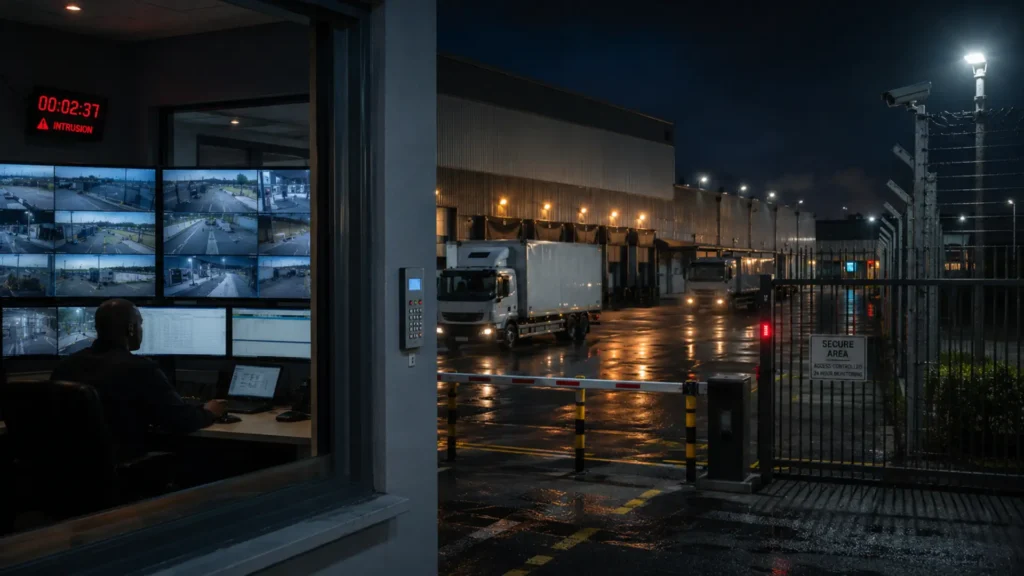
Active Intrusion Defence is becoming increasingly important as businesses look beyond traditional alarm systems and CCTV cameras to protect facilities, assets and operations. Across South Africa, organisations continue to invest heavily in security technology. However, many businesses remain vulnerable during the most critical period of an intrusion.
The reality is that security incidents rarely result in major losses because a criminal entered a facility. Instead, losses often occur because intruders are able to remain inside a facility long enough to carry out their objectives before security intervention takes place.
Consequently, organisations are increasingly evaluating whether traditional security approaches provide sufficient protection during an active intrusion. While cameras, alarms and response services remain essential components of a security strategy, they often operate as passive systems that detect and report incidents rather than actively disrupting them.
Furthermore, modern security planning increasingly focuses on reducing the amount of time intruders can operate inside a facility. Therefore, understanding the limitations of passive security is essential for businesses seeking to improve resilience and reduce loss exposure.
Direct Answer: Why Passive Security Fails During an Intrusion
Passive security systems such as alarms, CCTV cameras and perimeter detection technologies are designed primarily to detect, record and report security events. While these technologies are valuable, they generally do not stop an intrusion once it has begun.
Active intrusion defence focuses on reducing the amount of time intruders can operate within a facility by disrupting activity, restricting visibility and creating an environment that becomes difficult to navigate. Consequently, businesses can reduce the opportunity for theft, damage and operational disruption.
DigitFMS helps businesses strengthen security through integrated technologies that include CCTV, access control, remote monitoring, intrusion response solutions and active facility protection systems.
How Active Intrusion Defence Addresses the First Five Minutes
The first few minutes of an intrusion are often the most important. During this period, intruders attempt to gain access, locate assets, identify targets and carry out their objectives before intervention occurs.
Additionally, this window frequently determines the scale of losses a business may experience. The longer intruders remain active inside a facility, the greater the potential for theft, vandalism, inventory loss and operational disruption.
A typical intrusion timeline may look something like this:
- Perimeter breach occurs
- Alarm activates
- Monitoring centre receives alert
- Verification process begins
- Response team dispatched
- Travel time to facility
- Security intervention occurs
Meanwhile, the intrusion itself is already underway. Consequently, criminals may have several minutes of unrestricted access before any physical response reaches the site.
Furthermore, businesses often underestimate how much activity can occur during a relatively short period of time. In many cases, significant losses can occur well before security personnel arrive.
The Security Gap Active Intrusion Defence Helps Close
Many organisations invest in perimeter protection, alarm systems and armed response. These technologies and services remain important. However, there is often a critical gap between detection and intervention.
For example, an alarm system may immediately detect an intrusion. Likewise, CCTV cameras may provide visual confirmation of activity. However, neither technology physically interrupts the intrusion itself.
As a result, businesses can find themselves in a situation where they know an incident is occurring but have limited ability to influence what happens before responders arrive.
This period is commonly referred to as the intrusion window. Furthermore, it represents one of the most significant vulnerabilities in many security strategies.
Why Detection Alone Is Not Enough
Security detection technologies have improved dramatically over the past decade. Modern facilities can detect movement, identify perimeter breaches and generate alerts almost instantly.
However, detection does not automatically translate into prevention.
Additionally, once an intrusion has been detected, businesses still face several challenges:
- Verifying the event
- Determining the level of risk
- Dispatching a response team
- Managing communication
- Coordinating intervention
- Protecting assets during the response window
Consequently, even the most advanced alarm system may not prevent losses if intruders have sufficient time to complete their objectives.
Therefore, businesses should consider not only how quickly they can detect an intrusion but also how effectively they can influence the outcome while a response is in progress.
The Limitations of Alarm Systems During an Intrusion
Alarm systems remain one of the most widely deployed security technologies in South Africa. Additionally, they serve as an important first layer of defence by detecting unauthorised entry and notifying monitoring centres or security personnel.
However, alarm systems are fundamentally designed to communicate that an event has occurred. They do not physically prevent intruders from continuing their activities once access has been gained.
Consequently, alarm systems are often most effective when combined with additional security measures that address the period between detection and intervention.
Furthermore, businesses should consider how much time typically passes between alarm activation and physical response. In many cases, this window may be significantly longer than expected.
The Role and Limitations of CCTV
CCTV provides valuable visibility into what is happening across a facility. Modern camera systems offer high-definition video, remote access, intelligent analytics and incident recording capabilities.
Additionally, CCTV plays an important role in investigations, evidence collection and operational monitoring.
However, cameras primarily observe and record events. While they can confirm that an intrusion is taking place, they generally do not prevent intruders from continuing their activities.
As a result, CCTV often becomes most valuable after an incident has occurred. Footage can support investigations, insurance claims and security reviews. Meanwhile, the intrusion itself may have already caused significant losses.
Therefore, businesses should view CCTV as a critical visibility tool rather than a standalone intrusion prevention solution.
Why Security Response Times Matter
Armed response and security response services play an important role in commercial security strategies. Furthermore, professional response teams provide a critical layer of protection for facilities and personnel.
However, even the fastest response service faces unavoidable limitations.
Response teams must:
- Receive the alert
- Assess the information available
- Dispatch resources
- Travel to the location
- Secure the area
- Conduct intervention procedures
Consequently, physical response cannot occur instantly. Even when response times are excellent, businesses remain exposed during the period before responders arrive.
Furthermore, facilities located in industrial areas, remote locations or large logistics environments may experience longer intervention windows due to travel distances and site complexity.
The Cost of Intrusion Time
One of the most overlooked security metrics is intrusion time. Simply put, intrusion time refers to the period during which criminals can operate inside a facility before intervention occurs.
Additionally, every minute that passes may increase the scale of potential losses.
During an active intrusion, criminals may:
- Locate valuable assets
- Remove inventory
- Damage infrastructure
- Access sensitive areas
- Disable equipment
- Gather information
- Target fuel, vehicles or stock
Consequently, reducing intrusion time can significantly reduce the opportunity for loss.
Furthermore, businesses that focus only on detection may overlook opportunities to actively influence the outcome of an incident while it is still unfolding.
The South African Business Risk Environment
South African businesses operate within a complex security landscape. Theft, vandalism, break-ins, organised criminal activity and opportunistic crime continue to affect commercial facilities across multiple sectors.
Warehouses, logistics facilities, transport depots, manufacturing plants, fuel storage sites and distribution centres often face elevated risk due to the value of assets stored on site.
According to the South African Police Service, property-related crime remains an ongoing concern for businesses throughout the country.
Consequently, organisations are increasingly seeking ways to strengthen security beyond traditional alarm and surveillance systems.
Furthermore, business continuity planning now extends beyond incident reporting and response. Many organisations are evaluating how to minimise losses while incidents are actively taking place.
How Active Intrusion Defence Changes the Equation
Active intrusion defence takes a different approach to facility protection. Rather than focusing solely on detection and reporting, it introduces measures designed to disrupt criminal activity while an intrusion is in progress.
Additionally, active defence strategies seek to reduce the effectiveness of an intrusion by limiting visibility, restricting movement and creating conditions that make it difficult for intruders to achieve their objectives.
Consequently, the focus shifts from merely observing an incident to actively influencing its outcome.
Furthermore, active intrusion defence works best when integrated with existing technologies such as:
- CCTV systems
- Access control platforms
- Remote monitoring services
- Alarm systems
- Perimeter detection technologies
- Security response services
As a result, businesses can create a layered security strategy that combines detection, visibility, intervention and response.
From Detection to Active Intrusion Defence
Traditional security strategies are often built around detection and response. However, modern security planning increasingly includes disruption as an additional layer of protection.
Detection identifies the threat. Response addresses the threat. Disruption, meanwhile, helps reduce the intruder’s ability to continue operating while response resources are mobilised.
Therefore, businesses seeking to strengthen security outcomes should evaluate how intrusion time can be reduced and how active defence measures can complement existing technologies.
Where Active Intrusion Defence Delivers the Greatest Value
While every business can benefit from stronger security, certain environments are particularly vulnerable to losses during an active intrusion. Additionally, these facilities often contain high-value assets that can be targeted within a matter of minutes.
Active intrusion defence is particularly valuable for:
- Warehouses and distribution centres
- Fleet depots and transport yards
- Fuel storage facilities
- Manufacturing plants
- Commercial office parks
- Retail storage facilities
- Mining support operations
- Agricultural facilities
- Industrial sites
- Logistics hubs
Furthermore, these facilities often contain inventory, equipment, vehicles, fuel and infrastructure that can be quickly targeted during an intrusion. Consequently, reducing the amount of time intruders can operate freely becomes a critical component of risk management.
The Role of D-Pepper in Active Intrusion Defence
DigitFMS D-Pepper was developed around a simple security principle: intrusion time matters.
While traditional systems focus on detecting and reporting incidents, D-Pepper introduces an active response element designed to disrupt intruders during the critical period between detection and physical intervention.
Additionally, D-Pepper can be integrated into broader security ecosystems that include CCTV, access control, alarm systems and remote monitoring services.
Consequently, businesses can strengthen facility protection by adding a layer that actively contributes to reducing loss exposure during an active intrusion.
Furthermore, D-Pepper aligns with the broader objective of reducing opportunity rather than simply documenting incidents after they occur.
Building a Layered Security Strategy
The most effective security environments are rarely built around a single technology. Instead, they combine multiple layers that work together to reduce risk, improve visibility and strengthen response capabilities.
A modern layered security strategy may include:
- Perimeter protection
- Intrusion detection systems
- CCTV surveillance
- Access control technology
- Remote monitoring services
- Security response teams
- Active intrusion defence solutions
- Incident reporting procedures
- Operational security audits
Furthermore, each layer addresses a different stage of the threat cycle. Detection identifies activity, monitoring verifies events, active defence disrupts intrusions and response teams provide intervention.
As a result, businesses gain significantly greater resilience than they would from relying on any individual security measure.
Questions Every Business Should Ask
Business leaders should regularly review their security posture to determine whether existing systems provide adequate protection during an active intrusion.
Key questions include:
- How quickly can we detect an intrusion?
- How long does physical response typically take?
- What happens between detection and intervention?
- Can intruders continue operating after detection?
- How exposed are our assets during the response window?
- Do we have measures that actively disrupt criminal activity?
- Are we protecting high-value areas adequately?
- Can we reduce intrusion time?
- Is our security strategy proactive or reactive?
- Have we assessed our true loss exposure?
Consequently, answering these questions often reveals vulnerabilities that traditional security assessments may overlook.
Conclusion
Active Intrusion Defence addresses one of the most overlooked weaknesses in traditional security strategies: the time between intrusion detection and physical intervention.
While alarms, CCTV systems and security response services remain essential, they often leave businesses exposed during the critical minutes when intruders are actively operating inside a facility.
Furthermore, the longer criminals remain inside a facility, the greater the opportunity for theft, damage and operational disruption. Consequently, reducing intrusion time should be a priority for businesses seeking to strengthen security outcomes.
By combining detection technologies, monitoring services, security response and active intrusion defence, organisations can build a more resilient and proactive security strategy that focuses not only on identifying threats but also on limiting their ability to cause harm.
Ultimately, effective security is not only about knowing an intrusion is taking place. It is about reducing the opportunity for loss while the incident is still unfolding.
Frequently Asked Questions
Active intrusion defence refers to security measures designed to disrupt, delay or reduce the effectiveness of an intrusion while it is actively taking place rather than simply detecting or recording it.
The first few minutes often determine the scale of losses suffered during an incident. Intruders can locate assets, remove inventory and cause damage before security responders arrive.
Yes. Alarm systems remain a critical component of any security strategy. However, they are most effective when combined with monitoring, response services and additional protective measures.
CCTV is highly effective for visibility, monitoring and investigations. However, cameras primarily record and verify events rather than physically stopping an intrusion.
Warehouses, logistics facilities, transport depots, fuel storage sites, industrial facilities, manufacturing plants and other high-value environments often benefit significantly from active intrusion defence solutions.