
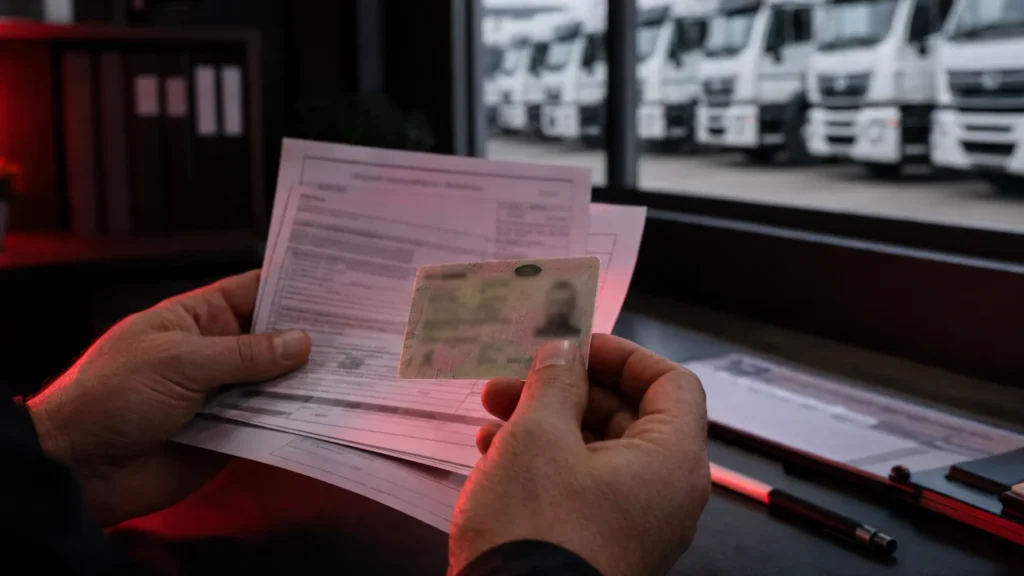
Durban, 21 July 2026 — A government traffic register number crackdown has started a three-month compliance clock for South African fleet operators. SA Trucker has reported a letter from Transport Minister Barbara Creecy. It directs officials to remove existing Traffic Register Numbers from NaTIS within three months. Officially, the goal is to restore the integrity of the vehicle registration and licensing system. However, the practical effect lands on transport companies. Some professional truck drivers hold licences built on TRNs that government may now cancel. Operators who hired those drivers in good faith could soon face gaps in their rosters.
What the Traffic Register Number Crackdown Actually Changes
A Traffic Register Number is a legitimate government identifier. Importantly, official NaTIS documentation confirms its purpose. Authorities issue it to foreign nationals who are lawfully in South Africa but lack a South African identity document. With a TRN, a qualifying person can register a vehicle. Where all legal requirements are met, they can also obtain a South African driving licence.
The problem sits in the abuse of that system. For years, industry concerns have persisted that some people obtained TRNs unlawfully. Those TRNs then allegedly became the foundation for real South African licences. As a result, some individuals may be working as professional truck drivers on documentation that should never have existed. The minister’s letter went to Western Cape Mobility MEC Isaac Sileku. Its directive aims to strip those records out of NaTIS. Measures to prevent future abuse would follow.
A Single-Source Report, Clearly Labelled
At the time of writing, SA Trucker stands alone on the letter, and other outlets have not yet confirmed it. So far, the Department of Transport has not published the directive. Accordingly, fleets should treat the three-month timeline as reported rather than gazetted. That said, the direction of travel matches confirmed government action. Authorities have spent months tightening immigration, identity and licensing enforcement. Moreover, proposals reported in June would fine operators up to R100,000 per undocumented driver.
Why the Crackdown Reaches Fleet Operators
After all, employers had every reason to trust the documents in front of them. A TRN is government-issued. A South African driving licence linked to it looks entirely legitimate, because it is a real licence. Consequently, many transport companies may have unknowingly employed drivers whose underlying records were flawed. If government cancels those TRNs, the linked licences come under scrutiny. In turn, affected drivers could lose the legal right to work behind the wheel.
Worse still, the timing makes this harder. The industry already faces driver shortages, rising costs and heavy operational demands. Furthermore, government has not yet explained its plans for affected individuals. It has detailed no review or appeal process. Until that clarity arrives, operators carry the uncertainty.
The Insurance Exposure Behind the Licence Register
In addition, there is a quieter insurance risk. Motor insurance policies routinely require validly licensed drivers behind the wheel. If a driver’s licence falls away with a cancelled TRN, every trip that follows becomes a claims risk. In practice, an operator could discover the problem only after an incident, when the insurer investigates the driver’s record. That scenario turns an administrative crackdown into a direct balance-sheet threat.
A Fleet Playbook for the Traffic Register Number Crackdown
Audit Every Driver File Now
First, run a full audit of driver documentation. Next, flag every licence linked to a Traffic Register Number. Additionally, confirm that professional driving permits are current and correctly categorised. A three-month window is short, and payroll-critical checks should not wait for a gazette.
Verify Against the Register, Not the Card
A printed licence card proves little on its own. Where possible, verify driver records against official channels and keep dated proof of each check. Similarly, tighten recruitment procedures and verify new hires before they carry their first load. Documented good faith matters if enforcement questions arrive later.
Model the Shortage Before It Happens
To prepare, work out how many routes would stand still if affected drivers left the roster next quarter. Then build the recruitment and training pipeline early. Meanwhile, watch for official confirmation of the directive and any review process for affected drivers. The operators who map their exposure now will absorb the change; the rest will discover it mid-contract.
How DigitFMS Helps Fleets Know Who Is Driving
Ultimately, this crackdown is about one question: who is really operating your vehicles? DigitFMS answers it with driver identification built into the platform. Each vehicle starts only for authorised, verified drivers. The system logs every trip against a named individual. AI dashcams add visual confirmation of the person behind the wheel. GPS tracking, geofencing and route management run alongside on a single dashboard. Competing providers such as Cartrack, Tracker, Netstar, Ctrack and MiX by Powerfleet offer driver ID options as well. However, the value lies in linking identity to every kilometre. A licence audit then matches what happens on the road. When regulators start cancelling records, that certainty protects the operation.
Frequently Asked Questions: Traffic Register Number Crackdown
What is a Traffic Register Number?
A TRN is an identifier for foreign nationals lawfully in South Africa without a South African ID. It allows vehicle registration and, where the person qualifies, a South African driving licence.
What has government reportedly directed?
SA Trucker reports a letter in which Minister Barbara Creecy directs the removal of existing TRNs from NaTIS within three months. Measures to prevent future abuse would follow.
Will affected drivers lose their licences?
Licences linked to unlawful TRNs could come under scrutiny once officials cancel those records. However, government has not yet detailed the process or any review mechanism.
Are employers at fault for hiring these drivers?
Generally, no. A TRN is a legitimate government-issued number, and licences linked to it appear valid. Many operators hired in good faith. Nevertheless, they now carry the operational consequences.
What should fleet operators do first?
Audit driver files immediately, flag TRN-linked licences, verify professional driving permits and tighten recruitment document checks. Keep dated proof of every verification.
Does this affect insurance cover?
Potentially, yes. Policies typically require validly licensed drivers. If a licence falls away and the driver keeps working, insurers could repudiate subsequent claims.
Is this connected to other enforcement measures?
Yes. It forms part of a wider push on immigration, identity and licensing integrity. Reported proposals would also fine operators up to R100,000 per undocumented driver.
Facts checked 21 July 2026. SA Trucker reported the ministerial directive, which remained officially unpublished and unconfirmed by other outlets at the time of writing. TRN background verified against official NaTIS documentation.
© 2026 DigitFMS. All rights reserved.