
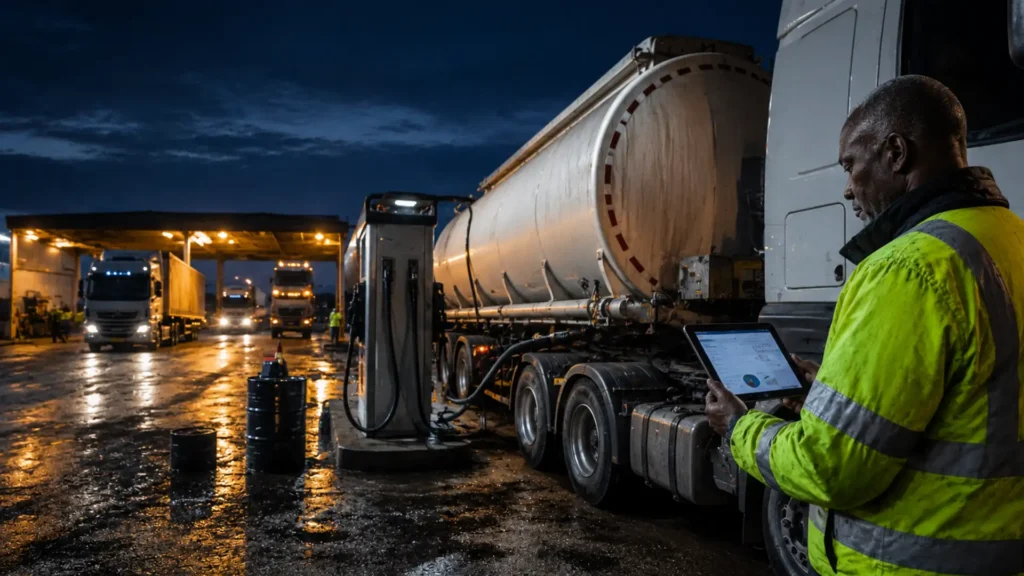
Fuel theft South Africa continues placing major pressure on logistics, freight, construction, mining, and commercial fleet operators during 2026. As a result, businesses are losing significant amounts of money through fuel theft, fuel wastage, poor visibility, and weak operational control.
Direct Answer: How Does Fuel Theft Affect Fleet Risk Management?
Fuel theft affects fleet risk management in South Africa because it is a recurring, hard-to-see loss that distorts cost, route and maintenance data. Fuel monitoring systems measure fuel in the tank and record every refuel and drop, giving operators the evidence to detect theft, hold drivers accountable and support insurance and audit requirements.
Additionally, rising diesel prices are making every litre of fuel increasingly valuable. Consequently, fleet operators now face growing pressure to improve fuel visibility, reduce operational losses, and strengthen daily fleet risk management.
At the same time, transport businesses must continue maintaining delivery schedules and operational performance while managing rising fuel-related risks.
Fuel theft can occur through multiple operational weaknesses including fuel siphoning, fuel card misuse, unauthorised vehicle use, false fuel claims, and depot fuel losses. Therefore, businesses increasingly require live fuel intelligence rather than relying only on manual reporting.
In this article, we explore how fuel theft South Africa risks are affecting fleet operations during 2026, why operational visibility matters more than ever, and how DigitFMS helps businesses improve fleet risk management through intelligent fuel monitoring technology.
Why Fuel Theft Remains a Major Fleet Risk
Fuel remains one of the largest operating expenses for transport and logistics businesses. Therefore, even small fuel losses can create major financial impact across large fleets.
Fleet fuel theft commonly occurs through:
- Fuel siphoning from vehicles
- Fuel card misuse
- Unauthorised refuelling
- After-hours vehicle usage
- False fuel claims
- Poor fuel depot controls
- Manual reporting inaccuracies
- Route deviations and unnecessary mileage
As a result, businesses often experience fuel losses without immediately identifying where the losses are happening.
Furthermore, rising fuel costs make fuel theft South Africa risks even more damaging for transport operators during 2026.
The Operational Impact of Fuel Theft
Fuel theft affects far more than fuel expenditure alone. Instead, ongoing fuel losses can impact operational efficiency, profitability, fleet planning, and long-term business sustainability.
Common operational impacts include:
- Higher monthly fuel costs
- Reduced route profitability
- Delivery inefficiencies
- Operational downtime
- Vehicle misuse
- Lower fleet productivity
- Increased operational risk
- Reduced business margins
Additionally, businesses often struggle to identify operational problems quickly when fuel reporting remains manual or delayed.
In addition, poor fuel visibility often results in slower operational decision-making and weaker fleet accountability.
How Fuel Monitoring Improves Fleet Risk Management
Modern fleet management systems now provide significantly more than basic vehicle tracking. Instead, intelligent telematics help businesses improve fuel visibility, monitor operational behaviour, and reduce fleet fuel risks.
DigitFMS helps businesses improve fuel theft prevention through integrated:
- Live fuel visibility solutions
- GPS tracking
- Fleet management systems
- AI mobile video with ADAS
- Driver behaviour reporting
- Operational alerts and reporting
Likewise, businesses with stronger operational visibility can identify suspicious fuel activity earlier and improve response times.
Fuel Monitoring Technology
Fuel monitoring systems provide live visibility into fuel levels, fuel usage patterns, sudden fuel drops, and unusual operational activity.
- Monitor fuel levels
- Identify abnormal fuel activity
- Detect possible fuel drains
- Improve reporting accuracy
- Reduce operational fuel losses
- Strengthen fleet accountability
Consequently, businesses gain greater control over fleet fuel costs and operational behaviour.
Furthermore, stronger fuel visibility helps businesses improve operational planning and reduce unnecessary daily fleet losses.
GPS Tracking and Operational Visibility
GPS tracking improves visibility over vehicle movement, stop activity, route deviations, and operational behaviour. Therefore, businesses can better identify suspicious operational activity and improve route control.
Driver Behaviour Monitoring
Driver behaviour reporting helps businesses identify excessive idling, route deviations, speeding, and unauthorised vehicle activity that may increase fleet fuel risks.
Meanwhile, improved driver accountability can also reduce unnecessary fuel usage and improve operational efficiency.
AI Mobile Video with ADAS
AI-powered mobile video provides additional operational visibility around driver activity and vehicle events. Furthermore, video intelligence helps fleet managers understand operational incidents more clearly.
Why Live Fleet Visibility Matters More Than Ever
In a high-cost fuel environment, delayed reporting creates operational vulnerability. Therefore, businesses increasingly require live operational intelligence instead of relying only on month-end reporting.
Operational visibility now includes:
- Fuel level monitoring
- Vehicle location visibility
- Route activity tracking
- Driver behaviour reporting
- Fuel alerts and notifications
- AI video visibility
- Operational analytics
As a result, businesses can respond faster to suspicious fuel activity and improve daily fleet control.
Ultimately, businesses that improve operational visibility place themselves in a stronger position to reduce fuel theft South Africa risks during 2026.
How DigitFMS Supports Fuel Theft Prevention
DigitFMS provides integrated fleet intelligence solutions designed specifically for South African operating conditions. Rather than simply tracking vehicles, DigitFMS helps businesses improve fuel visibility, operational awareness, and daily fleet control.
DigitFMS solutions support industries including:
- Transport and logistics
- Mining fleets
- Construction fleets
- Fuel distribution
- Commercial vehicle operations
- Courier fleets
- Specialised vehicles
Additionally, stronger operational intelligence helps businesses reduce fuel-related losses, improve accountability, and strengthen long-term fleet risk management.
For additional South African government information and services, visit the South African Government portal.
Frequently Asked Questions – Fuel Theft South Africa
Fuel theft increases operational costs, reduces profitability, affects route planning, and weakens fleet efficiency across transport operations.
Fuel monitoring systems improve visibility over fuel levels, fuel usage, operational activity, and abnormal fuel events through live operational intelligence.
Fleet risk management refers to improving operational visibility, reducing operational losses, improving driver accountability, and strengthening overall fleet security.
Therefore, businesses investing in live fleet intelligence are better positioned to reduce operational losses and improve long-term fuel control.
In the long term, businesses that improve fuel visibility and operational awareness will be in a stronger position to manage future fuel theft South Africa risks.
Conclusion – Fuel Theft in South Africa and Fleet Risk Management
Fuel theft South Africa continues placing pressure on logistics and transport operators during 2026. Businesses that fail to improve fuel visibility face increasing operational and financial risk.
However, intelligent fleet management technology helps businesses improve operational visibility, strengthen fleet accountability, and reduce fuel-related losses.
DigitFMS helps South African businesses improve fuel visibility through intelligent fuel monitoring, GPS tracking, AI video telematics, and operational fleet intelligence solutions.
Contact DigitFMS today to discover how intelligent fleet visibility can help reduce operational fuel losses across your fleet.