
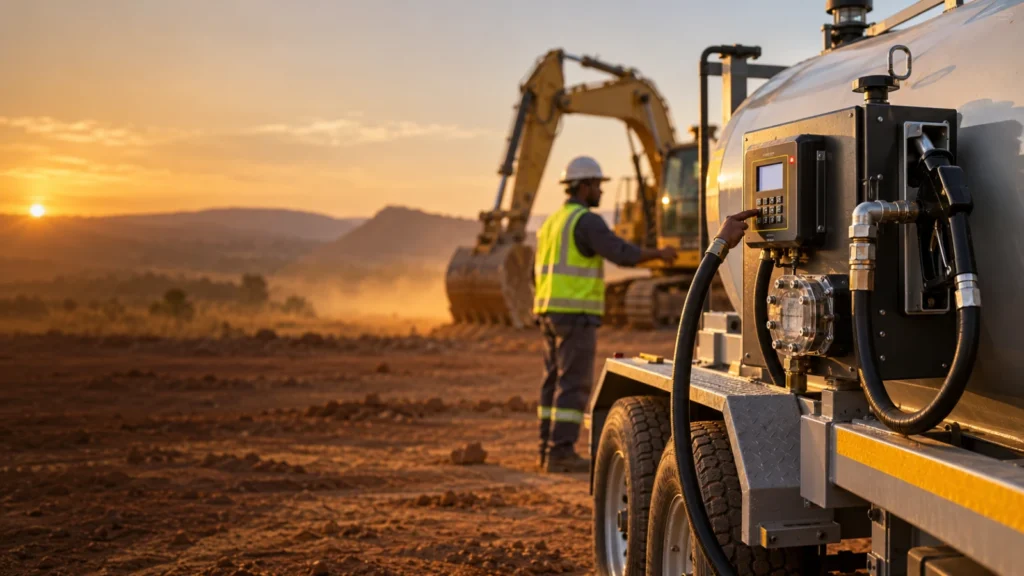
Use this diesel bowser for sale checklist before you buy in South Africa. The bowser itself is only half of the decision. The other half is how you control every litre once it starts moving between your bowser, your machines and your vehicles.
A bowser brings fuel to where the work happens. As a result, it saves trips to the filling station and keeps plant, generators and trucks running on site. However, a bowser that nobody monitors also becomes an easy target for theft and unrecorded refuelling.
This diesel bowser for sale checklist covers the main bowser types, how to choose the right size and what to inspect before you buy. It also explains why it pays to fit fuel monitoring from the day the bowser arrives.
Direct Answer: What Should You Check on a Diesel Bowser for Sale?
Before you buy a diesel bowser, check its type and its size against your daily fuel use. Also check the tank build and bunding, the pump and meter, the security features and the towing setup. Then plan how you will control the fuel. DigitFMS does not sell bowsers, but its branches supply and install Digit D-Bulk fuel monitoring for them.
Control every litre in the tank with Digit D-Bulk
Digit D-Bulk monitors tank levels and every dispense on bulk tanks and diesel bowsers, and alerts on unauthorised use. Fleets see an 18% proven fuel-loss reduction (DigitFMS client data).
Get a Bulk Fuel Quote →Diesel Bowser for Sale: The Main Types to Compare
Bowsers come in a few common formats. Each one suits a different way of working, so start with how and where you refuel.
- Trailer bowsers. These tow behind a bakkie or truck and carry diesel to machines on site. They suit construction, mining, farming and road works.
- Static site bowsers. These stay in one place, such as a yard, depot or farm. Vehicles and equipment come to the bowser to refuel.
- Bakkie-mounted units. These smaller tanks sit in a load bin and suit service teams that refuel a few machines at a time.
In addition, most bowsers share the same core parts. These include a tank, a pump, a hose and nozzle, a meter and a lockable cabinet.
How to Size a Diesel Bowser for Your Operation
Size matters more than most buyers expect. A bowser that is too small means constant refills, while one that is too large ties up cash in stored fuel.
First, work out how much diesel your machines use on a normal day. Next, decide how often you want to refill the bowser. Then add a buffer for busy periods and delays. Finally, check that your tow vehicle can legally pull the bowser when it is full.
A good supplier will help you run these numbers before you commit. That way, the bowser fits the job instead of the job fitting the bowser.
Diesel Bowser for Sale Checklist: What to Inspect Before You Buy
Not every bowser on the market suits South African site conditions. Before you sign, work through this diesel bowser for sale checklist with the seller.
- Tank construction. Ask what material the tank uses and whether it has bunding. A bunded tank has a second wall that contains a leak.
- Pump and meter. Confirm the pump type, its flow rate and whether the meter records each dispense accurately.
- Filtration. A good filter keeps water and dirt out of your engines.
- Security. Look for a lockable cabinet, a lockable fill point and a way to record who draws fuel.
- Towing setup. For a trailer bowser, check the axle, brakes, lights and licensing against the loaded mass.
- Monitoring readiness. Ask whether the pump and outlet leave room to fit a fuel management system later.
Diesel Bowser Rules on the Road
Diesel counts as a dangerous good for road transport. Chapter VIII of the regulations under the National Road Traffic Act covers how dangerous goods travel by road. Loads above the exempt quantities must meet its requirements.
For that reason, ask the seller which rules apply to the size of bowser you plan to tow. Also keep the trailer roadworthy and licensed, because a full bowser puts real strain on the axle, tyres and brakes.
Why You Should Monitor a Diesel Bowser From Day One
A bowser holds one of your biggest running costs in a single, mobile tank. Consequently, small losses add up quickly when nobody can see them.
Common problems include fuel drawn without authorisation, refills that never reach a vehicle and month-end figures that do not balance. Most of these losses go unnoticed because the bowser keeps no reliable record.
That is where Digit D-Bulk comes in. It adds electronic authorisation, so only approved users and vehicles can draw fuel. It also measures each dispense, shows live tank levels and sends theft alerts. In addition, every transaction lands in a verified record that you can reconcile against your fleet data.
When D-Bulk goes on before the first refill, you start with clean records instead of fixing gaps later. To see the full system, explore our diesel bowser management system.
Fitting Fuel Monitoring to a New or Existing Bowser
DigitFMS does not sell bowsers. Instead, your local DigitFMS branch supplies and installs Digit D-Bulk on the bowser you buy, or on one you already own. Typically, the process follows these steps:
- The branch confirms your fuel use, refill plan and site layout.
- Next, it checks that your bowser can take D-Bulk.
- The team then installs D-Bulk on the bowser.
- After that, it sets up your authorised users, vehicles and alerts.
- Finally, it shows your team how to dispense and how to read the reports.
Moreover, the same branch stays your point of contact for support. With more than 100 branches nationwide, help is never far from your site.
Conclusion
Buying a diesel bowser is a practical way to keep fuel close to the work. Still, the real value comes from knowing where every litre goes.
So choose the right type and size, check the build and the towing setup, and plan your monitoring from the start. Once you find the right diesel bowser for sale, your nearest DigitFMS branch can fit D-Bulk so every litre has a record.
Frequently Asked Questions
The price depends on the bowser type, its size, the pump and meter, and any extras. DigitFMS does not sell bowsers, so compare quotes from bowser suppliers. For Digit D-Bulk monitoring, your local DigitFMS branch gives you a written quote.
Start with your daily diesel use and how often you want to refill. Then add a buffer for busy periods. Finally, check what your tow vehicle can legally pull when the bowser is full.
Yes, as long as the trailer is roadworthy and licensed and the load meets the dangerous goods rules. Chapter VIII of the National Road Traffic Regulations applies to loads above the exempt quantities, so check with the seller first.
Digit D-Bulk works with tanks and bowsers. So your local DigitFMS branch can assess your existing bowser and advise whether D-Bulk will fit it.
D-Bulk only lets authorised users and vehicles draw fuel. It also measures each dispense, shows live tank levels and sends alerts when something looks wrong. As a result, every litre has a record.
No. DigitFMS does not sell bowsers. Instead, its branches supply and install Digit D-Bulk fuel management for new and existing bowsers. With more than 100 branches across South Africa, you can find support close to your site.