
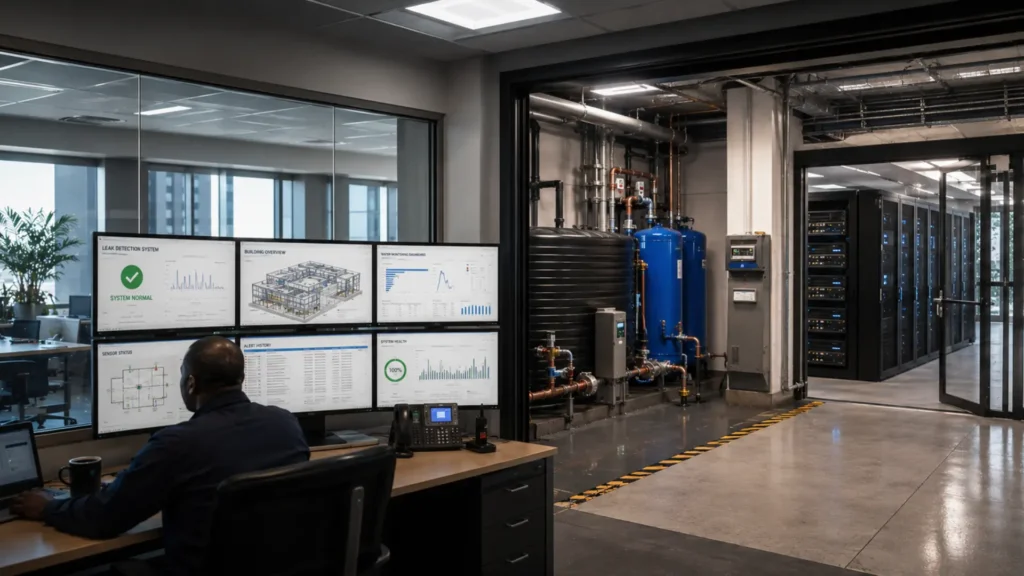
Water Leak Detection has become one of the most important yet overlooked components of modern facility management. While businesses invest heavily in security systems, backup power, fire protection and operational continuity, hidden water leaks continue to cause significant financial losses across commercial properties every year.
Unlike many operational risks, water damage often develops quietly. A leak may begin behind a wall, above a ceiling, beneath a raised floor or inside a plant room long before anyone notices a problem. Consequently, by the time visible signs appear, the damage may already be extensive.
Furthermore, water damage rarely affects only one area. A single leak can impact infrastructure, inventory, electrical systems, equipment, operations and business continuity simultaneously.
Therefore, organisations are increasingly adopting Water Leak Detection solutions to identify problems early and reduce the risk of costly disruptions.
Direct Answer: Why Water Leak Detection Matters
Water Leak Detection helps businesses identify leaks before they become major incidents. By providing early warning alerts, leak detection systems enable organisations to respond quickly, minimise damage and reduce operational disruption.
Consequently, businesses gain greater visibility into building infrastructure and can protect critical assets long before water becomes visible to occupants.
DigitFMS helps organisations improve infrastructure protection through intelligent water leak monitoring solutions designed to support business continuity and operational resilience.
Why Most Water Leaks Go Undetected
One of the biggest challenges with water leaks is that they often occur in areas people rarely inspect.
Additionally, modern commercial buildings contain extensive plumbing, HVAC systems, pumps, valves and water infrastructure spread across multiple floors and locations.
Common hidden leak locations include:
- Ceiling voids
- Plant rooms
- Server rooms
- Air-conditioning systems
- Raised floors
- Water storage areas
- Pipe risers
- Basements
- Pump rooms
- Service ducts
As a result, leaks can continue for hours, days or even weeks before they are discovered.
The Real Cost of Water Damage
Many organisations underestimate the true impact of water damage. The cost extends far beyond repairing the source of the leak.
Furthermore, secondary damage often exceeds the cost of the original plumbing failure.
Potential consequences include:
- Infrastructure damage
- Electrical system failures
- Equipment replacement costs
- Inventory losses
- Server downtime
- Business interruption
- Insurance claims
- Building repairs
- Operational delays
- Reputational damage
Consequently, what initially appears to be a minor leak can quickly become a major operational incident.
What Happens When a Leak Starts After Hours?
Many of the most costly water incidents occur when facilities are unoccupied.
Additionally, leaks that begin overnight, during weekends or on public holidays often continue for extended periods without intervention.
A typical scenario may look like this:
- A pipe develops a fault
- Water begins leaking
- No staff are present
- Water accumulates
- Infrastructure becomes damaged
- Operations are disrupted
- The problem is discovered hours later
Meanwhile, thousands of litres may already have been lost and significant damage may have occurred.
Why Early Detection Changes Everything
The greatest advantage of Water Leak Detection is time.
Just as early fire detection improves outcomes during a fire incident, early leak detection improves outcomes during a water-related event.
Furthermore, early intervention can significantly reduce:
- Repair costs
- Operational disruption
- Downtime
- Equipment damage
- Insurance exposure
- Business interruption
Consequently, organisations can respond proactively rather than reactively.
Facilities Most at Risk
Although any building can experience a leak, certain environments face greater exposure due to the nature of their infrastructure and operations.
- Commercial office buildings
- Warehouses
- Shopping centres
- Schools and universities
- Healthcare facilities
- Data centres
- Hotels and hospitality venues
- Industrial facilities
- Logistics hubs
- Government buildings
The South African Infrastructure Challenge
South African businesses face increasing pressure to protect infrastructure and reduce unnecessary operational costs. Ageing building services, expanding facilities and rising utility expenses have made proactive maintenance more important than ever.
Furthermore, water losses can contribute directly to higher utility costs, increased maintenance requirements and avoidable operational disruption.
Consequently, organisations are increasingly adopting technologies that provide greater visibility into infrastructure performance.
Building a Smarter Water Risk Strategy
Modern facility protection requires more than periodic inspections. Instead, organisations should focus on continuous monitoring and early intervention.
A proactive strategy may include:
- Water Leak Detection
- Remote monitoring
- Critical area protection
- Facilities reporting
- Maintenance planning
- Operational risk assessments
- Infrastructure audits
- Business continuity planning
Additionally, integrating leak detection into broader facility management strategies creates stronger resilience across the organisation.
Conclusion
Water Leak Detection is ultimately about visibility. The earlier a leak is identified, the greater the opportunity to reduce damage, minimise disruption and protect critical infrastructure.
Furthermore, the most expensive leaks are rarely the largest leaks. They are the leaks that continue unnoticed until significant damage has already occurred.
By implementing Water Leak Detection solutions, organisations can move from reactive repairs to proactive protection, improving both operational resilience and business continuity.
Ultimately, the goal is simple: identify the problem before the damage becomes visible.
Frequently Asked Questions
Water Leak Detection uses sensors and monitoring technology to identify leaks early and alert businesses before significant damage occurs.
Sensors are commonly installed in plant rooms, server rooms, ceiling voids, raised floors, pump rooms and other high-risk areas.
Yes. Early detection enables faster intervention, reducing the likelihood of infrastructure damage and operational disruption.
Commercial offices, warehouses, shopping centres, data centres, healthcare facilities, hotels and industrial operations often benefit significantly.
Hidden leaks often continue for extended periods before discovery, increasing water losses, repair costs and infrastructure damage.