
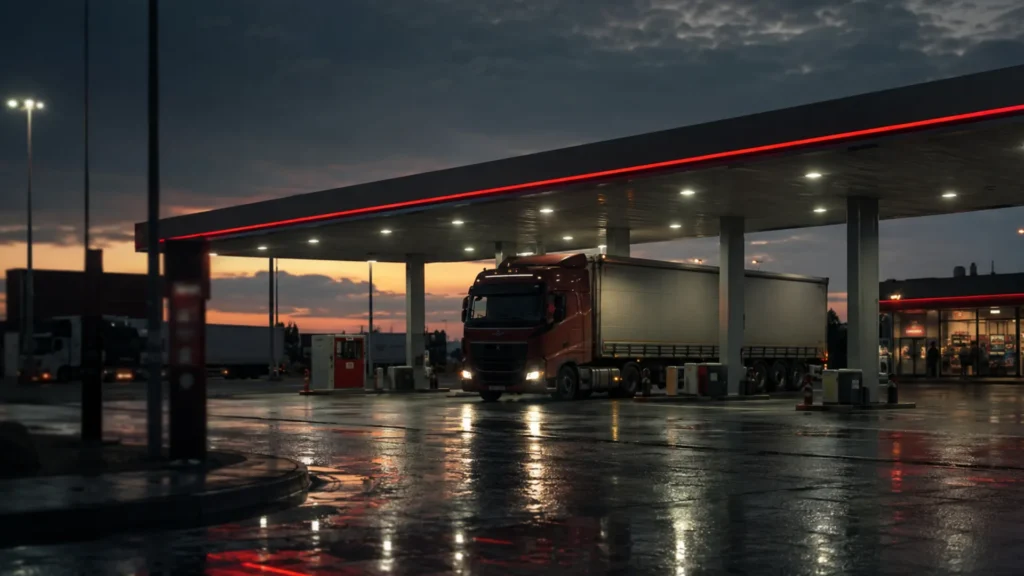
Johannesburg, 11 August 2026 — The Shell South Africa sale is signed. Fleet fuel buyers now have a date to plan against. On 7 July, ADNOC Distribution entered a definitive agreement to acquire 100% of Shell Downstream South Africa. The implied enterprise value sits at about $1 billion, roughly R16 billion. The deal covers about 580 service stations, some 360 convenience stores, and the wholesale fuels, aviation, marine and lubricants businesses. Completion should come in 2027, subject to regulatory approvals. After 124 years, Shell’s South African retail era is ending. The contracts fleets hold with it are not.
The buyer is expanding fast. ADNOC Distribution is the fuel retail arm of Abu Dhabi’s national oil company. Per Reuters, it called the deal its largest overseas acquisition. South Africa becomes its fourth market after the UAE, Saudi Arabia and Egypt. The purchase grows its network by about 55% to roughly 1,600 sites and lifts fuel volumes by about a fifth. Notably, Shell Downstream South Africa sold about 3.5 billion litres in 2025, per figures cited by IOL. That places it among the country’s largest fuel retailers.
The structure answers the local questions early. A 28% stake goes to a local empowerment partner and an employee stock ownership plan after closing, per ADNOC’s statement. The Shell brand stays on forecourts and lubricants under a long-term licensing agreement. Accordingly, the network fleets use keeps its identity. Meanwhile, South Africa’s competition authorities must still approve one of the largest downstream deals the country has seen. That review will scrutinise jobs, pricing and empowerment commitments, and its conditions will shape the business fleets buy fuel from.
The Pattern
Why the Shell South Africa Sale Fits a Decade of Deals
The Shell South Africa sale also fits a pattern, and the pattern matters as much as the deal. Chevron’s South African business went to Glencore in 2018 and became Astron Energy. Engen’s majority shareholding moved to Vivo Energy. Now Shell exits retail. Consequently, three of South Africa’s major fuel networks have changed hands within a decade. Each time, the brand outlasted the owner. For consumers, little changes at the pump. Indeed, the Liquid Fuels Wholesalers Association has previously argued the departure itself has limited market impact. For commercial buyers, however, the negotiable layer sits below the brand, and that layer is exactly what changes with ownership.
The Numbers Behind the Shell Sale
Fleet Impact
What the Shell South Africa Sale Means for Fleet Fuel Buyers
The fleet exposure is contractual, not cosmetic. Petrol stays price-regulated, and diesel wholesale pricing tracks the official structure. However, rebates, fuel card terms, supply agreements and truck-diesel lane investment are commercial decisions. A new owner revisits commercial decisions. Therefore, the audit is straightforward. Inventory which routes and depots depend on Shell commercial supply, and diarise every contract renewal against the 2027 completion window. Fleets running litre-level fuel monitoring hold the consumption data that makes any renegotiation factual. Similarly, vehicle tracking across the fleet shows which corridors actually depend on which fuel networks.
- Inventory which routes, depots and cards depend on Shell commercial supply before the ownership clock runs
- Diarise every fuel contract renewal against the 2027 completion window, and renegotiate from consumption data
- Watch the Competition Commission conditions: pricing, jobs and empowerment terms will bind the new owner
- Treat card and rebate reviews as expected, not exceptional: new owners revisit commercial terms
Fleet Technology
How Fuel Data Wins the Supplier Negotiation
Ownership changes reprice quietly, through card terms and rebate reviews rather than pump boards. The defence is knowing your own numbers first. DigitFMS gives operators litre-level visibility through D-Fuel, its fuel monitoring system. It tracks every fill, drain and burn against tank capacity and route data. As a result, clients have cut fuel theft by up to 95%. Supplier negotiations then start from measured consumption rather than estimates. In addition, GPS tracking, geofencing, AI dashcams and driver identification run alongside on one dashboard. Competing providers such as Cartrack, Tracker, Netstar, Ctrack and MiX by Powerfleet offer fuel modules as well. However, the next two years will bring new commercial owners to old supply relationships. The fleets that know their litres will negotiate. The rest will accept.
Key Numbers · The Deal
Implied enterprise value: about $1 billion (~R16bn), signed 7 July 2026.
Assets: ~580 service stations, ~360 convenience stores, wholesale fuels, aviation, marine and lubricants; ~3.5 billion litres sold in 2025.
Completion: expected 2027, subject to competition approval; 28% to an empowerment partner and ESOP after closing.
Brand: Shell retained under long-term licence for retail and lubricants.
Source: ADNOC Distribution statement, 7 July 2026; Reuters via CNBC Africa; IOL.
Questions Answered
Frequently Asked Questions: The Shell South Africa Sale
Who is buying Shell’s South African business?
ADNOC Distribution, the fuel retail arm of Abu Dhabi’s national oil company. On 7 July it signed a definitive agreement to acquire 100% of Shell Downstream South Africa. The implied enterprise value is about $1 billion, per the company’s statement.
What does the Shell South Africa sale include?
Around 580 company and dealer-owned service stations, roughly 360 convenience stores, and the wholesale fuels, aviation, marine and lubricants businesses. Shell sold about 3.5 billion litres of fuel in 2025, per figures cited by IOL.
Will Shell stations be rebranded?
Not in the near term. ADNOC Distribution will retain the Shell brand for retail stations and lubricants under a long-term licensing agreement. Therefore, the forecourts fleets use keep their look.
When does the deal complete?
The parties expect completion in 2027, subject to approvals including South Africa’s competition authorities. After closing, a 28% stake goes to a local empowerment partner and an employee stock ownership plan.
Does the sale change fuel prices?
Not directly. Petrol prices remain regulated and diesel wholesale pricing continues to track the official structure. However, ownership affects the negotiable layer: rebates, card terms and commercial supply agreements.
Why does ownership matter to fleet fuel buyers?
Because contracts outlive brands. Supply agreements, fuel card programmes and negotiated wholesale terms will sit with a new owner. Its capital plans, network strategy and commercial priorities are still taking shape.
Is this part of a wider pattern?
Yes. Chevron’s South African business went to Glencore and became Astron Energy. Engen’s majority stake moved to Vivo Energy, and now Shell exits retail after 124 years. In total, three major fuel networks have changed hands within a decade.
Facts checked 11 August 2026. Source: the ADNOC Distribution statement, Reuters reporting via CNBC Africa and deal coverage by IOL. Related: the official August fuel prices and what fuel did to Q2 freight margins.
© 2026 DigitFMS. All rights reserved.