
Retail delivery fleet security has never faced a threat like this: improvised explosive devices detonating at the exact time and place where fleet drivers work. On 28 May, an IED exploded at Woolworths Menlyn Park at approximately 1am — while five packers worked inside. Less than 24 hours later, a second device detonated at Woolworths Preller Square in Bloemfontein at 3am. ISS explosives expert Willem Els warned the incidents bear “hallmarks of a possible extortion campaign.” The U.S. Embassy issued a security alert. Preller Square remains closed. Hawks are investigating. Every previous article in this series covered threats on the road — hijacking, blockades, fuel theft, border crime. The Woolworths bombings introduce a fundamentally different category: the threat at the delivery destination. Fleet drivers deliver to shopping centres between midnight and 5am. The IEDs detonated at 1am and 3am. The overlap is exact.
This analysis examines what the Woolworths IED bombings mean for retail delivery fleet security, why the extortion model could spread to other retailers and affect fleet operations nationwide, what the 1-3am delivery window vulnerability reveals about last-mile risk, and the specific actions fleet operators serving the retail supply chain must take immediately.
What Happened: The IED Attacks That Exposed Retail Delivery Fleet Security Gaps
Specifically, two coordinated-style attacks targeted Woolworths stores in two provinces within 24 hours — both during the overnight hours when retail deliveries occur.
Menlyn Park: IED detonates during retail delivery fleet working hours
First, SAPS Captain Johan van Dyk confirmed that the Menlyn store manager received a call about an explosion at approximately 1am on Thursday 28 May. Five packers — merchandise handlers who stock shelves overnight — were inside the store when the device detonated. Importantly, no injuries occurred. Damage concentrated on food items and shelving. Explosives expert Jimmy Roodt assessed the blast as “low-order,” meaning it produced less destructive force than a high-explosive detonation. Nevertheless, Els cautioned bluntly: “A bomb is a bomb. It will always be dangerous even if no one was hurt.” The store has since reopened after SAPS conducted a thorough security sweep.
Preller Square: second device hits retail delivery operations
Second, less than 24 hours later, Hawks spokesperson Fikiswa Matoti confirmed an explosion at the Woolworths Preller Square branch in Bloemfontein at approximately 3am on Friday 29 May. The store manager learned about the blast from a security company call. Moneyweb reports the local SAPS Explosives Unit and Hawks responded to the scene. Crucially, Preller Square remains closed as forensic investigations continue — meaning fleet deliveries to that location have been suspended indefinitely. The Hawks’ Serious Organised Crime unit now leads both investigations.
Woolworths responds with nationwide retail delivery security heightening
Woolworths spokesperson Zimkhitha Ngumeni stated: “Woolworths is a proudly South African brand that stands for integrity and the courage to do the right thing. We are taking every action and doing everything in our power to protect our people and customers.” Consequently, the retailer hired specialist forensic experts, heightened security at all stores nationwide, and confirmed full cooperation with the Hawks. SACCAWU representative Sithembile Tshwete said the union was “shocked” and had not been informed by the employer before media reports emerged.
The Extortion Model: Why Retail Delivery Fleet Security Could Face a Spreading Threat
Fundamentally, the ISS analysis points to a threat model that fleet operators must understand — because its expansion would directly disrupt delivery operations.
What extortion campaigns mean for retail fleet delivery patterns
Els explained that in extortion campaigns, the IED serves as a demonstration of capability — proving to the target that the attackers can reach their premises and cause damage. The initial blasts are typically low-order to minimise casualties while maximising fear. If the target does not comply with demands, subsequent devices escalate in destructive power. For fleet operators, this escalation model means that the Menlyn and Preller Square devices may represent the beginning rather than the end of the threat.
Could the campaign spread beyond Woolworths to other retail fleet destinations?
Historically, South Africa has documented organised extortion in the construction, taxi, and liquor industries. If the Woolworths campaign succeeds — either through payment or through insufficient law enforcement response — the model becomes replicable against other major retailers. Pick n Pay, Checkers, Spar, Game, and Makro all receive overnight fleet deliveries through the same 1-5am window. Furthermore, shopping centre management companies that host multiple retailers face a compound risk: a single IED at a loading bay affects every retailer sharing that facility. Fleet operators serving any major retail chain should treat the Woolworths bombings as a sector-wide warning, not an isolated incident.
The SAPS capacity question for retail delivery fleet protection
Meanwhile, the Hawks’ Serious Organised Crime unit leads the investigation. However, the same Hawks leadership is compromised by the Madlanga Commission suspensions — Gauteng Hawks head Kadwa and KZN Hawks head Senona are both suspended. Acting Commissioner Dimpane deployed a National Forensic Task Team, demonstrating institutional seriousness. Nevertheless, the gap between deploying a task team and actually preventing the next IED remains the critical unknown. Fleet operators cannot rely on SAPS to prevent attacks at delivery points — only to investigate after they occur.
The 1-3am Vulnerability: Why the IED Timing Targets Retail Delivery Fleet Operations Directly
Critically, the detonation window is not coincidental — and it overlaps precisely with fleet delivery schedules.
Overnight deliveries place fleet drivers inside the blast radius
Specifically, major retailers schedule deliveries between midnight and 5am to avoid customer traffic, maximise shelf-stocking time, and reduce loading bay congestion. Fleet drivers arrive, reverse into loading bays, unload cargo, and depart — typically spending 30 to 90 minutes at each delivery point. At Menlyn, five Woolworths packers were already inside the store at 1am. If a fleet delivery vehicle had been at the loading bay — which services the same building — the driver and vehicle would have been within the blast zone. The temporal overlap between IED detonation and fleet delivery activity is exact.
Loading bay access creates a retail delivery fleet security blind spot
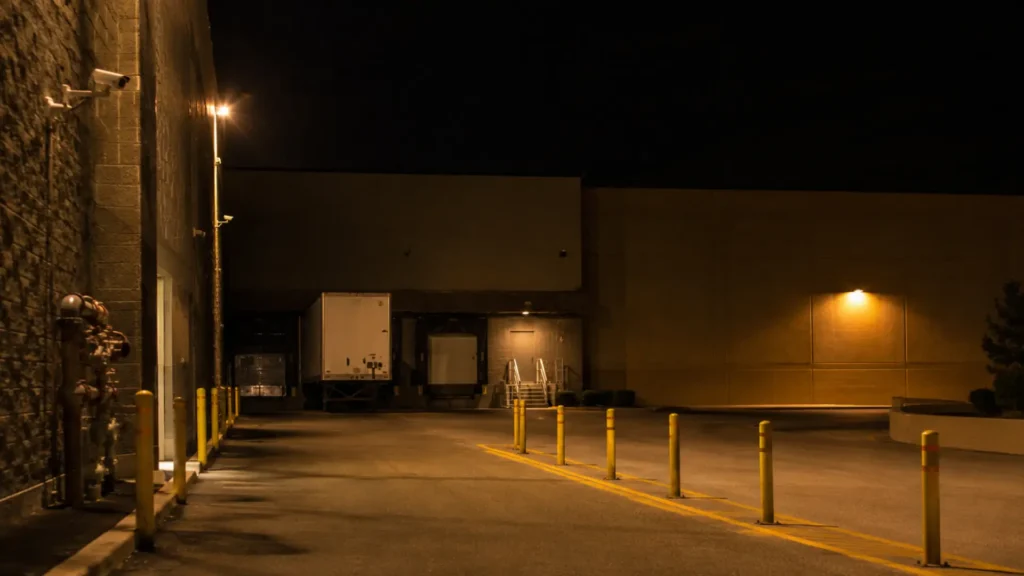
Moreover, shopping centre loading bays are designed for efficiency, not security. They feature wide roller doors, minimal lighting compared to customer entrances, limited CCTV coverage relative to the retail floor, and access routes that are often shared with waste management and maintenance personnel. An attacker can approach a loading bay area with less scrutiny than a main entrance. For fleet operators, this means the part of the shopping centre where their vehicles spend the most time is also the part with the weakest security footprint. The Woolworths IEDs were planted inside stores, but loading bays — where fleet vehicles park unattended for extended periods — represent an equally accessible target.
The U.S. Embassy alert adds an international fleet dimension
The U.S. Embassy’s security advisory specifically named Menlyn Park Shopping Centre. For fleet operators with multinational clients, international cargo contracts, or logistics agreements that reference embassy-level security advisories, this alert creates a contractual trigger. Some international supply chain contracts include clauses requiring fleet operators to avoid locations flagged by embassy-level alerts. Additionally, insurers with international underwriters may reassess risk profiles for delivery operations at locations where foreign embassies have issued warnings.
Six Actions for Fleet Operators Serving Retail: Protecting Delivery Fleet Security at the Last Mile
Clearly, the threat has moved from the road to the delivery point. Fleet security protocols must follow.
Brief every driver on IED awareness at retail delivery points
Add IED awareness to your next fleet driver briefing. Drivers making overnight retail deliveries should know: report any unattended packages, exposed wires, unusual devices, or chemical odours at loading bays immediately. Do not approach, touch, or move suspicious objects. Evacuate the area and contact the control room via panic button. Similarly, if a driver arrives at a delivery point and observes damage, broken glass, or emergency services already present, do not enter — contact the control room for instructions. This is no longer a theoretical risk. Woolworths packers were inside the Menlyn store when the IED detonated.
Ensure dashcams record continuously during retail delivery fleet operations
Confirm AI dashcams upload to the cloud on every vehicle making retail deliveries. If a fleet vehicle is at a loading bay when a device detonates, dashcam footage captures the blast conditions, the vehicle’s position, and the delivery context — evidence that distinguishes a legitimate fleet delivery from a suspicious presence. Equally important, forward-facing dashcam footage of loading bay approaches may capture individuals planting devices or conducting reconnaissance. Cloud upload ensures footage survives even if the vehicle sustains blast damage.
Verify insurance covers blast damage at retail delivery destinations
Contact your broker this week. Ask specifically: “If my delivery vehicle sustains blast damage from an IED at a retail loading bay, does my current policy cover the vehicle repair, cargo loss, driver injury, and business interruption?” Most fleet policies cover accident and hijacking damage. IED damage at a delivery point occupies uncertain territory between civil unrest and terrorism coverage. Do not wait for an incident to discover the gap. Accordingly, request written confirmation of coverage and identify any endorsements required.
Coordinate with retail clients on shared delivery fleet security
Contact every major retail client about delivery point security protocols. Ask what additional measures they have implemented since the Woolworths bombings. Verify whether security sweeps occur before the overnight delivery window opens. Confirm that CCTV covers loading bays — not just the retail floor. Request that any threat intelligence received by the retailer is shared with fleet operators whose drivers and vehicles are present during the affected hours. Retail delivery fleet security requires collaboration between the carrier and the client.
Consider temporary delivery schedule adjustments
Evaluate whether deliveries to affected or high-risk locations can shift to daylight hours temporarily. Delivering at 6am instead of 2am reduces the overlap with the 1-3am IED window. This creates retail-side challenges — stores must manage customer traffic alongside deliveries — but it removes fleet drivers from the highest-risk window until the Hawks investigation determines whether the threat is contained. Not every retail location justifies this adjustment. Woolworths stores and the shopping centres that house them should be prioritised.
Monitor the Hawks investigation for fleet threat updates
Track investigation developments weekly. If the Hawks confirm extortion as the motive, the threat model becomes predictable — escalating devices until demands are met. If arrests follow quickly, the immediate threat diminishes. If the investigation stalls, the risk of copycat attacks against other retailers increases. Each development changes the fleet risk assessment. Fleet managers who monitor the investigation make better routing and scheduling decisions than those who assume the threat is over because the headlines moved on.
Technology That Protects Retail Delivery Fleet Security at the Last Mile
The same integrated fleet platform that protects against road threats serves a critical role at delivery destinations — with specific capabilities that the IED threat makes more urgent.
DigitFMS integrates GPS tracking with geofencing, AI dashcams with cloud upload, wireless driver identification, panic button activation, and route management on a single dashboard. When a vehicle arrives at a geofenced delivery point, the control room confirms arrival and monitors the delivery duration. If the driver activates the panic button — whether from an IED, an armed robbery, or any threat at the delivery point — the control room responds immediately. Cloud-uploaded dashcam footage captures everything the driver sees at the loading bay, providing evidence for investigation, insurance claims, and client communication.
Cartrack, Tracker, Netstar, Ctrack, and MiX by Powerfleet all offer real-time tracking and dashcam systems that function at delivery points, not just on the road. The critical requirement after the Woolworths bombings is that the platform provides panic button capability at static locations (not just during transit), continuous dashcam recording during loading and unloading, and cloud upload that preserves footage even if the vehicle sustains blast damage.
Outlook: The Woolworths Bombings Mark a Turning Point for Retail Delivery Fleet Security
Looking ahead, before 28 May, fleet security focused on what happens between depot and destination — hijacking, fuel theft, route deviation, driver behaviour. After the Woolworths IEDs, fleet security must extend to what happens at the destination itself. A delivery point that was safe yesterday may not be safe tomorrow. A loading bay that a driver has used without incident for years now carries a threat that did not exist two weeks ago.
The Woolworths bombings did not harm any fleet driver or damage any fleet vehicle — this time. However, the detonation window (1-3am), the location type (retail premises), and the escalation model (extortion with increasing device power) all align precisely with overnight fleet delivery operations. If the campaign spreads to other retailers, fleet operators face a new operational landscape where every delivery point requires a security assessment, every overnight schedule carries a temporal risk, and every loading bay approach demands the same situational awareness that drivers currently apply only on the road.
Ultimately, retail delivery fleet security at the last mile is no longer a secondary concern. The Woolworths IEDs proved that the threat can reach the most familiar, routine delivery destination — a Woolworths store in a suburban shopping centre — without warning, without prior intelligence to the fleet operator, and without any defence except the driver’s awareness and the technology recording what happens. Fleet operators who add delivery-point security to their protocols this week will be prepared if the threat expands. Fleet operators who assume “it only happened to Woolworths” will learn otherwise when the next device detonates at the next loading bay, at 2am, while their driver unloads cargo 30 metres away.
Frequently Asked Questions
What happened at the Woolworths stores?
IEDs detonated at Menlyn Park (1am, 28 May) and Preller Square Bloemfontein (3am, 29 May). Five packers were inside Menlyn during the blast. No injuries. Hawks Serious Organised Crime unit investigating. Menlyn reopened; Preller Square remains closed. Woolworths heightened security nationwide and hired specialist forensic experts.
Is this an extortion campaign threatening retail delivery fleet operations?
ISS expert Willem Els says the incidents bear “hallmarks of a possible extortion campaign.” Expert Jimmy Roodt described the Menlyn blast as low-order but cautioned any bomb is dangerous. Hawks have not confirmed a motive. If confirmed as extortion, the model could replicate against other retailers — directly disrupting fleet delivery schedules.
How do the bombings affect retail delivery fleet security?
Fleet drivers deliver at 1-3am — the exact detonation window. Vehicles at loading bays face blast damage risk. Stores that close for investigation disrupt delivery schedules. Preller Square remains closed indefinitely. If the campaign spreads to other retailers, fleet operators face unpredictable closures at multiple delivery destinations simultaneously.
Why did the U.S. Embassy issue an alert?
The Embassy warned citizens to avoid Menlyn Park after the first explosion. This elevates the incident to an internationally flagged security event. Fleet operators with multinational clients or contracts referencing embassy advisories may face contractual triggers. Insurers with international underwriters may reassess delivery-point risk profiles.
Could the extortion spread to other retail fleet delivery points?
SA has documented organised extortion in construction, taxi, and liquor industries. If the Woolworths campaign succeeds or law enforcement response is slow, the model becomes replicable. Pick n Pay, Checkers, Spar, Game, and Makro all receive overnight fleet deliveries through the same window. Fleet operators should treat this as a sector-wide warning.
What time do fleet deliveries to shopping centres occur?
Between midnight and 5am to avoid customer traffic. The Woolworths IEDs detonated at 1am and 3am — squarely within the delivery window. Five packers were already inside Menlyn. Fleet drivers, loaders, and handlers routinely work in stores during these hours. The IED risk directly threatens people and vehicles present during overnight deliveries.
What should fleet operators delivering to retail do now?
Brief drivers on IED awareness at loading bays. Ensure dashcams record continuously during overnight deliveries. Verify insurance covers blast damage at delivery destinations. Coordinate with retail clients on shared security protocols. Consider temporarily shifting deliveries to daylight hours at high-risk locations. Monitor the Hawks investigation for threat updates weekly.
Sources
IOL — “Explosives expert warns of potential extortion behind Woolworths bombings”, 30 May 2026; Willem Els ISS, extortion hallmarks, “a bomb is a bomb” · IOL — SAPS Captain Johan van Dyk, five packers inside Menlyn, 1am detonation · News24 — “Another explosion rocks Woolworths, this time in Bloemfontein”, 29 May 2026; Hawks spokesperson Matoti, 3am detonation, Preller Square closed · The Citizen — “Woolworths rocked by two explosions”, 29 May 2026; Jimmy Roodt low-order blast assessment, nationwide security heightening
EWN — “Woolworths heightens nationwide security following blasts”, 29 May 2026; 1-2am detonation times, SAPS sweeps, Hawks leading · Moneyweb — “Woolies stores rocked by explosions in two separate incidents”, updated 1 June 2026; Hawks probing, investigation continuing · Daily Voice — “Woolies bombs extortion”, 31 May 2026; security response · Cape Argus — “Expert warns bombings could be linked to extortion”, 30 May 2026 · Cape Town Etc — “Woolworths responds after explosive devices detonate”, 30 May 2026; employees shaken, support provided
Woolworths Holdings — Official statement, 29 May 2026; Zimkhitha Ngumeni quotes, forensic experts hired, full cooperation with Hawks · U.S. Embassy Pretoria — Security Alert, 28 May 2026; Menlyn Park Shopping Centre advisory · SACCAWU — Sithembile Tshwete statement, “shocked”, not informed by employer · DigitFMS — SAPS corruption analysis (12 May), Madlanga Commission (14 May), border security technology (1 June)
© 2026 DigitFMS. All rights reserved.