
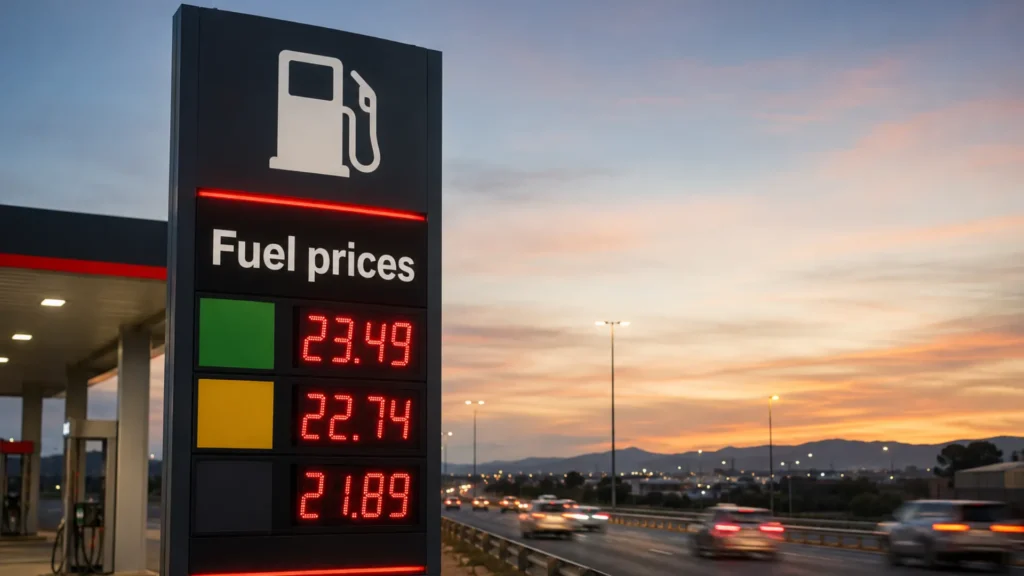
The first-Wednesday fuel price ritual that every South African fleet builds its budget around could be heading for retirement. Parliament has heard a proposal to review petrol and diesel prices every two weeks instead of monthly. Separately, government has set itself a deadline for permanent fuel price reform. BusinessTech reports the proposal was raised in the Portfolio Committee on Mineral and Petroleum Resources. Importantly, nothing is decided: this is a fuel price system overhaul under discussion, not adopted policy. Nevertheless, fleet operators should understand what is on the table. The operational implications reach into budgets, contracts and daily practice.
Specifically, this analysis covers the two-week proposal and its motivation, plus the wider reform deadline behind it. It then works through the practical gains, challenges and preparations for fleet operations.
The Proposal: A Fuel Price System Overhaul Reaches Parliament
The idea itself is simple. Its motivation is the fuel year every operator just lived through.
What the fuel price system overhaul proposal says
MP Fasiha Hassan-Duma put the case to the committee directly. South Africa cannot control international oil markets, she argued, but it can control how often it responds to them. Rather than one large monthly adjustment, prices would be reviewed every two weeks. Her framing was practical. Instead of increasing diesel by R10 or R7 immediately, you review every two weeks and set the price for each fortnight, because crude oil fluctuates so quickly. She acknowledged the change would create challenges. However, she argued a staggered approach manages shocks better and shows a responsive government.
The crisis driving the fuel price system overhaul call
The motivation is fresh in every fuel ledger. After conflict broke out at the end of February, petrol climbed R6.53 per litre between March and May. Diesel surged R13.43 per litre, arriving in a handful of brutal monthly jumps. June brought a R2.62 wholesale diesel cut while petrol rose again as Treasury relief wound down. Then July delivered the first cuts for both fuels, with diesel down R3.59 per litre. Under a two-week cycle, both the pain and the relief would have arrived in smaller, faster steps.
The pressure evidence behind the fuel price system overhaul
The committee discussion did not happen in a vacuum. The Business Partners SME Confidence Index recorded small and medium enterprises shifting focus from expansion to survival. Fuel sat central among the pressures. Additionally, the Fuel Retailers Association warned that price shocks threaten station sustainability. It cited fixed margins, rising working capital needs and declining sales, with some operators weighing shorter trading hours or job cuts. Consequently, the case for smoothing the shock cycle has advocates on both sides of the pump. The businesses buying fuel and the businesses selling it both feel the jolts.
The Bigger Reform Behind the Fuel Price System Overhaul
The two-week idea lands on fertile ground. Government has already committed itself to fuel price reform with a date attached.
Government’s fuel price system overhaul deadline
According to reporting by The South African, government’s 2026/27 Annual Performance Plan revives fuel price reform. It carries a firm deadline inside the current financial year, which ends in March 2027. Transport Minister Barbara Creecy has argued the changes are essential for economic stability. Furthermore, she said retail margins, levies and the pricing frameworks need closer interrogation. A redesigned pricing mechanism, in her view, offers the only sustainable path to shield vulnerable citizens from future fuel shocks. The Middle East conflict that reversed months of stable prices supplied the renewed urgency.
What sits inside the fuel price system overhaul scope
The current structure has many moving parts, and reform could touch any of them. The Basic Fuel Price tracks international product prices, shipping and the rand. On top sit the general fuel levy, the Road Accident Fund levy, and regulated retail and wholesale margins. Then comes the self-adjusting slate levy that recovers the industry’s cumulative under-recoveries. It currently runs at R1.14 per litre against a multibillion-rand slate balance. Notably, adjustment frequency is only one lever among several. Margin reviews, levy restructuring and formula redesign all sit inside the reform conversation government has opened.
What a Fuel Price System Overhaul Means for Fleet Operations
Every fleet in the country runs on the monthly rhythm, often without noticing how deeply it shapes practice. Change the cadence, and much changes with it.
The monthly ritual a fuel price system overhaul would end
Consider what the first Wednesday currently anchors. Fuel budgets reset monthly. Transport rates and customer quotes reference the month’s price. Operators time bulk tank fills ahead of announced increases. Finance teams reconcile fuel spend against a single known price per period. A two-week cycle would double the frequency of every one of those routines. That is not an argument against reform. Rather, it is the honest measure of the retraining involved. A fuel price system overhaul would ask the industry to rebuild deep operational muscle memory.
Contract clauses and the fuel price system overhaul
The sharpest practical issue hides in contracts. Fuel surcharge and escalation clauses across the transport industry are overwhelmingly keyed to the monthly DMPR adjustment. The clause reads the official change and adjusts the rate accordingly. Under a two-week cycle, those clauses would need redrafting. Moreover, the transition period could produce disputes between transporters and clients over which price applies when. Accordingly, operators should audit their fuel clauses now, while this remains a proposal. Knowing exactly how your contracts reference the official price is preparation that costs nothing and protects margins.
The gains fleets could see from a fuel price system overhaul
The upside case is genuine. This year’s R13.43 diesel surge arrived in a few massive monthly steps. Each one hit as a budget shock and a cash flow strain. Spread across two-week intervals, the same increase would have landed in smaller increments, easier to absorb and to pass through. Equally, the relief side improves: July’s R3.59 diesel cut waited for month-end while international prices had already fallen. Under a faster cycle, declines reach fleet fuel bills sooner. For cash flow smoothing alone, many operators would count the change a net win.
The challenges a fuel price system overhaul would bring
Honesty requires the other column. Repricing administration doubles, for fleets and for the retailers the Fuel Retailers Association already describes as strained. Quote validity periods shorten, complicating tender pricing on longer contracts. Forecasting gains noise: twenty-six adjustments a year instead of twelve. Moreover, the slate mechanism and levy structures were built around monthly mechanics and would need reworking. That is precisely the technical detail the proposal has not yet addressed. None of these challenges is fatal. Each is real, and the committee process will need to weigh them seriously.
Preparing now for a fuel price system overhaul
Sensible preparation starts before any decision. First, audit fuel clauses in every transport contract and note which reference the monthly adjustment. Second, make fuel price tracking a standing financial routine rather than a monthly event. Any cadence change then arrives as an adjustment rather than a shock. Third, tighten consumption visibility, because whatever cycle government chooses, the litres a fleet burns remain the variable it controls. Finally, follow the process. The committee discussion, the DMPR response and the Annual Performance Plan deadline all signal where this lands.
Technology and the Fuel Price System Overhaul Question
Notably, whichever pricing cadence wins, one truth survives the debate. The price of fuel is set nationally, but the cost of fuel is set in the fleet yard.
DigitFMS integrates D-Fuel litre-level fuel monitoring, GPS tracking with geofencing, AI dashcams, driver identification and route management. Everything runs on a single dashboard. Litre-level visibility turns any pricing system into manageable data. Consumption reconciles against distance, every fill ties to a vehicle and driver, and anomalies surface immediately. Client data shows up to 95% fuel theft reduction. Consequently, operators with that visibility can model a two-week cycle, a monthly cycle or any reformed formula in minutes. They know their consumption baseline precisely. The fleets that struggle with pricing changes are the ones guessing at their own usage.
Equally, Cartrack, Tracker, Netstar, Ctrack and MiX by Powerfleet provide comparable fleet management platforms across the industry. The reform debate strengthens the case for all of them. Route optimisation cuts the litres exposed to whatever price applies, and driver behaviour monitoring trims consumption waste. Accurate fuel data feeds the surcharge calculations that contracts will demand under any cadence. The ownership changes sweeping fuel retail and the pricing reform now on the table both point the same way. The fuel environment is changing, and data is the fleet’s stable ground.
Outlook: The Fuel Price System Overhaul Is a Process, Not an Event
Where this goes next is procedural. The proposal sits with the committee, and the DMPR response is awaited. Meanwhile, the Annual Performance Plan deadline gives the wider reform a horizon of March 2027. For now, nothing changes at the pump. August’s adjustment will arrive on the first Wednesday as always, calculated the way it has been for decades. Operators should treat the story as a planning signal rather than an operational instruction.
However, the direction of travel deserves respect. Consider what now sits on the table together. A parliamentary proposal, a ministerial reform commitment and a dated performance plan add up to more momentum than this reform has carried in years. The Gulf crisis converted an academic debate into a lived emergency. This year’s R13.43 diesel surge gave every argument a number. Consequently, some form of change to how South Africa prices its fuel now looks more likely than not within the reform window. The two-week cadence specifically may or may not survive scrutiny.
Ultimately, the fuel price system overhaul conversation is one fleet operators should welcome and watch in equal measure. Welcome, because smoother cycles and faster relief serve every fuel buyer. Watch, because contracts, budgets and routines are built on the current rhythm, and transitions reward the prepared. The homework is clear and cheap. Audit the fuel clauses, build the tracking habit, and know your consumption to the litre. The operators who do that will handle whatever cadence emerges. The first Wednesday may keep its ritual or lose it. Either way, the well-run fleet already knows exactly what every litre is doing.
Frequently Asked Questions
What change to fuel prices has been proposed?
A proposal before Parliament’s Portfolio Committee on Mineral and Petroleum Resources suggests a new cadence. The monthly fuel price adjustment would give way to reviews every two weeks. Large increases would phase in gradually, and price declines would reach buyers within two weeks rather than waiting for month-end. The proposal is at discussion stage, with no formal process or date.
Who made the proposal and why?
MP Fasiha Hassan-Duma raised it in committee, as reported by BusinessTech. Her case rests on this year’s shock: petrol up R6.53 and diesel up R13.43 per litre between March and May. South Africa cannot control oil markets, she argued, but can respond faster. A staggered approach manages shocks and cost-of-living pressure better.
Is the two-week fuel price change confirmed?
No. It is a committee proposal, not adopted policy, and the DMPR had not yet responded to media questions about it. However, it lands amid a wider push. Government’s 2026/27 Annual Performance Plan revives fuel price reform with a deadline inside the financial year ending March 2027. Change is on the agenda; its shape is undecided.
How are fuel prices currently set in South Africa?
The DMPR adjusts prices monthly, effective the first Wednesday. The Basic Fuel Price tracks international product prices, shipping and the rand-dollar rate. Domestic elements sit on top. These include the general fuel levy, the Road Accident Fund levy, regulated margins and the self-adjusting slate levy. Petrol retail prices are fixed; diesel is regulated at wholesale level.
How would two-week price changes affect fleet operators?
The monthly rhythm would double in frequency: budgets, rate reviews and pre-increase tank fills would all run fortnightly. Gains include smaller increase steps and faster relief when prices fall. Challenges include doubled repricing administration, shorter quote validity, and fuel surcharge clauses keyed to the monthly adjustment needing redrafting. Strong fuel data makes the adaptation manageable.
What is the government’s fuel price reform deadline?
Reporting on the 2026/27 Annual Performance Plan indicates fuel price reform carries a deadline. It falls inside the current financial year, ending March 2027. Minister Barbara Creecy has said retail margins, levies and pricing frameworks need interrogation. A redesigned mechanism, she argues, is the sustainable shield against future fuel shocks. The final scope remains to be published.
How should businesses prepare for fuel pricing changes?
Three cheap preparations stand out. Audit fuel surcharge clauses to see which reference the monthly adjustment. Make price tracking a standing routine rather than a monthly event. Then tighten consumption visibility, since litres burned remain the controllable variable under any system. Operators who know consumption precisely can model whatever cadence government chooses.
Sources
BusinessTech — “Proposal to change the official petrol price every two weeks in South Africa”, July 2026; Hassan-Duma committee remarks and quotes, two-week review proposal, March-May increase figures of R6.53 petrol and R13.43 diesel, June and July adjustment context, Business Partners SME Confidence Index findings, Fuel Retailers Association warnings, DMPR response pending · The South African — “Monthly fuel price changes could soon be coming to an end in South Africa” and “Minister’s comments hint at permanent fuel-price reform in SA”, July 2026; committee proposal coverage, 2026/27 Annual Performance Plan reform deadline within the financial year ending March 2027, Creecy remarks on margins, levies and pricing frameworks, end of temporary levy relief in June
Department of Mineral and Petroleum Resources — July 2026 fuel price adjustment documentation; monthly adjustment mechanics, Basic Fuel Price components, slate levy of R1.14 per litre and cumulative slate balance context · Fuels Industry Association of South Africa — levy and slate mechanism statements, May-June 2026
DigitFMS — July fuel price confirmed diesel cut fleet savings (2 July), Shell South Africa sale ADNOC fleet (9 July), fuel cost arc coverage (March-July); the fuel price history and retail ownership context. Note: the two-week adjustment is a parliamentary proposal under discussion and not adopted policy; reform scope and timing are as reported from the cited coverage and remain subject to government decision. This is general information, not financial advice.
© 2026 DigitFMS. All rights reserved.