
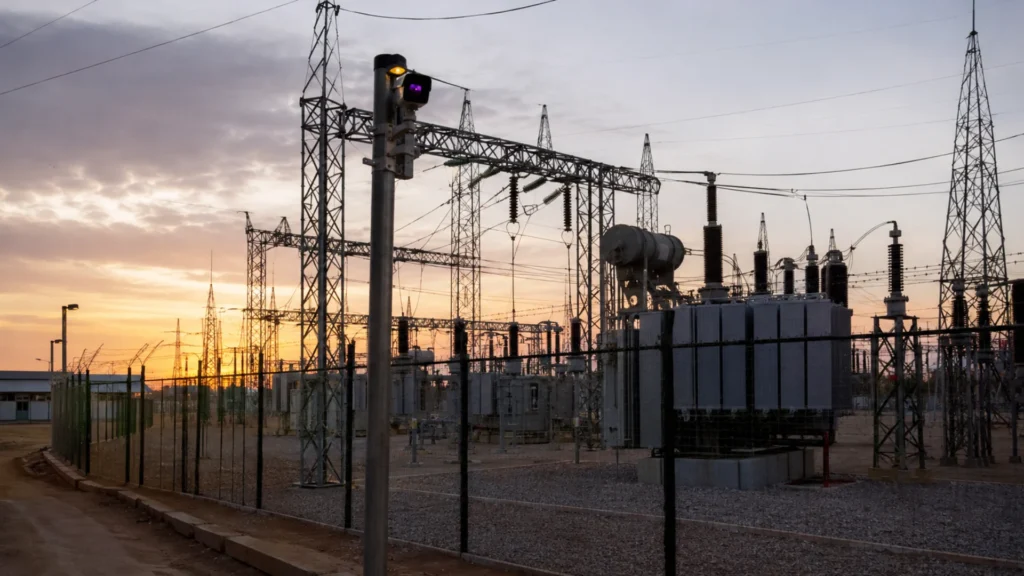
Fixed infrastructure electronic security has become the last line of defence for South Africa’s substations, cell towers, and pump stations — because physical guarding simply cannot scale to the problem. Eskom reports R221 million in vandalism costs year-to-date. Vodacom loses R100 to R130 million annually to battery theft. MTN spent R1.5 billion in a single year keeping its network operational. City Power in Johannesburg operates 18,000 substations — and cannot post a guard at every one. The maths demand technology.
This analysis examines why electronic security is now the primary defence for South Africa’s critical infrastructure. It covers the specific threats each asset type faces, the technology that protects them, and why fleet operators should care — because when substations, towers, and pump stations go down, fleet security systems go dark with them.
The Scale of the Crisis That Fixed Infrastructure Electronic Security Must Address
Business Unity South Africa (BUSA) puts it bluntly: theft and vandalism are crippling all of South Africa’s key infrastructure sectors, not just rail. BUSA senior executive Ian Bird calls it “a far-reaching and systemic crisis” that demands coordinated national action. The damage spans every sector.
Eskom: R221 million and counting
Eskom acknowledges a decline in criminal activity targeting its mini-substations, high-voltage pylons, and transformers compared with the previous year. However, Engineering News confirms that incidents remain “high and a serious concern.” The R221 million year-to-date figure covers only direct vandalism and theft costs — not the economic losses from power outages that affect businesses, homes, and critical services downstream. A stolen substation transformer plunges the area into darkness. Electric fences fail, CCTV cameras go offline, and fleet depot security systems stop functioning.
Telecommunications: R1.5 billion to keep the network alive
MTN South Africa spent R1.5 billion in one year to ensure its mobile network operates despite vandalism and battery theft. Vodacom estimates annual losses of R100 to R130 million. Connecting Africa reports that Telkom could have built 35 new base stations with the money lost to battery theft in a single year. Importantly, Gauteng alone witnesses between 90 and 140 vandalism incidents and 120 to 160 battery thefts per month at cell tower sites. A tower that loses its batteries takes down every GPS tracker, dashcam, and alarm system that depends on that cellular signal.
Water infrastructure: a “criminal onslaught”
IOL reports that Durban’s water infrastructure faces a “criminal onslaught” costing millions in repairs. The eThekwini Municipality’s weekly report lists vandalised pump stations across the city: Unit Avenue (R600,000), Riverside (R3.2 million), Savannah Park (R400,000), and multiple others.
Meanwhile, Cape Town has invested R123 million upgrading security at 39 sewer pump stations — reinforced steel doors, concrete walls, CCTV cameras, and security personnel. If pump stations fail, sewage overflows into communities, construction sites lose water supply, and irrigation systems stop.
Why Physical Guarding Cannot Solve the Fixed Infrastructure Electronic Security Problem
Essentially, City Power’s General Manager Mangena stated the problem directly: “We have about 18,000 of these chambers. Imagine if we have to put a guard at each station, day and night. It is not sustainable.” Consequently, City Power is developing security technology that activates armed response automatically when someone tampers with a substation — replacing physical guards with electronic detection.
The maths of guarding
To illustrate, a single security guard on 24/7 rotation costs approximately R25,000 to R35,000 per month (three shifts). Guarding 18,000 substations would cost R450 million to R630 million per month — R5.4 to R7.6 billion per year. That exceeds Eskom’s entire annual vandalism loss by a factor of 25. For Cape Town’s 39 pump stations alone, full-time guarding costs R975,000 to R1.4 million per month. The R123 million electronic security investment covers all 39 sites for years at a fraction of the ongoing guarding cost.
Human limitations
Furthermore, guards have physical limitations that electronic systems do not. Guards cannot see in the dark without lighting. Monitoring a full perimeter simultaneously is beyond any individual’s capability. Fatigue sets in during 12-hour shifts. Armed syndicates can intimidate, bribe, or overwhelm a lone guard. Electronic sensors, by contrast, detect intrusion regardless of visibility, never fatigue, cover multiple zones simultaneously, and trigger alerts to control rooms that coordinate armed response from a position of safety.
How Fixed Infrastructure Electronic Security Protects Each Asset Type
Specifically, each infrastructure category faces distinct threats requiring tailored electronic security solutions.
Electrical substations and mini-substations
Primarily, substations face transformer theft, copper cable stripping, and vandalism of switchgear. Effective fixed infrastructure electronic security for substations combines perimeter intrusion detection using fibre-optic or vibration sensors along fence lines (detecting cutting and climbing before entry), thermal imaging cameras that spot intruders at 500+ metres regardless of lighting, AI-powered CCTV with analytics that distinguish people from animals and vehicles, tamper-detecting locks and enclosures on transformer cabinets and cable termination boxes, and integration with armed response services for dispatch within minutes of alert activation.
Notably, the system must operate independently of the very power it protects. Solar panels with battery backup keep electronic security running even when the substation itself has been disconnected. This self-sufficient design is critical — a security system that fails when the power goes down protects nothing during the exact moments it is needed most.
Cell towers and base stations
Meanwhile, cell tower theft targets batteries, rectifiers, and copper cabling. MTN’s pilot programme in Soweto provides a model: the company partnered with the Gauteng Provincial Community Police Board to equip community policing forums with CCTV at tower sites, panic buttons, and a local command centre with laptops and data collection tools. Vodacom’s KwaZulu-Natal community partnership adds local surveillance through residents who receive benefits in exchange for reporting suspicious activity.
Electronic solutions for towers include access control on compound gates and equipment cabinets, vibration sensors on battery racks that detect removal attempts before the battery leaves the enclosure, CCTV with infrared night vision covering the compound perimeter, GPS trackers embedded in high-value batteries and rectifiers for recovery if theft occurs, and cellular or satellite uplink for alerts that function even when the tower’s own power fails.
Water and sewer pump stations
Similarly, pump stations face theft of motors, valves, copper wiring, and even steel structures. Cape Town’s upgrade programme demonstrates the layered approach: reinforced steel doors resist forced entry, raised concrete walls prevent climbing, CCTV cameras record all activity, and security personnel provide physical presence at the highest-risk sites. Electronic enhancements add perimeter sensors that alert before entry, remote monitoring via cellular connectivity, flood and overflow sensors that detect when pumps fail due to theft, and backup power that keeps security operational during Eskom outages.
Additionally, eThekwini’s experience shows why integrated monitoring matters. When a pump station motor is stolen at 02:00, the first sign is not a security alert — it is a sewage overflow at 06:00 that floods a residential area. Electronic monitoring detects the intrusion in real time, dispatches response immediately, and prevents the cascade from equipment theft to public health crisis.
Why Fleet Operators Must Care About Fixed Infrastructure Electronic Security
Crucially, fleet security does not exist in isolation. It depends on infrastructure that criminals are actively dismantling.
When substations go down, depot security goes dark
Electric fences at fleet depots require continuous power. CCTV cameras need electricity. Access control gates fail without power. Fuel storage monitoring goes offline. A substation failure caused by copper theft does not just inconvenience households — it disables every grid-dependent security system in the area. For fleet depots, this creates a window where vehicles, cargo, and fuel sit unprotected. Consequently, fleet operators who invest in depot security but ignore infrastructure vulnerability are protecting assets with a system that has an off switch controlled by criminals.
When cell towers lose batteries, trackers lose connectivity
Likewise, GPS tracking systems transmit position data via cellular networks. AI dashcams upload footage via 4G. Alarm systems send alerts via the same infrastructure. When battery theft knocks out a cell tower, every tracking device and camera in its coverage area loses its communication link. The vehicle is still tracked by GPS satellites, but the data cannot reach the control room. In effect, the fleet operator goes blind — and the hijacking response chain breaks at the first link.
When pump stations fail, construction sites lose water
In addition, construction fleets operating near vandalised water infrastructure face site shutdowns, project delays, and contract penalties. Agricultural fleets depend on functioning irrigation infrastructure for the operations that justify their diesel consumption — and their SARS refund claims. The cascade from infrastructure theft to fleet operational disruption is real, measurable, and growing.
Unified Platforms: Connecting Fixed Infrastructure Electronic Security With Fleet Management
Therefore, the most effective approach monitors both fixed infrastructure and mobile fleet assets on a single platform. When a substation alarm triggers at the same time a fleet vehicle’s tracking goes offline nearby, the unified system connects the two events — identifying a power outage that has disabled fleet security rather than a vehicle fault.
Leading providers in South Africa approach fixed infrastructure electronic security from different directions. Fidelity ADT and Bidvest Protea Coin lead in critical infrastructure protection — guarding, electronic security, and armed response for substations, industrial facilities, and government buildings. G4S provides integrated security solutions for energy, telecoms, and water utilities. Specialised firms like Seequre and Stafix focus on perimeter detection and electric fence integration respectively.
DigitFMS bridges the gap between fixed infrastructure electronic security and fleet management. The platform integrates CCTV, access control, perimeter detection, and alarm monitoring for fixed sites with GPS tracking, AI dashcams, D-Fuel monitoring, and driver identification for mobile assets — all on a single dashboard. For operators managing both infrastructure sites (substations, pump stations, depots) and vehicle fleets, DigitFMS eliminates the blind spot between building and vehicle security. The company’s 100+ franchise branches provide local installation and support across South Africa, including regional and rural areas where critical infrastructure is most exposed.
Six Steps to Protect Fixed Infrastructure With Electronic Security
Audit infrastructure dependency. Map every point where your operations depend on Eskom power, cellular connectivity, and water supply. Identify which security systems fail when each infrastructure element goes down. This reveals your actual exposure to infrastructure theft consequences.
Next, install perimeter intrusion detection before CCTV. Cameras record what happens. Perimeter sensors detect what is about to happen. Fibre-optic or vibration sensors along fence lines alert when someone cuts or climbs — giving response teams minutes of lead time before the intruder reaches equipment. Detection before entry is more valuable than footage after theft.
Additionally, deploy thermal imaging for night coverage. Most infrastructure theft occurs after dark. Thermal cameras detect body heat at 500+ metres regardless of lighting, fog, or smoke. Unlike visible-light cameras, they cannot be defeated by cutting site lighting. For substations and pump stations in unlit areas, thermal imaging is the most reliable night detection technology available.
Power, connectivity, and response
Ensure security systems have independent power. Solar panels with battery backup keep cameras, sensors, and communications operational during Eskom outages. The security system must survive the exact event it is designed to detect. A camera that loses power when the substation transformer is stolen captures nothing.
Furthermore, use multi-network and satellite connectivity for alerts. If one cellular network goes down due to tower theft, the security system must switch to an alternative. Multi-network SIMs and satellite fallback ensure alerts reach the control room regardless of local connectivity status.
Finally, integrate infrastructure monitoring with fleet management. If you manage both fixed sites and fleet vehicles, put both on one platform. A power outage that disables depot security and a vehicle tracking dropout in the same area at the same time is a connected event. Separate systems miss the connection. A unified platform catches it.
Outlook: Fixed Infrastructure Electronic Security Becomes Essential National Infrastructure Itself
Overall, BUSA’s Ian Bird is right: this is a systemic crisis that extends far beyond any single sector. The mines, telcos, Eskom, and municipalities all suffer from the same vandalism and theft. However, the electronic security industry has responded with technology that makes physical guarding of every site unnecessary. Solar-powered cameras, fibre-optic perimeter detection, thermal imaging, and AI analytics can monitor thousands of sites simultaneously from a single control room — at a fraction of the cost of deploying guards.
Accordingly, for fleet operators, fixed infrastructure electronic security is not someone else’s problem. Every stolen transformer, every vandalised cell tower battery, and every stripped pump station motor degrades the systems that fleet operations depend on. The operators who protect their own infrastructure — depots, yards, fuel storage, remote sites — and advocate for electronic security of the public infrastructure around them will build the most resilient operations.
Ultimately, in a country where 18,000 substations cannot be guarded, where R1.5 billion keeps one telecoms network alive, and where pump station vandalism causes sewage to flood communities, fixed infrastructure electronic security is no longer an investment in property protection. It is an investment in operational continuity — for every business that depends on power, connectivity, and water to function.
Frequently Asked Questions
How much does infrastructure theft cost South Africa?
Eskom reports R221 million year-to-date. Vodacom loses R100-130 million annually. MTN spent R1.5 billion in one year on network resilience. Cape Town invested R123 million upgrading pump station security. Durban faces millions in water infrastructure repair costs. BUSA calls it a systemic crisis threatening the entire economy.
Why can’t guards alone protect infrastructure?
Scale makes physical guarding impossible. City Power has 18,000 substations. Guarding them all 24/7 would cost R5.4-7.6 billion per year — 25 times more than Eskom’s annual theft losses. Electronic security monitors every site simultaneously from one control room, detecting intrusion within seconds and dispatching response only where needed.
What electronic security works at substations?
Layered protection combines fibre-optic perimeter detection, thermal imaging at 500+ metres, AI-powered CCTV, tamper-detecting enclosures, and armed response integration. The system must run on independent solar power — a security system that fails during a power outage protects nothing when it matters most.
How do you secure cell towers against battery theft?
Access control on gates and cabinets, vibration sensors on battery racks, CCTV with night vision, GPS trackers in batteries, and community policing partnerships. MTN’s Soweto pilot equips CPF members with panic buttons and CCTV command centres. Vodacom’s KZN model uses community surveillance partnerships.
What security protects water pump stations?
Cape Town’s R123 million programme uses reinforced steel doors, concrete walls, CCTV, and security personnel. Electronic additions include perimeter sensors, remote monitoring, flood detection for pump failure, and backup power. Integrated monitoring detects theft in real time — preventing the cascade from equipment loss to sewage overflow.
How does infrastructure security connect to fleet security?
Substation failures disable depot electric fences, CCTV, and access control systems. Battery theft at cell towers disrupts GPS tracking and fleet connectivity. Vandalised pump stations interrupt water supply to construction and industrial operations. Fixed infrastructure electronic security protects the critical services that fleet security depends on, while unified platforms monitor both infrastructure and vehicles from a single dashboard.
What is the ROI of infrastructure electronic security?
A single transformer costs R500,000 to R2 million to replace, plus outage revenue losses. A battery bank costs R50,000 to R200,000. A pump station motor costs R300,000 to R600,000. Electronic security preventing one incident per year delivers 5x to 20x ROI. Cape Town’s R123 million investment protects infrastructure worth billions.
Sources
Eskom — “Theft and vandalism remain a major threat”, April 2025; R221M year-to-date data · Engineering News — “Theft, vandalism of electricity infrastructure remains a threat”, 9 April 2025 · Engineering News — “Theft, vandalism crippling SA infrastructure despite Transnet gains, warns BUSA”, July 2025; Ian Bird statements · Connecting Africa — “SA towers hit by power cuts, theft and vandalism”, September 2024; Vodacom R100-130M, Telkom 35 base stations equivalent · Developing Telecoms — “Vodacom KZN partners communities to prevent battery theft”, April 2025; R100M annual loss · Techpoint Africa — “MTN partners police to combat cell tower cable theft”, February 2024; R1.5B network resilience spend · City of Cape Town / DA — “City ramps up investment to protect sewer pump stations”, July 2023; R123M investment, 39 stations · IOL — “Durban’s water infrastructure faces criminal onslaught”, March 2026; eThekwini pump station damage list · TimesLive — “Theft, vandalism, load-shedding combine to strain City Power”, June 2022; 18,000 substations, R1.6B investment · Taylor & Francis — “Socio-economic impacts of infrastructure vandalism in Southern Africa”, 2024; PRASA 274 cases per month, 1,000 km cable stolen
© 2026 DigitFMS. All rights reserved.