
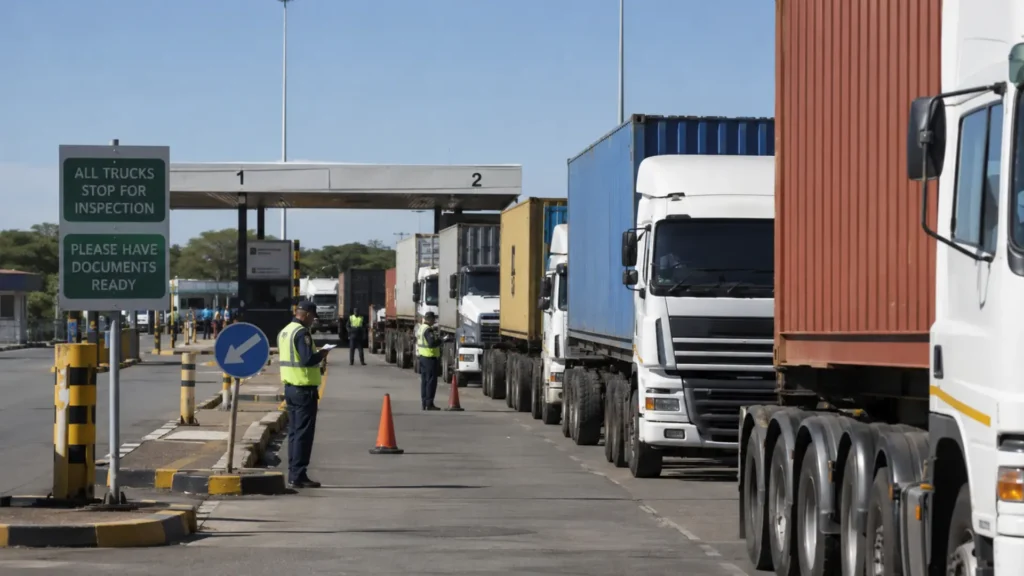
A R12.6 million copper seizure in Johannesburg this week reads like a masterclass in organised cargo theft fleet security threats — hijacked trucks, cloned number plates, fraudulent customs papers, and serial numbers filed off to erase the trail. SABC News reports that a multidisciplinary team seized 26 bundles of suspected stolen copper at City Deep on 18 June. The team drew on Crime Intelligence, Interpol, Border Police, and private security partners. Intelligence from Zambian authorities about three hijacked trucks triggered the operation. Investigators found false Tanzanian plates. They traced roughly 121 tonnes of copper entering through Beitbridge on 10 June on fraudulent documents. One truck turned up in Zambia wearing the cloned plates of a South African logistics company. For fleet operators, the case is a detailed blueprint of the threat — and a guide to the defence.
Importantly, this analysis breaks down how the syndicate operated. It explains why high-value commodities like copper attract organised crime. It examines the specific danger of vehicle cloning to legitimate operators. Finally, it sets out the cargo theft fleet security measures that protect high-value loads.
Anatomy of the Bust: A Cargo Theft Fleet Security Case Study
Crucially, the value of this case lies in its detail. Each step the syndicate took reveals a specific vulnerability that fleet operators can learn to defend.
The hijacking that triggered the cargo theft fleet security operation
According to police spokesperson Lieutenant Colonel Vincent Mukhathi, hijackers struck three trucks transporting copper blocks. Zambian authorities passed the intelligence to SAPS. The theft originated across the border, showing that regional cargo crime is genuinely transnational. Notably, investigators later recovered one hijacked truck in Zambia. It displayed registration numbers belonging to a South African logistics company. The crime therefore reached back into South Africa from the very first stage. It implicated a legitimate operator’s identity before the cargo even moved south.
False plates and fraud at the border in this cargo theft fleet security case
Subsequently, two trucks carrying roughly 121 tonnes of copper slabs entered South Africa through Beitbridge on 10 June. They allegedly used fraudulent customs documents. Furthermore, preliminary investigations point to trucks displaying false Tanzanian plates. This combination — cloned or false plates plus fraudulent paperwork — is the core technique of cross-border cargo crime. It lets a stolen-cargo truck pass through official checkpoints looking entirely legitimate. On paper and on the plate, the truck appears to be a lawful consignment.
Erasing the trail: origin concealment in cargo theft fleet security
Additionally, the syndicate deliberately filed off the copper’s original serial numbers to conceal its origin. This step is the cargo-crime equivalent of removing a vehicle identification number. Without serial numbers, tracing the copper to its Zambian source becomes far harder. That gap complicates both prosecution and recovery. Acting on the intelligence, the team ran a follow-up operation on 18 June in City Deep. They seized 26 bundles of copper valued at R12.68 million. The concealment shows the syndicate planned for seizure from the outset.
Why High-Value Commodities Drive Cargo Theft Fleet Security Risk
The copper bust is not an isolated event but part of a broader pattern. Certain commodities attract organised crime precisely because of what they are worth and how easily they sell.
The economics behind copper cargo theft fleet security threats
Copper is high-value, in constant demand, and easy to sell through scrap and export channels. Consequently, a single truckload can be worth millions, as this R12.68 million seizure shows. Our earlier analysis of copper theft documented R45 billion in annual economic damage. That trade also drives freight off collapsing rail onto the roads. This hijacking case is the cargo-in-transit dimension of that same crisis. Here, criminals stole and moved copper by truck rather than stripping it from infrastructure.
Beyond copper: the wider cargo theft fleet security target list
Importantly, copper is one of several commodities that draw organised cargo crime. Precious metals, electronics, fuel, cigarettes, and pharmaceuticals share the same profile. Each offers high value relative to weight, and a ready resale market. Therefore, any fleet operator carrying such goods faces elevated hijacking risk. The principle is simple. The higher the load’s value and the easier the resale, the more systematically crime will target it. Operators should match their security investment to what they actually carry.
The Cloning Danger: When Cargo Theft Fleet Security Hits Innocent Operators
One detail of this case deserves particular attention from legitimate operators: the syndicate used a South African logistics company’s registration on a truck moving stolen copper.
How vehicle cloning exploits cargo theft fleet security gaps
Vehicle cloning means fitting a truck with plates belonging to a legitimate vehicle or company. As a result, the criminal truck appears lawful to police, weighbridges, and border officials. Meanwhile, the cloning exposes the innocent operator to serious risk. Specifically, a crime can attach to their vehicle identity. That link may trigger investigations, reputational harm, and administrative complications. The legitimate operator often knows nothing until their registration surfaces in a crime report. That is exactly what happened to the South African company here.
How GPS data defends against cloning in cargo theft fleet security
Fortunately, a well-tracked fleet has a powerful defence. GPS tracking proves exactly where a genuine vehicle was at any moment. That record offers decisive evidence against a cloning claim. Consequently, an operator with complete route histories can quickly show that their real vehicle was elsewhere. This clears them of any false association. Operators should also watch for misuse of their registration and report suspected cloning at once. The verifiable location record is the strongest protection against a stolen identity.
Six Measures to Strengthen Cargo Theft Fleet Security
The techniques in this case — hijacking, cloning, document fraud, origin concealment — each have a countermeasure. Together, they form a layered defence for high-value loads.
Track, geofence, and sense tampering for cargo theft fleet security
First, deploy real-time GPS tracking with geofencing. Any route deviation or entry into a high-risk zone then triggers an immediate alert. Next, fit tamper and door sensors that flag unauthorised cargo access the moment it happens. For the highest-value loads, add a covert secondary tracking unit hidden apart from the primary device. The load then stays traceable even if hijackers disable the main tracker.
Verify drivers, documents, and routes for cargo theft fleet security
Additionally, verify driver identity with wireless driver identification so only authorised drivers operate high-value loads. Furthermore, verify customs and consignment documents independently through official channels. Do not rely solely on what a client provides, since fraudulent paperwork drove this case. Then, plan routes to avoid known hijacking hotspots and vary them where possible. Predictable routing helps syndicates plan an ambush.
Brief drivers and protect your identity for cargo theft fleet security
Finally, brief drivers on hijacking-avoidance protocols — situational awareness, panic-button use, and the absolute priority of personal safety over cargo. Equally, watch for misuse of your own vehicle registration. Keep GPS records that prove your vehicles’ true locations to defend against cloning. No driver should ever resist a hijacking to protect a load. The cargo carries insurance, and the tracking technology can recover it.
Technology That Underpins Cargo Theft Fleet Security
Notably, every technique the copper syndicate used has a technological counter, and the right platform combines them into a single layered defence.
DigitFMS integrates real-time GPS tracking, geofencing, tamper and door sensors, wireless driver identification, panic buttons, AI dashcams, and route management on one dashboard. When a high-value load deviates from its route, the geofence alerts instantly. If anyone opens the cargo area without authorisation, the tamper sensor flags it. Driver identification confirms who is behind the wheel. The GPS history then provides the verifiable location record that defends against cloning. For recovery, covert secondary tracking keeps a hijacked load findable. The franchise network supports operators on the cross-border corridors where this syndicate operated.
Equally, Cartrack, Tracker, Netstar, Ctrack, and MiX by Powerfleet provide comparable tracking and recovery platforms. The private security sector also partners directly with SAPS on operations like this one. The decisive capability for cargo theft fleet security is layered visibility. That means knowing where the load is, whether anyone has tampered with it, and who is driving — and proving all of it. Fleet operators with that layered defence deter, detect, and recover. A single tracker cannot match a syndicate that clones plates and forges documents.
Outlook: The Copper Bust Is a Warning and a Template for Cargo Theft Fleet Security
The R12.6 million seizure is genuinely good news. Acting on cross-border intelligence, a multidisciplinary team intercepted a sophisticated syndicate. They took millions in stolen copper off the market. The cooperation spanned Zambian authorities, Interpol, SAPS Crime Intelligence, Border Police, and private security partners. It shows what coordinated enforcement can achieve against organised cargo crime.
However, no arrests had followed at the time of reporting. That gap is a reminder that interception is not the same as dismantling. The syndicate’s methods — hijacking, cloning, document fraud, serial-number removal — are replicable. The people behind them remain at large. Consequently, fleet operators cannot rely on enforcement alone. The best protection keeps one’s own vehicles and loads from becoming the next case. Layered onboard security and verified documents do exactly that.
Ultimately, cargo theft fleet security denies syndicates the vulnerabilities they exploit. This case exposed each one clearly. Criminals hijack an unprotected load. They clone an untracked vehicle. Unverified documents cross a border. Unmarked goods vanish into the market. Each vulnerability has a countermeasure within the operator’s reach. Tracking, tamper sensors, driver identification, document checks, and a verifiable location record all protect a legitimate identity. The copper syndicate wrote the threat blueprint. Fleet operators who study it can write the defence — and keep their trucks, cargo, and company name out of the next R12 million headline.
Frequently Asked Questions
What happened in the R12.6 million copper bust?
On 18 June 2026, a multidisciplinary team seized 26 bundles of suspected stolen copper worth about R12.68 million at City Deep. Zambian intelligence about three hijacked trucks led them there. Investigators found false Tanzanian plates and filed-off serial numbers. Roughly 121 tonnes had entered via Beitbridge on 10 June on fraudulent documents. Police recovered one truck in Zambia wearing a South African company’s cloned plates. No arrests yet.
Why is this case important for cargo theft fleet security?
It is a textbook example of organised cross-border cargo crime. The syndicate combined hijacking, cloning, document fraud, and origin concealment in one operation. This shows high-value theft is systematic and sophisticated, not opportunistic. Critically, criminals cloned a legitimate operator’s registration to move stolen goods. They exploited an innocent company’s identity. Understanding these methods is the first step to defending against them.
How do syndicates use cloned plates and fake documents?
Cloning fits a truck with plates belonging to a legitimate vehicle or company. The stolen-cargo truck then looks lawful to authorities and weighbridges. Fraudulent customs documents let cargo cross borders by misrepresenting origin, contents, or ownership. Filing off serial numbers removes traceability. Together these move stolen cargo through legitimate-looking channels. That is why document verification and vehicle authentication anchor any defence.
What can fleet operators do to protect high-value loads?
Deploy GPS tracking with geofencing for deviation alerts. Use tamper and door sensors. Fit panic buttons and covert secondary trackers on high-value loads. Verify driver identity. Avoid hijacking hotspots and vary routes. Verify documentation independently through official channels. Brief drivers on hijacking-avoidance, prioritising safety over cargo.
Why are copper and similar commodities targeted?
Copper is high-value, in constant demand, and easy to sell through scrap and export channels — a truckload can be worth millions. Other targets include precious metals, electronics, fuel, cigarettes, and pharmaceuticals: high value-to-weight ratios with ready resale markets. The higher the value and the easier the resale, the more systematically organised crime targets the load.
How does vehicle cloning affect legitimate operators?
Here criminals cloned a South African company’s registration onto a truck moving stolen copper. A crime linked to their identity can expose legitimate operators to investigations, reputational damage, and administrative complications. Operators should watch for misuse of their registration. They should keep GPS records proving their vehicles’ true locations, and report suspected cloning at once. The location record is the strongest defence.
How does technology help combat cargo theft?
GPS tracking gives real-time location and verifiable route history. Geofencing alerts on deviations and high-risk zones. Tamper and door sensors detect unauthorised access. Driver identification confirms the operator. Covert secondary tracking aids recovery. Dashcams document incidents. Together they deter, detect, and build an evidence trail. They also prove a genuine vehicle’s true location if a cloned vehicle appears in a crime.
Sources
SABC News — “Police seize R12m copper, investigate cross-border smuggling ring”, 19 June 2026; City Deep seizure, multidisciplinary team, Zambian intelligence, Mukhathi statement, serial numbers filed off, no arrests · Truck and Freight Online — “Suspected stolen copper worth more than R12 million seized at City Deep”, 19 June 2026; 26 bundles R12 680 000, 18 June operation, false Tanzanian plates, Crime Intelligence and Interpol and Border Police and private security · EWN — “R12m worth of alleged stolen copper seized in Gauteng”, 20 June 2026; three hijacked trucks, 121 tonnes, Beitbridge 10 June, recovered truck with SA logistics company plates
IOL / The Star — “Gauteng police seize R12.6 million in stolen copper linked to cross-border smuggling operation”, 21 June 2026; elaborate cross-border network, fake plates and fraudulent customs paperwork, City Deep tracking · eNCA — “121 tonnes of copper seized”, 19 June 2026; team composition, Zambian information · Algoa FM — “Copper worth R12.6 million seized in Johannesburg”, 19 June 2026; Lt Col Mukhathi, cloned documents, fake licence plates · The Witness — “R12 million copper haul seized in smuggling bust”, 20 June 2026; cross-border cargo theft context
DigitFMS — copper theft infrastructure security South Africa (2 May), counterfeit goods fleet logistics (18 June), border security fleet technology Beitbridge (1 June), fleet road safety technology N4 crash (17 June); cargo crime, cross-border corridors, document verification, tracking and recovery. Note: matters before the courts are reported factually; suspects are presumed innocent until proven guilty.
© 2026 DigitFMS. All rights reserved.