
The Bafana Korea fleet night has finally arrived — and it is exactly the 3am reckoning we have been warning about since the Mexico defeat. ESPN confirms South Africa face the Republic of Korea in their final Group A match at 7pm local time on Wednesday in Monterrey — which is 3am South African time on Thursday 25 June. The equation is brutally simple: win and Bafana can reach the knockout rounds for the first time in their history, or draw and lose and go home. Specifically, that win-or-go-home drama lands dead-centre in the overnight fleet shift. For operators, this is the tournament’s single highest-risk fixture, and the plan needs to be locked today — before tonight’s drivers head out.
Importantly, this analysis confirms the timing and stakes, explains why a win-or-go-home match at 3am is the most dangerous fleet scenario of the tournament, and sets out the final operational checklist — which doubles as a live rehearsal for the 30 June shutdown just five days later.
Win or Go Home: The Stakes Behind the Bafana Korea Fleet Night
Crucially, the higher the stakes, the larger the audience — and the larger the audience, the greater the fleet distraction risk at 3am.
The simple equation driving the Bafana Korea fleet night
According to ESPN and Goal, the equation for Bafana is straightforward: beat South Korea and qualify for the round of 32, or draw or lose and exit the tournament. After a 2-0 loss to Mexico and a 1-1 draw with Czechia, South Africa sit on one point. Notably, they have never progressed beyond the group stage in three previous World Cup appearances, in 1998, 2002 and 2010. Therefore, a win on Thursday morning would make history. That historic possibility guarantees the largest television and streaming audience of Bafana’s campaign — at 3am.
Mokoena out: the twist sharpening the Bafana Korea fleet night drama
Adding to the drama, Teboho Mokoena — whose late penalty rescued the point against Czechia — is suspended for this match after picking up his second yellow card of the tournament. Themba Zwane is also suspended. Consequently, coach Hugo Broos must reshape his midfield for the biggest match of the campaign, with Sphephelo Sithole available again after his own ban. For fleet operators, the team news matters less than what it signals: maximum national drama, maximum viewership, and therefore maximum temptation for drivers and depot staff to follow the match when they should be focused on the road.
Why national investment raises the Bafana Korea fleet night risk
Specifically, a dead-rubber match draws a modest audience, but a win-or-go-home decider draws the nation. Because Bafana’s qualification hangs on this single result, the whole country will be watching — including the drivers, controllers, and security staff a fleet relies on overnight. Accordingly, the temptation to stream the match on a phone, or to be distracted by it at a depot, peaks precisely when operations are most exposed. The drama that thrills the nation is the same drama that threatens the overnight shift.
The 3am Danger Zone: Why This Bafana Korea Fleet Night Is the Worst
The Mexico and Czechia matches kicked off at 9pm and 6pm. This one is different, and the difference is what makes it dangerous.
The timing that defines the Bafana Korea fleet night hazard
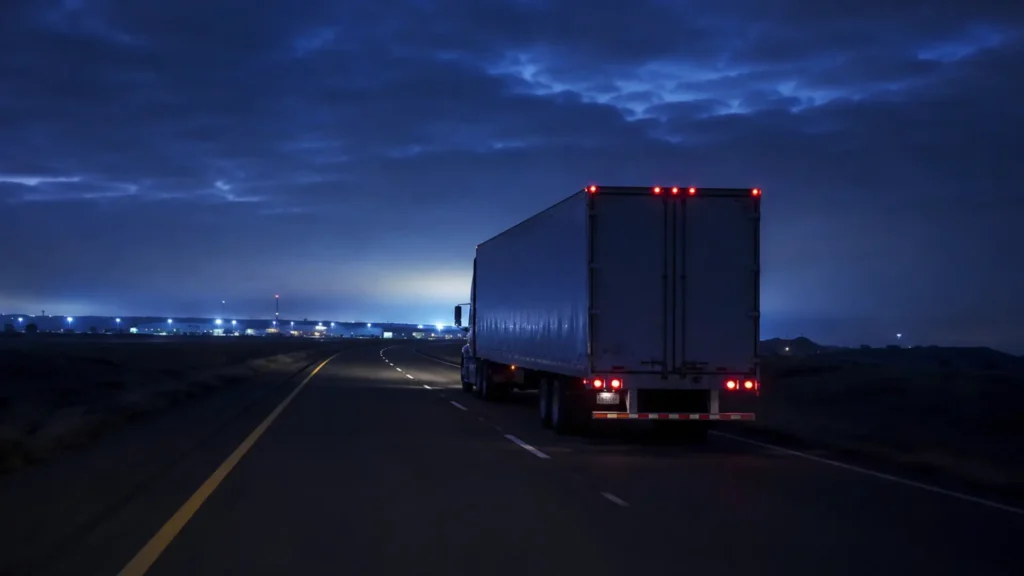
Notably, a 3am kickoff lands in the deepest part of the overnight haul. At that hour, long-distance vehicles are mid-route on the N3, N1, and N2. Depots run minimum staffing, and control rooms operate skeleton crews. Furthermore, human alertness naturally bottoms out in the pre-dawn hours, so drivers are already fighting fatigue before any match begins. The fixture arrives when the fleet is most stretched, least supervised, and least naturally alert — the worst possible convergence for a high-temptation event.
Fatigue plus distraction: the Bafana Korea fleet night double threat
Crucially, the core danger is the combination. A driver several hours into an overnight run is already fatigued, with reaction times degraded at 3am. Add the pull of a win-or-go-home Bafana match on a phone, and the two most lethal night-driving factors — fatigue and distraction — converge in the same cab at the same moment. Moreover, because the match is decisive, the temptation peaks exactly when the fatigue is deepest. As we flagged after the Czechia draw, no other fixture in this tournament combines these risks so acutely.
Five Days to 30 June: The Bafana Korea Fleet Night as Rehearsal
Beyond the match itself, the timing gives this overnight window a second purpose that operators should not waste.
A live systems test inside the Bafana Korea fleet night
The 25 June match sits just five days before the planned 30 June shutdown. Consequently, the overnight window doubles as a final live test of the fleet’s systems — geofencing, real-time alerts, driver protocols, and control-room readiness — under genuine overnight conditions. Operators who treat Thursday morning as both a match night and a rehearsal extract maximum value from one difficult night. Any gap that surfaces at 3am on Thursday can be fixed in the five days before the shutdown raises the stakes again.
How the result feeds the mood after the Bafana Korea fleet night
Equally, the outcome also shapes the national mood heading into the shutdown. If Bafana win and advance, euphoria carries into the shutdown week and could spill onto urban routes in celebration. Conversely, if they exit, disappointment compounds the existing tensions around immigration and the economy. Either way, the result is an input to the 30 June risk picture. Therefore, fleet operators should track Thursday’s scoreline not only as sport but as one more variable in their shutdown planning.
The Final Checklist for the Bafana Korea Fleet Night
With the match tomorrow morning, the plan must be locked today. These five actions convert the warning into readiness before tonight’s drivers depart.
Reschedule the overnight window for the Bafana Korea fleet night
First, reschedule critical long-haul runs around the 3am window. Where possible, plan routes to finish before 2:30am or depart after 5:30am on Thursday, keeping vehicles off the road during the match itself. A delivery shifted by a few hours costs far less than a fatigue-and-distraction crash. The fixed kickoff time makes this window entirely predictable, and therefore plannable today.
Brief drivers and staff the control room for the Bafana Korea fleet night
Next, brief every overnight driver before they depart tonight. The message must be unambiguous: streaming a match while driving is prohibited and dangerous at 3am fatigue levels, and any driver wanting to follow the match should do so only at a proper rest stop, parked and safe. Additionally, staff the control room with a designated non-watching monitor so supervision does not lapse during the match. Someone must keep their eyes on the fleet, not the football.
Arm the technology and rehearse for the Bafana Korea fleet night
Then, activate enhanced dashcam fatigue and distraction detection for the overnight period, so the technology catches a drowsy or distracted driver when human oversight is thinnest. Finally, treat the night as a 30 June systems test. Verify that geofences fire, alerts reach the control room, and driver protocols hold under real overnight conditions. Fix any gap in the five days before the shutdown. One difficult night, used well, prepares the fleet for the harder one ahead.
Technology That Carries the Bafana Korea Fleet Night Safely
Notably, a 3am win-or-go-home match is exactly the scenario where automated monitoring matters most, because human attention — driver, controller, and security alike — is at its lowest ebb.
DigitFMS integrates AI dashcams with fatigue and distraction detection, GPS tracking with geofencing, driver identification, panic buttons, and real-time route management on a single dashboard. During the 3am window, the dashcam flags a drowsy or phone-distracted driver and alerts the control room at once. GPS tracking shows every vehicle’s position, and geofencing warns of any approach to a flagged area. The system does not tire at 3am, and it does not glance at the score. It monitors identically whether Bafana are winning, losing, or level — the consistency a decisive overnight match demands.
Equally, Cartrack, Tracker, Netstar, Ctrack, and MiX by Powerfleet provide comparable fatigue and tracking platforms. The decisive capability for the Bafana Korea fleet night is automated vigilance during the hours when people cannot sustain it. Fleet operators whose systems watch at 3am protect drivers fighting both fatigue and temptation. Those relying on human attention alone gamble at the worst hour, on the most-watched match of the campaign.
Outlook: Cheer the Team, Then Prepare for the Bafana Korea Fleet Night
Thursday morning could make history. A Bafana win would carry South Africa into the World Cup knockout rounds for the first time ever, and the whole country will rightly want to witness it. The romance of the moment is real, and no fleet operator should begrudge their drivers wanting to share in it.
However, the romance does not change the road. At 3am on Thursday, freight will still move, drivers will still be fatigued, and a decisive match will still tempt tired eyes toward a phone screen. The operators who prepared — rescheduled runs, briefed drivers, staffed the control room, and armed the technology — will move their freight safely through the window. Those who left it to chance will be exposed at the worst possible hour.
Ultimately, the Bafana Korea fleet night captures the whole of this June: hope and risk arriving together, asking for preparation rather than either celebration or fear. Cheer the team — and then lock the overnight plan today, before the drivers head out tonight. If Bafana win, the country celebrates a historic morning, and the prepared fleet celebrates a safe one too. Five days later, the same systems face the 30 June test. The night that carries Bafana’s hope can also carry the fleet’s readiness — if operators treat 3am on Thursday with the seriousness it deserves.
Frequently Asked Questions
When is the Bafana v South Korea match?
South Africa play the Republic of Korea in their final Group A match at Estadio BBVA in Monterrey. Local kickoff is 7pm on Wednesday 24 June — 3am South African time on Thursday 25 June. That places the match in the deepest part of the overnight fleet shift. SABC broadcasts it in South Africa, with SuperSport and Sporty TV among other sub-Saharan options.
Why is this match so important for Bafana?
It is win-or-go-home. After losing to Mexico and drawing with Czechia, Bafana have one point and must beat South Korea to have a realistic chance of reaching the knockouts for the first time in their history. A draw or loss almost certainly ends the campaign. South Africa have never passed the group stage in three previous appearances, so the stakes are historic — guaranteeing maximum viewership for a 3am kickoff.
Why does a 3am kickoff matter for fleet operators?
It falls in the deepest part of the overnight shift, when long-haul vehicles are mid-route, depots run minimum staffing, control rooms are thin, and fatigue peaks. A win-or-go-home match at that hour maximises the temptation to watch or stream while working. It combines distraction and fatigue — the two most dangerous night-driving factors — at the worst time, making it the tournament’s highest fleet-risk fixture.
What should fleet operators do for the 3am match?
Reschedule critical runs to finish before 2:30am or depart after 5:30am on Thursday. Brief every overnight driver that streaming while driving is prohibited and dangerous at 3am. Staff the control room with a designated non-watching monitor. Activate enhanced dashcam fatigue and distraction detection. Treat the night as a final live test of systems before the 30 June shutdown.
How does this connect to the 30 June shutdown?
The match falls five days before the planned shutdown. Its result’s mood — euphoria or disappointment — feeds the tense shutdown climate. That overnight window also serves as a final live rehearsal of fleet systems before the more demanding shutdown. Operators who manage the 3am match well enter 30 June with verified geofencing, alerting, driver protocols, and control-room readiness.
Is Mokoena playing against South Korea?
No. Teboho Mokoena, whose penalty earned the draw against Czechia, is suspended after two tournament yellow cards. Themba Zwane is also suspended. Coach Hugo Broos must reshape his midfield for the biggest match of the campaign, with Sphephelo Sithole available again. For fleets the team news is secondary, but it underlines how high the drama and viewership will be for the 3am decider.
What is the safest approach for drivers who want to watch?
Never stream or watch while driving, especially at 3am when fatigue is severe. Any driver wanting to follow the match should do so only at a proper, planned rest stop — parked safely, off the road. Operators can support this by scheduling routes around the window and being clear that personal and road safety come before any fixture. The goal is a driver who follows the match safely and finishes the route alive.
Sources
ESPN — “South Africa vs. South Korea — Kick-off time, how to watch, Bafana permutations, team news”, 23 June 2026; 3am CAT Thursday 25 June, Estadio BBVA Monterrey, win-or-go-home, Mexico six points, head-to-head tiebreaker, SABC broadcast · ESPN — “South Africa vs South Korea: TV channel, kick-off time, predicted line-ups”, 22 June 2026; Mokoena and Zwane suspended, Sithole available, referee Facundo Tello · Goal.com — “South Africa vs Republic of Korea preview”, 20 June 2026; beat Korea and qualify, draw or lose and out, Korea need a draw
Olympics.com — South Africa World Cup results and standings; Mexico 2-0 SA, Czechia 1-1 SA Mokoena 83′ pen, Korea fixture 24 June · Flashscore — South Africa 2026 schedule; Monterrey 19h00 local, 03h00 SAST Thursday 25 June, third-place permutations · The South African — Bafana v South Korea permutations; four points possibly enough, Broos retiring after finals, midfield reshape
DigitFMS — Bafana fleet match night 3am Korea reckoning (19 June), Bafana defeat fleet impact frustration scenario (12 June), World Cup fleet operations (11 June), June shutdown fleet security viral (17 June), June shutdown fleet risk (11 June); 3am Korea kickoff flagged after the Mexico defeat and built on after the Czechia draw
© 2026 DigitFMS. All rights reserved.