
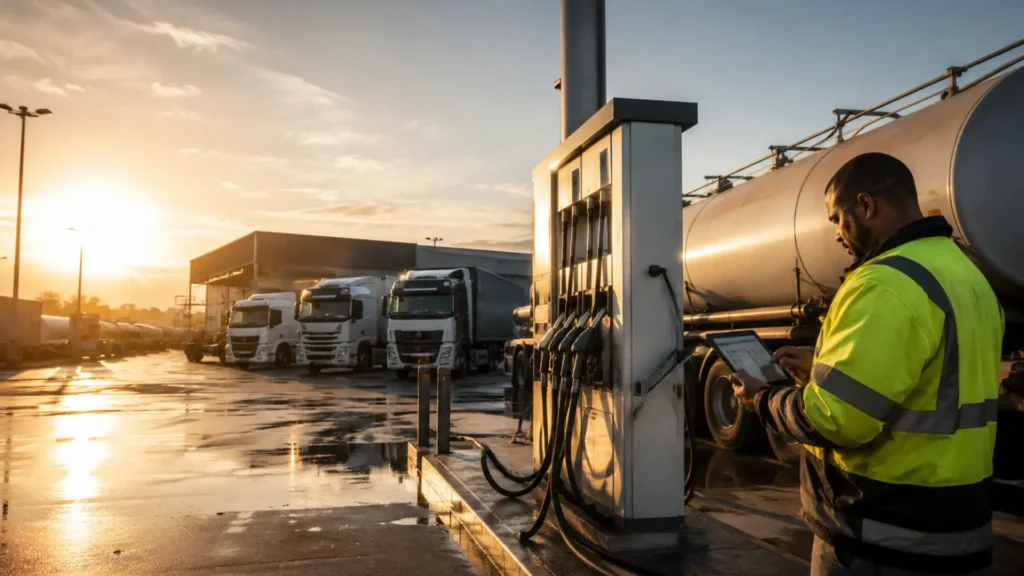
Diesel price South Africa increases are putting real pressure on transport, logistics, mining, building, and commercial fleet teams in 2026. As a result, fuel is no longer just a monthly cost. It now affects profit, delivery times, route plans, and long-term fleet control.
Direct Answer: How Can Fleets Manage Diesel Price Increases?
Fleets manage diesel price increases in South Africa by controlling the litres they use, because they cannot control the pump price. Fuel monitoring shows consumption per vehicle, GPS tracking cuts wasted kilometres and idling, and theft alerts stop losses. Reviewing routes, driver behaviour and refuelling records then lowers the cost per kilometre.
Additionally, many South African businesses now need to review how their vehicles are used each day. Rising diesel costs make every trip, stop, route change, and litre of fuel more important.
At the same time, transport companies must continue meeting customer expectations while managing rising fuel and operating costs.
Moreover, rising diesel costs continue affecting transport margins, operational forecasting, and fleet profitability across multiple South African industries.
In May 2026, diesel fuel prices in South Africa increased sharply after a pricing error was corrected. Consequently, companies that rely on road freight, long-distance routes, and high-mileage vehicles felt the impact quickly.
For fleet managers, the issue is not only the pump price. Instead, the real risk is poor fuel control, weak route planning, fuel theft, long idling times, and limited live data.
Therefore, this article explains how diesel price South Africa changes affect fleet costs, why fuel monitoring matters, and how DigitFMS helps businesses improve fleet cost control.
Why Rising Diesel Costs Matter to Fleet Operators
Diesel remains one of the biggest running costs for any business that relies on vehicles. Therefore, each increase affects much more than the fuel tank. It affects delivery prices, route profit, service levels, and daily planning.
For South African fleets, diesel cost South Africa pressure is made worse by:
- Long-distance transport routes
- Traffic and long idling times
- Border delays
- Poor route planning
- Fuel theft and unauthorised use
- Bad road conditions
- Higher insurance costs
- Higher repair and service costs
As a result, even small fuel losses can become costly across a large fleet. For example, one truck that idles too long or takes the wrong route can reduce profit on that trip.
Additionally, fleet operators must keep service levels high while fuel price increases place more pressure on their margins.
The Real Cost of Poor Fuel Visibility
Many businesses know how much fuel they buy each month. However, fewer know where that fuel is used, where it is wasted, and which vehicles cost more to run.
This creates a clear gap between fuel spend and fleet control. Therefore, managers often find problems only after money has already been lost.
Common fuel control issues include:
- Fuel slips that do not match vehicle use
- Sudden fuel drops
- Too much idling
- Speeding and harsh driving
- Vehicle use after hours
- Fuel card misuse
- Route changes
- Manual report errors
Furthermore, businesses without live fuel data often struggle to find waste before it becomes a serious cost problem.
In addition, poor fuel visibility often leads to slower decision-making and weaker daily fleet control.
In this way, fleet fuel costs become harder to manage when teams rely only on fuel slips, driver updates, or month-end reports.
How Intelligent Telematics Improves Daily Fleet Control
Modern fleet systems are no longer only about tracking vehicles on a map. Instead, they help businesses see how vehicles are used, how drivers behave, and where fuel is being lost.
DigitFMS helps businesses manage diesel price South Africa pressure through better visibility, fuel data, driver reports, and live fleet insight.
DigitFMS solutions include:
- Fleet management systems
- Fuel monitoring technology
- GPS tracking
- AI mobile video with ADAS
- Driver behaviour reports
- Fleet reports and alerts
Likewise, businesses with stronger fleet visibility are often able to improve route planning, reduce downtime, and improve daily operations.
Real-Time GPS Tracking
GPS tracking shows where vehicles are, where they stop, which routes they use, and when delays happen. Consequently, businesses can reduce wasted mileage and improve route plans.
Fuel Monitoring Technology
Fuel monitoring helps businesses track fuel levels, fuel use, sudden drops, and possible theft. Therefore, teams can act faster when fuel use does not match normal patterns.
- Monitor fuel levels
- Detect possible fuel drains
- Spot unusual fuel use
- Reduce fuel waste
- Improve driver and vehicle control
- Improve fuel reports
As a result, businesses gain clearer fuel data and better control over day-to-day fleet costs.
Driver Behaviour Monitoring
Driver behaviour has a direct effect on fuel use. For example, speeding, harsh braking, hard acceleration, and long idling can all increase diesel use.
Therefore, driver reports help teams coach drivers, reduce waste, and improve fuel use across the fleet.
Meanwhile, better driving can also reduce repair costs, tyre wear, accident risk, and vehicle downtime.
AI Mobile Video with ADAS
AI mobile video with ADAS gives fleet teams more context behind events on the road. Furthermore, video insight helps managers understand what happened before, during, and after a risky event.
Fuel Theft Remains a Major Fleet Risk
As fuel price increases continue, fuel theft becomes even more costly for South African fleet operators. Every litre lost now has a higher effect on monthly costs.
Fuel theft can happen through:
- Fuel siphoning
- Fuel card misuse
- Unauthorised fuel use
- False fuel claims
- Vehicle use after hours
- Poor depot fuel control
However, fuel monitoring helps businesses move away from guesswork. Instead, they can use data to find fuel loss, check driver activity, and improve fleet control.
Furthermore, better fuel visibility helps businesses respond faster to fuel theft, fuel waste, and other costly events.
As a result, businesses can react faster to fuel loss, suspicious activity, and unusual fuel use across the fleet.
For this reason, diesel fuel price pressure should be managed with live data and not only with manual records.
Why Operational Visibility Matters More Than Ever
In a high-cost fuel market, reactive fleet control is expensive. Meanwhile, waiting for monthly reports leaves too much time for fuel waste to grow.
Businesses now need live fleet data that shows what is happening while vehicles are still on the road.
This includes visibility over:
- Vehicle location
- Route activity
- Idling time
- Driver behaviour
- Fuel drops
- Vehicle use
- Daily fleet waste
Consequently, businesses can make faster decisions and reduce avoidable fuel losses.
Ultimately, businesses that improve fuel visibility are better placed to manage diesel price South Africa increases and protect profit.
How DigitFMS Supports Fleet Cost Control
DigitFMS provides fleet intelligence solutions built for South African operating conditions. Rather than only tracking vehicles, DigitFMS helps businesses improve fuel control, driver control, route control, and daily decision-making.
DigitFMS supports industries such as:
- Transport and logistics
- Construction
- Mining
- Fuel distribution
- Commercial fleets
- Security operations
- Specialised vehicles
Additionally, stronger fleet data helps businesses reduce waste and improve planning in a tough fuel market.
As diesel cost South Africa pressure continues, businesses need fuel intelligence, live alerts, and clear fleet reports to stay in control.
For additional industry information regarding fuel pricing and energy updates, visit the Department of Mineral Resources and Energy.
Frequently Asked Questions – Diesel Price Increases and Fleet Cost Control
Diesel price increases raise the cost of transport, deliveries, logistics, and daily fleet operations. Even small increases can affect monthly costs for high-mileage fleets.
Fleet management systems help reduce diesel costs by improving route visibility, reducing idling, monitoring driver behaviour, finding route changes, and detecting unusual fuel use.
Fuel monitoring shows fuel levels, fuel use, fuel drops, and unusual fuel events. It helps businesses reduce waste, theft, and poor fuel control.
Therefore, businesses that invest in live fleet visibility are better placed to reduce waste, improve control, and manage long-term fuel pressure.
In the long term, businesses that improve fuel visibility and operational control will be in a stronger position to manage future fuel price increases.
Conclusion – Diesel Price Increases and Fleet Cost Control
Diesel price South Africa increases are placing major pressure on fleet operators. Businesses that fail to improve fuel visibility and fleet control will face higher running costs.
However, smart fleet management helps reduce fuel losses, improve daily visibility, and support long-term fleet cost control.
DigitFMS helps South African businesses improve fleet visibility through GPS tracking, fuel monitoring, driver reports, and AI-powered fleet tools.
Contact DigitFMS today to find out how smarter fleet intelligence can help your business reduce fuel pressure and improve cost control.