
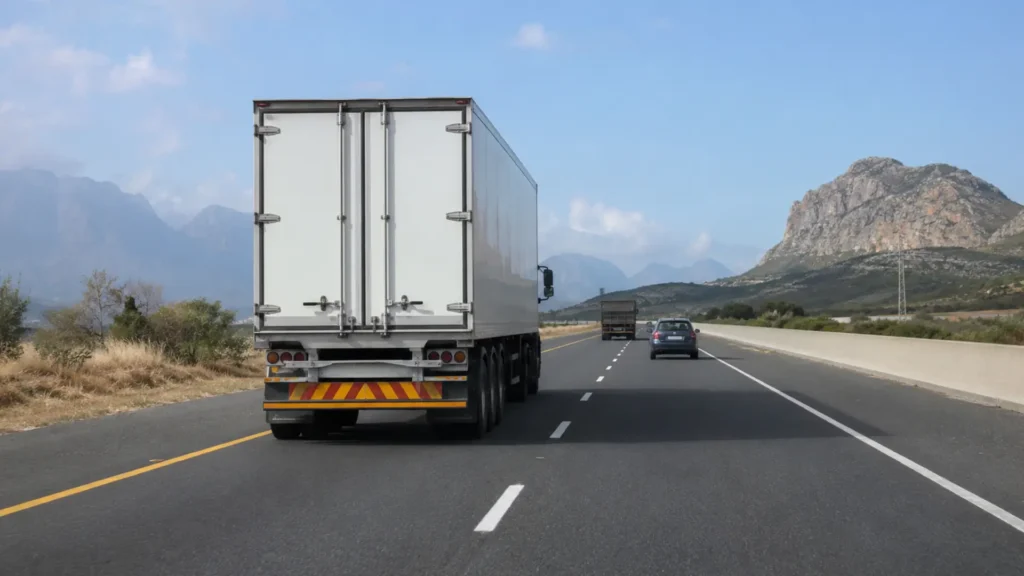
Eight people lost their lives on the N4 yesterday morning — and the tragedy is a sober reminder of why fleet road safety technology matters far beyond any balance sheet. TimesLive reports that a minibus taxi and a truck collided on the N4 Toll Road between Ngodwana and Waterval Onder, near Mbombela, on Tuesday 16 June. Eight people were declared dead at the scene and at least one was critically injured. The road was closed during recovery. Specifically, MEC Thulasizwe Thomo extended condolences and urged all operators to ensure vehicles are roadworthy and to avoid reckless driving, fatigue and speeding. The cause remains under investigation. This article does not assign blame for this crash; instead, it examines the safety factors the MEC raised and how fleet operators can act on them.
Importantly, this analysis reports the facts of the N4 tragedy, reflects on South Africa’s wider road-safety challenge, and sets out how fleet road safety technology directly addresses the fatigue, speeding, and roadworthiness factors that authorities repeatedly identify — with the goal of helping prevent the next crash.
What Happened on the N4: The Crash Behind the Fleet Road Safety Technology Reflection
Before any wider discussion, the facts of the tragedy deserve to be stated clearly and respectfully. Eight families are grieving today.
The facts of the N4 crash near Waterval Onder
According to the Mpumalanga Department of Community Safety, Security and Liaison, the collision happened on Tuesday morning on the N4 Toll Road between Ngodwana and Waterval Onder, towards Waterval Boven. Both vehicles were travelling in the direction of Mbombela. Spokesperson Moeti Mmusi confirmed that eight people were declared dead at the scene, while one person who sustained serious injuries was rushed to hospital. Furthermore, the minibus taxi carried a Mozambican registration, and authorities were still verifying the identities of the deceased. The road was closed during recovery operations, and motorists were advised to avoid the area.
The official response shaping the fleet road safety technology conversation
MEC for Public Works, Roads and Transport Thulasizwe Thomo expressed profound sadness and extended condolences to the bereaved families. Notably, he used the moment to make a direct appeal to operators. He urged all public transport operators, including minibus taxi drivers, to adhere strictly to traffic regulations, ensure that vehicles are roadworthy, and avoid reckless driving, fatigue and speeding. Crucially, those four factors — roadworthiness, reckless driving, fatigue, and speeding — are precisely the areas where modern fleet technology can make a measurable difference. The MEC named the problem; technology offers part of the answer.
A wider pattern that fleet road safety technology must confront
Tragically, the N4 crash was not isolated. Sunday World reports that just a day earlier, five people died near Peddie in the Eastern Cape when a bakkie collided with a long-distance bus. Additionally, the N4 itself has drawn growing concern over a series of fatal crashes. South Africa’s road fatality figures remain among the highest in the world per capita. Consequently, each individual tragedy sits within a national crisis that demands systemic responses — better enforcement, better roads, and better in-vehicle safety technology across every fleet.
Fatigue: The Hidden Factor Fleet Road Safety Technology Can Detect
Of the four factors the MEC named, fatigue is the most insidious — invisible, often unadmitted, and devastating in its effect on reaction time.
Why fatigue demands in-cab safety technology on early routes
The N4 crash happened in the morning, and fatigue is especially dangerous on early-morning and overnight routes when the body’s natural rhythms push toward sleep. A fatigued driver suffers slower reactions, impaired judgement, and the risk of a microsleep — a brief, involuntary lapse that can last just long enough to cause a catastrophe. Importantly, fatigue cannot be detected by a roadblock or a licence check. It is a real-time condition that only in-cab monitoring can catch as it develops.
How AI dashcams fight fatigue on the road for fleets
Modern AI dashcams use facial and eyelid monitoring to detect the signs of drowsiness before a microsleep occurs. When the system detects prolonged eye closure, head nodding, or distraction, it alerts the driver immediately and notifies the control room. Consequently, a fatigued driver can be prompted to stop and rest before the moment of danger. This is one of the most valuable applications of fleet road safety technology, because it intervenes in the precise window — the seconds before a crash — that no other safety measure can reach.
Speed and Reckless Driving: Where Fleet Road Safety Technology Intervenes
The MEC also named speeding and reckless driving. These behaviours are visible, measurable, and therefore directly addressable through telematics.
Speed monitoring as core fleet safety technology on the road
GPS-based speed monitoring records a vehicle’s speed continuously and flags any breach of the limit or of company policy. Furthermore, the data is not merely punitive — it identifies patterns, such as a particular driver, route, or time of day associated with speeding, allowing targeted coaching. When drivers know their speed is monitored and reviewed, behaviour improves measurably. Accordingly, speed monitoring works both as a deterrent and as a diagnostic tool, reducing the reckless driving the MEC warned against.
Behaviour scoring extends fleet road safety technology to daily habits
AI dashcams and telematics generate driver behaviour scores based on speed, harsh braking, sharp cornering, following distance, and distraction. Notably, this turns abstract “reckless driving” into specific, coachable data points. A fleet manager can identify the highest-risk drivers and intervene with training before a crash, rather than after. Over time, behaviour scoring builds a culture of accountability in which safe driving is recognised and unsafe driving is corrected — the daily discipline that prevents the rare catastrophic event.
Roadworthiness: How Fleet Road Safety Technology Keeps Vehicles Safe
The fourth factor the MEC named was roadworthiness — the mechanical safety of the vehicle itself. Here too, technology shifts the model from reactive to preventive.
From breakdown to prevention with fleet road safety technology
Traditional maintenance often waits for a fault to appear. In contrast, telematics-based fleet management tracks vehicle health data continuously and schedules preventive maintenance before a component fails. A brake, tyre, or steering issue caught during a scheduled service never becomes a failure on the highway. Therefore, a data-driven maintenance programme keeps vehicles genuinely roadworthy rather than relying on an annual certificate that may not reflect current condition. Roadworthiness becomes an ongoing state, not a once-a-year checkbox.
Compliance records as fleet road safety technology evidence
Fleet systems also maintain digital records of every inspection, service, and repair. Consequently, an operator can prove a vehicle’s maintenance history and roadworthiness compliance at any time. This protects responsible operators, supports insurance claims, and creates accountability across the fleet. When roadworthiness is documented and data-driven, the vehicles on the road are demonstrably safer — and the operator can show it.
Six Actions Fleet Operators Can Take on Road Safety Technology Now
A tragedy like the N4 crash should prompt every fleet operator to audit their own safety systems. These actions translate reflection into prevention.
Deploy fatigue and distraction detection across the fleet
First, install AI dashcams with fatigue and distraction detection on every vehicle. Prioritise long-distance and early-morning routes where fatigue risk peaks. Ensure the alerts reach both the driver and the control room, and that the control room is staffed to respond. Detection without response saves no one.
Next, enforce rest periods and route compliance through GPS tracking. Fatigue is best prevented by adequate rest. Use tracking to verify that drivers take required breaks and do not exceed safe driving hours. The data makes rest compliance enforceable rather than aspirational.
Monitor speed, coach behaviour, and maintain vehicles
Additionally, activate speed monitoring and review the data weekly. Identify high-risk drivers, routes, and times, and coach accordingly. Make clear that monitoring exists to protect drivers and the public, not merely to discipline. Furthermore, review driver behaviour scores and act on them. A high-risk score is an early warning. Coaching a driver this week may prevent a crash next month.
Then, move to a preventive, data-driven maintenance programme. Use telematics to track vehicle health and service before failures occur. Treat roadworthiness as a continuous state verified by data, not an annual certificate. Finally, brief every driver on fatigue management and safe driving. Technology supports drivers; it does not replace their judgement. A workforce that understands fatigue, respects speed limits, and reports vehicle concerns is the foundation on which the technology builds.
A Public Good: Fleet Road Safety Technology Protects Everyone
Notably, the benefit of fleet road safety technology extends far beyond the operator who deploys it. Every crash prevented protects the whole road network.
DigitFMS integrates AI dashcams with fatigue and distraction detection, GPS tracking with speed monitoring, driver behaviour scoring, and telematics-based maintenance support on a single dashboard. The system alerts a drowsy driver before a microsleep, flags speeding in real time, and supports the preventive maintenance that keeps vehicles roadworthy. Each of these directly addresses a factor the MEC named after the N4 tragedy. The company’s national franchise network supports operators across every province, including the Mpumalanga corridors where Tuesday’s crash occurred.
Equally, Cartrack, Tracker, Netstar, Ctrack, and MiX by Powerfleet provide comparable safety platforms, and Cartrack has reported measurable crash reductions through driver coaching. The shared point is bigger than any one provider: when fleets adopt fatigue detection, speed monitoring, and roadworthiness programmes, the safety benefit reaches every other road user — motorists, taxi passengers, and pedestrians alike. Fleet road safety technology is a public good as much as a business tool, and wider adoption means fewer families receiving the news that eight families received yesterday.
Outlook: Turning the N4 Tragedy Into Fleet Road Safety Technology Action
Today, eight families in and beyond South Africa are mourning people who set out on an ordinary journey and did not arrive. No analysis softens that loss. The most meaningful response the freight and transport industry can offer is not words but action — a renewed commitment to the safety of every person who shares the road with a commercial vehicle.
Looking ahead, the factors the MEC named after the N4 crash — fatigue, speeding, reckless driving, and roadworthiness — are not abstract. They are measurable, addressable, and increasingly preventable with technology that already exists. Fleet operators who deploy fatigue detection, speed monitoring, behaviour coaching, and preventive maintenance are not simply protecting their businesses. They are reducing the chance that their vehicle becomes part of the next headline.
Ultimately, fleet road safety technology cannot undo the N4 tragedy, and it cannot prevent every crash. However, it can detect the drowsy driver, flag the speeding vehicle, and keep the truck roadworthy — and each of those interventions can save a life. Tuesday’s crash investigation will run its course. A lasting tribute to those who died would be an industry that treats every such tragedy as a call to act, equipping every vehicle with the tools to help ensure that fewer families ever receive that call. The road took eight lives yesterday. Making it safer belongs to everyone who uses it.
Frequently Asked Questions
What happened in the N4 crash in Mpumalanga?
On Tuesday 16 June 2026, eight people were killed and at least one critically injured when a minibus taxi and a truck collided on the N4 Toll Road between Ngodwana and Waterval Onder, near Mbombela. Both vehicles travelled towards Mbombela; the taxi carried a Mozambican registration. The road closed during recovery. The cause is under investigation.
What did authorities say about the cause?
The cause remains under investigation. Spokesperson Moeti Mmusi said the circumstances are unclear and an investigation is underway. MEC Thulasizwe Thomo urged operators to adhere to traffic regulations, ensure roadworthiness, and avoid reckless driving, fatigue and speeding. This article does not assign blame for the crash; it examines the broader safety factors the MEC raised.
How does fleet road safety technology help prevent crashes?
It addresses the exact factors authorities cite. AI dashcams detect fatigue, distraction, and phone use in real time. Speed monitoring flags excessive speed. Following-distance and harsh-braking detection identify risky driving early. GPS tracking enforces rest and route compliance. Telematics support preventive maintenance, helping ensure roadworthiness before a fault becomes a failure.
What is driver fatigue and why does it matter?
Fatigue is impairment from tiredness, long hours, or poor rest, and it sharply slows reaction time and judgement. It is a common factor in heavy-vehicle and long-distance crashes, especially on early-morning and overnight routes. AI dashcams use facial and eyelid monitoring to detect drowsiness and alert the driver before a microsleep — making fatigue detection one of the most valuable safety technologies available.
How does roadworthiness connect to fleet safety?
Roadworthiness means a vehicle is mechanically safe — sound brakes, tyres, steering, and lights. Unroadworthy vehicles contribute to many crashes, and the MEC urged operators to ensure it. Telematics track vehicle health, schedule preventive maintenance, and flag issues before failures. A data-backed maintenance programme keeps vehicles compliant and reduces mechanical-failure crashes.
What should fleet operators do after a crash like this?
Audit their own safety systems. Verify roadworthiness and current maintenance. Deploy or review AI dashcams with fatigue detection. Enforce rest and route compliance via GPS. Review behaviour scores and coach high-risk drivers. Brief drivers on fatigue management for early and overnight routes. Ensure the technology and the human processes around it actually function.
Does fleet safety technology benefit the wider public?
Yes. Every crash a fleet prevents protects other motorists, taxi passengers, pedestrians, and families, not just the driver and cargo. Heavy vehicles carry higher stakes in any collision. When fleets adopt fatigue detection, speed monitoring, and roadworthiness programmes, the benefit reaches the whole road network. Fleet road safety technology is a public good as much as a business tool.
Sources
TimesLive — “Eight killed in minibus taxi and truck crash on N4 in Mpumalanga”, 16 June 2026; eight dead, one critical, Ngodwana to Waterval Onder, Mmusi statement, cause under investigation · IOL — “Horrific N4 crash claims eight lives near Waterval Onder in Mpumalanga”, 16 June 2026; MEC Thulasizwe Thomo condolences and appeal on roadworthiness, fatigue, speeding, reckless driving · Citizen / Lowvelder — “Eight killed in N4 collision near Ngodwana”, 16 June 2026; both vehicles towards Mbombela, Mozambican taxi registration, recovery operations
Sunday World — “Eight killed in N4 taxi and truck collision near Ngodwana”, 16 June 2026; Peddie bakkie and bus crash 15 June five dead, road safety concern context · SABC News — “Eight killed in minibus taxi, truck collision on the N4 in Mpumalanga”, 16 June 2026; road closed, scene active · Briefly — “Mpumalanga accident leaves eight people dead”, 16 June 2026; renewed concern over taxis and trucks in fatal crashes
Arrive Alive — road safety and fatigue management guidance · DigitFMS — youth freight industry careers road safety (16 June), fleet driver shortage repatriation (13 June), AI dashcam product resources; fatigue detection, speed monitoring, behaviour scoring, preventive maintenance
© 2026 DigitFMS. All rights reserved.