
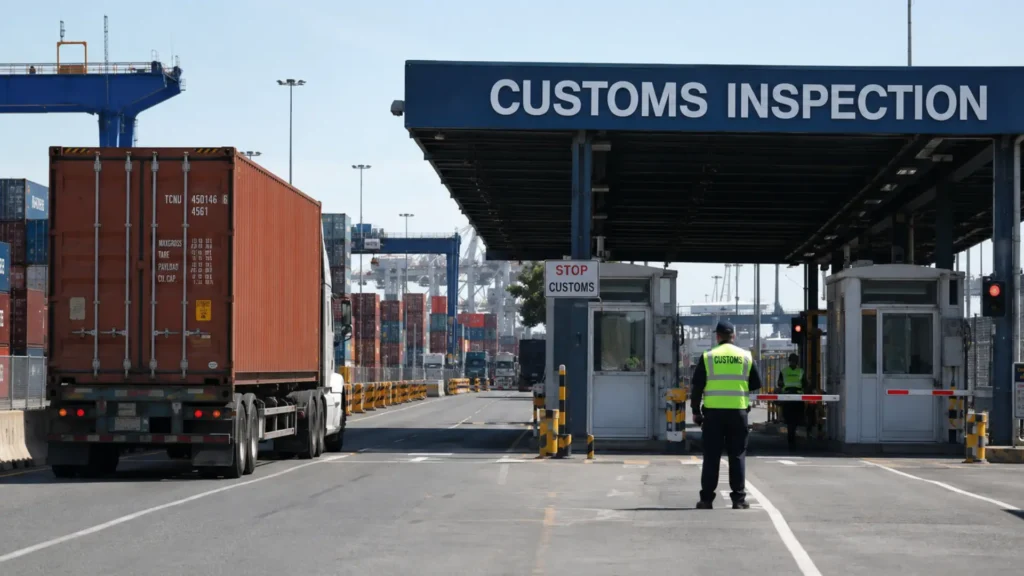
While the world watches the football, a second contest is playing out in cargo warehouses and customs halls — and counterfeit goods fleet logistics has become a live exposure for South African operators. ESPN reports that just hours before kickoff, Hong Kong customs seized about 230,000 counterfeit items worth an estimated $20 million, including 30,000 World Cup jerseys, with nearly 80% bound for the Americas. Notably, a truck driver was arrested at a border checkpoint moving the goods. Days later, US Customs seized over $6 million of fakes in Houston. Specifically, these goods do not teleport to market — they move through freight, ports, and increasingly small parcel networks. For South African operators, the Counterfeit Goods Act applies across every transport mode, which means the exposure reaches any vehicle carrying the wrong load.
Importantly, this analysis examines how counterfeit goods move through the freight chain during major events, why South African fleet operators face real exposure under the Counterfeit Goods Act, how the shift to e-commerce parcels changes the risk, and what due diligence protects legitimate operators.
The Global Surge: How the World Cup Drives Counterfeit Goods Fleet Logistics
Crucially, major sporting events create demand spikes that counterfeit networks exploit — and that demand moves through the same logistics infrastructure as legitimate trade.
The Hong Kong seizure and the counterfeit goods fleet logistics chain
According to ESPN and AP, Hong Kong authorities seized roughly 230,000 suspected counterfeit items worth an estimated $20 million in the weeks before the tournament. The haul included about 30,000 jerseys, some so finely made that inspectors said they were hard to distinguish from authentic shirts. Significantly, part of the operation took place at logistics centres between late May and early June. Nearly 80% of the goods were set for shipment to the Americas. A truck driver was arrested at the border checkpoint linking Hong Kong to mainland China, and five others were held over online jersey sales.
Operation Winner’s Circle and counterfeit goods fleet logistics enforcement
Meanwhile, US Customs and Border Protection ran “Operation Winner’s Circle,” using intelligence and trend analysis to target recipients of trademark-infringing shipments. In Indianapolis, officers intercepted 18 shipments of World Cup merchandise. Furthermore, the Houston trade-enforcement team seized over $6 million in counterfeit products. The common thread is that enforcement increasingly focuses on the logistics chain — the warehouses, cargo handlers, and distribution recipients — rather than only the street-level seller. The freight network is where the goods are caught.
Why counterfeit goods fleet logistics is a freight problem, not just a retail one
Notably, counterfeit merchandise is a logistics phenomenon at its core. The goods are manufactured in one region, shipped across oceans, cleared through ports, trucked to distribution points, and delivered to sellers. Each stage involves a carrier. Consequently, the freight industry sits in the middle of the counterfeit supply chain whether it wishes to or not. Every container, every truck, and every parcel van is a potential link. The question for legitimate operators is not whether counterfeits move through freight — they demonstrably do — but how to avoid carrying them unknowingly.
The South African Exposure: Counterfeit Goods Fleet Logistics Under the Law
South Africa is not insulated from this trade, and its legal framework places responsibility across the entire transport chain.
The Counterfeit Goods Act and counterfeit goods fleet logistics liability
According to SARS, the Counterfeit Goods Act of 1997 exists to prevent counterfeit goods entering the local market. SARS officials may detain any goods on importation to determine whether they are counterfeit, acting on behalf of the Department of Trade, Industry and Competition. Critically, these prohibitions apply across all modes of transport — road, rail, sea, air, and post. This means a consignment is subject to the same scrutiny regardless of how it is packaged or carried. For a road freight operator, that legal reach extends to the cargo on the truck.
What detention means for counterfeit goods fleet logistics operations
When SARS detains a suspect consignment, the operational consequences are immediate. The goods are held, and the vehicle carrying them may be delayed during investigation. Even where an operator had no knowledge of the cargo’s counterfeit nature, the load is detained and the schedule is disrupted. Therefore, the practical risk is not only the eventual legal finding but the immediate cost: a stranded vehicle, a missed delivery, and a client relationship strained. In a tight-margin industry, even a lawful operator caught in an investigation absorbs real cost.
Knowledge, intent, and counterfeit goods fleet logistics due diligence
Importantly, criminal liability under the Act generally turns on knowledge or intent, so an operator genuinely unaware of counterfeit cargo stands in a different legal position from one knowingly transporting it. This article is general information, not legal advice, and operators should consult their own attorneys on specific liability questions. Nevertheless, the prudent posture is clear: ignorance is not a reliable shield against operational disruption, and demonstrating due diligence — knowing your client and your cargo — is the strongest protection an operator can build.
The E-Commerce Shift: How Counterfeit Goods Fleet Logistics Changed
The way counterfeits move has transformed, and the shift has pushed the risk deeper into everyday courier and parcel operations.
From containers to parcels in counterfeit goods fleet logistics
Historically, counterfeit goods arrived in large shipments that were relatively easy to identify and intercept. However, the rise of e-commerce changed the model entirely. Illicit networks now rely on thousands of small postal and express-delivery packages, making detection far harder. According to CBP, over 90% of counterfeit seizures now occur in the international mail and express environment. Consequently, the risk has migrated from the container terminal to the parcel van, touching last-mile courier fleets that may never handle a shipping container.
What the parcel shift means for counterfeit goods fleet logistics exposure
For South African fleet operators, this shift broadens the exposure. A cross-border container operator was always aware of customs risk. Now, additionally, courier and last-mile fleets handling high volumes of small parcels during the World Cup merchandise surge face their own version of the risk. A van carrying hundreds of small packages cannot easily know the contents of each. Accordingly, the due-diligence question extends beyond container freight to the booming parcel-delivery sector — precisely the segment growing fastest in South African logistics.
The Cross-Border Angle: Counterfeit Goods Fleet Logistics at the Border Posts
Heightened enforcement during the World Cup creates a second-order effect for legitimate operators: more inspections, and therefore more delays.
Why legitimate operators feel the counterfeit goods fleet logistics crackdown
When customs authorities heighten vigilance, every consignment faces closer scrutiny — including entirely legitimate ones. Consequently, operators on routes from major ports such as Durban, and at crossings like Beitbridge and Lebombo, should expect potentially longer clearance times during the enhanced-enforcement period. The counterfeit crackdown does not distinguish at first glance between a fake-jersey load and a genuine consignment; both wait while inspectors work. Legitimate operators absorb the delay alongside the offenders.
Protecting schedules through counterfeit goods fleet logistics vigilance
Therefore, the defensive move for legitimate operators is preparation. Build buffer time into cross-border schedules during the tournament period. Ensure documentation is complete and accurate before a vehicle reaches the border. Maintain clean compliance records that let inspectors clear a known, documented operator quickly. Notably, an operator with a verifiable track record and complete paperwork moves through enhanced inspections faster than one whose documentation invites further questions. Compliance is not only a legal safeguard; it is a competitive speed advantage at the border.
Six Due-Diligence Actions on Counterfeit Goods Fleet Logistics
Protecting a fleet from counterfeit exposure does not require inspecting every box. It requires knowing who you carry for and what they say you are carrying.
Verify clients and document cargo for counterfeit goods fleet logistics protection
First, verify the legitimacy of clients and consignors before accepting loads, especially for branded goods during major events. A new client offering branded merchandise at a suspicious volume warrants checking. Next, require accurate manifests and documentation describing the cargo. A clear, accurate manifest protects the operator and creates the paper trail that demonstrates good faith if a load is ever questioned.
Watch for red flags and maintain records in counterfeit goods fleet logistics
Additionally, treat vague descriptions and suspicious pricing as red flags. Cargo described only as “general goods” when it is clearly branded merchandise, or transport priced unusually high for a simple load, deserves scrutiny. Furthermore, maintain GPS and documentation records for every consignment. A complete record of where a vehicle went, what it carried, and for whom is the operator’s best evidence of due diligence if an investigation ever arises.
Train drivers and understand the law for counterfeit goods fleet logistics
Then, train drivers to report irregularities — unexpected cargo, last-minute load changes, or instructions to avoid weighbridges or inspection points. Finally, understand the Counterfeit Goods Act and customs requirements for cross-border work, and consult an attorney on specific liability questions. Knowing the legal framework lets an operator structure contracts and procedures to manage the risk rather than discover it during a detention.
Technology That Supports Counterfeit Goods Fleet Logistics Compliance
Notably, while no technology can inspect cargo for authenticity, the right systems build the accountability and audit trail that protect a legitimate operator.
DigitFMS integrates GPS tracking with route history, wireless driver identification, AI dashcams, and digital documentation on a single dashboard. The GPS record provides a verifiable account of where a vehicle travelled and stopped, while digital documentation links each load to its consignor and manifest. Driver identification confirms who handled a consignment and when. Together, these create the audit trail that demonstrates due diligence — showing what an operator was contracted to carry and helping pinpoint where in the chain any problem arose. The franchise network supports operators on the cross-border corridors where customs exposure is highest.
Equally, Cartrack, Tracker, Netstar, Ctrack, and MiX by Powerfleet provide comparable tracking and documentation platforms. The decisive capability for counterfeit goods fleet logistics is cargo accountability: a complete, verifiable record linking vehicle, driver, route, and consignment. Fleet operators with that record demonstrate good faith readily and clear inspections faster. Those without it rely on memory and paperwork that may not satisfy an investigator — a weak position when a load is detained and a schedule is on the line.
Outlook: Counterfeit Goods Fleet Logistics Is a Year-Round Discipline
The World Cup has thrown a spotlight on counterfeit merchandise, but the underlying risk is permanent. Major events simply intensify a trade that runs continuously through global and South African logistics. The jerseys seized in Hong Kong and Houston are this month’s headline; next month it will be electronics, pharmaceuticals, or luxury goods. The freight chain remains the conduit regardless of the product.
Looking ahead, the operators who treat counterfeit exposure as a year-round compliance discipline — not a World Cup novelty — protect themselves best. Client verification, accurate documentation, driver training, and a complete audit trail are not event-specific measures. They are the standing practices that keep a legitimate operator clearly distinguishable from the networks that customs authorities target. The tournament is a useful prompt to review those practices, but the practices themselves should outlast it.
Ultimately, counterfeit goods fleet logistics is a reminder that the freight industry moves more than cargo — it moves liability, reputation, and trust. A legitimate operator’s greatest asset is the ability to prove, at any moment, exactly what its vehicles carry and for whom. The World Cup counterfeit surge will pass when the final whistle blows in July. The discipline of knowing your cargo, verifying your clients, and maintaining your records is what keeps an operator on the right side of the line long after the tournament ends — and well clear of the next surge, whatever product it carries.
Frequently Asked Questions
What is happening with counterfeit World Cup goods?
The World Cup has driven a global surge in counterfeit merchandise moving through freight. Hong Kong seized about 230,000 fake items worth $20 million and arrested a truck driver at a border checkpoint. US Customs seized over $6 million in Houston via Operation Winner’s Circle, targeting logistics hubs. Most goods move through cargo warehouses, ports, and increasingly small e-commerce parcels.
How are South African fleet operators exposed?
The Counterfeit Goods Act applies across all transport modes — road, rail, sea, air, post. SARS may detain any goods on importation to verify whether they are counterfeit. A carrier moving counterfeit cargo, even unknowingly, can have the consignment detained and the vehicle delayed. Cross-border operators on routes from major ports face the highest exposure.
Can an operator be liable for cargo they did not know about?
Criminal liability generally requires knowledge or intent, so an unaware operator is in a different position from one knowingly transporting fakes. However, SARS can still detain goods and the vehicle during investigation, causing delays and costs. Ignorance is not full protection. Knowing your cargo, keeping documentation, and vetting clients reduce both legal and operational risk. This is general information, not legal advice.
Why has counterfeit smuggling shifted to small parcels?
E-commerce transformed distribution. Fakes once arrived in large, identifiable shipments; now they move as thousands of small postal and express packages, making detection far harder. Over 90% of counterfeit seizures now occur in the mail and express environment. For fleets, counterfeits increasingly move through last-mile courier and parcel networks rather than only container freight.
How does fleet technology help with counterfeit risk?
Technology supports cargo accountability. GPS tracking records where a vehicle travelled and stopped. Digital documentation links each load to its consignor and manifest. Driver identification confirms who handled a consignment. Technology cannot verify authenticity, but it creates the audit trail that protects an operator demonstrating due diligence and helps identify where a problem arose.
What due diligence should operators conduct?
Verify clients and consignors, especially for branded goods during major events. Require accurate manifests. Treat vague descriptions and suspicious pricing as red flags. Keep GPS and documentation records for every load. Train drivers to report irregularities. Understand the Counterfeit Goods Act for cross-border work. Due diligence means knowing who you carry for and what they say you carry.
Does this affect legitimate cross-border freight?
Yes, indirectly. Heightened customs vigilance means more inspections, which can delay legitimate consignments at ports and border posts. Operators on Durban routes and crossings like Beitbridge and Lebombo should expect longer clearance during the enforcement period. Buffer time, complete documentation, and clean compliance records help legitimate operators clear enhanced inspections with minimal disruption.
Sources
ESPN / AP — “Hong Kong customs seize $20 million in fake goods ahead of the World Cup”, 11 June 2026; 230,000 items, 30,000 jerseys, 80% to the Americas, logistics centres late May to early June, truck driver arrested at border checkpoint, five arrested over online sales · Fox 26 Houston — “Fake World Cup merchandise seized in Houston”, 18 June 2026; over $6 million, jerseys, soccer balls, counterfeit electronics, intelligence-led targeting
US Customs and Border Protection — “CBP Officers in Indianapolis Seize Counterfeit FIFA World Cup 2026 Merchandise”, 16 June 2026; Operation Winner’s Circle, 18 shipments, intelligence and trend analysis, over 90% of seizures in mail and express environment, e-commerce parcel shift · Al Día News — “The World Cup and the Black Market”, 17 June 2026; logistics hubs and cargo warehouses, $134,000 retail value Indianapolis, small-parcel sophistication
SARS — “Prohibited, restricted and counterfeit goods”; Counterfeit Goods Act 37 of 1997, section 113A Customs and Excise Act detention powers, all modes of transport (road, rail, sea, air, post), Department of Trade Industry and Competition authority · DigitFMS — border security fleet technology Beitbridge (1 June), fleet driver shortage repatriation (13 June); cross-border corridor context. Note: general information, not legal advice — operators should consult their own attorneys on liability.
© 2026 DigitFMS. All rights reserved.